Skullflower Street Calavera Spring-Assisted EDC Knife - Azure Stonewash
5 sold in last 24 hours
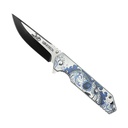
This spring-assisted knife is for Texans who like their EDC with a little art on it. A quick-deploy clip point blade, liner lock, and pocket clip make it work-ready, while the azure Calavera skull-and-floral handle turns it into a conversation piece. It’s not an automatic knife or an OTF switchblade—just a dependable assisted opener that snaps to attention when you thumb the stud. Pocket-friendly at 8 inches overall, it rides light, looks bold, and tells folks you know exactly what you’re carrying.
| Blade Length (inches) | 3.5 |
| Overall Length (inches) | 8 |
| Closed Length (inches) | 4.5 |
| Blade Color | Silver |
| Blade Finish | Stonewash |
| Blade Style | Clip Point |
| Blade Edge | Plain |
| Blade Material | Steel |
| Theme | Calavera |
| Pocket Clip | Yes |
| Deployment Method | Spring-assisted |
| Lock Type | Liner lock |
What This Spring-Assisted Knife Really Is
The Calavera Elegante Quick-Deploy Spring-Assisted Knife - Azure Stonewash is a true spring-assisted knife, built for everyday carry with a little extra attitude. Tap the thumb stud, the spring helps the blade the rest of the way, and the liner lock keeps it there. It’s not an automatic knife that fires by button, and it’s not an OTF knife that shoots straight out the front. This is a side-opening assisted folder made for Texans who know the difference and care about it.
Closed, it disappears in your pocket. Open, that clip point blade and azure skull handle make it clear this is more than a hardware-store pocketknife. It’s a working EDC with Calavera art and a mechanism you can trust.
Spring-Assisted Knife Mechanism, Explained the Texas Way
Mechanically, this spring-assisted knife is simple and honest. You start the motion with the thumb stud; the internal spring takes over and snaps the blade into lockup. That’s the whole story. No hidden button, no trick switchblade release, no OTF track to clog with pocket lint. Just a clean, assisted-opening folder.
How It Differs from an Automatic Knife
An automatic knife opens from a button or hidden release: press it, and the blade jumps out on its own. This assisted opener needs your thumb to start it. That small distinction matters in Texas law and in how it rides in your pocket. You get quick, one-handed opening, but you’re still the one in control of the action.
Side-Opening vs. OTF Knife in Real Use
This is a side-opening folder, not an OTF knife. The blade swings out from the side on a pivot instead of sliding out the front of the handle. That means fewer moving parts, solid liner lock engagement, and easier cleaning after a dusty day, a muddy truck bed, or a fish-cleaning session on the coast. OTFs and switchblades have their place, but for routine Texas EDC, a spring-assisted pocket knife like this stays practical and low-drama.
Calavera Art Meets Everyday Steel
The first thing a collector notices is the Calavera handle. The blue skull-and-floral pattern isn’t an afterthought; it’s the centerpiece. Silver stonewash steel and azure detailing give it that Day-of-the-Dead feel without turning it into a toy. It looks like something you’d see on good tattoo flash or a hand-painted lowrider panel, not a cheap novelty knife.
Blade and Build Details
You get a 3.5-inch clip point blade with a stonewash finish and a dark primary grind. That stonewash hides use marks and looks right at home on a working EDC knife. The plain edge is easy to sharpen—no serrations to fight with. Steel handle scales keep it solid in hand, while the contoured edges and texture help lock your grip when you’re breaking down boxes, cutting cordage, or opening feed bags.
Hardware is straightforward: liner lock, exposed screws, and a pocket clip set up for tip-down carry. Nothing fancy, nothing fragile. Just the kind of build a Texas buyer expects when they hear "spring-assisted pocket knife" instead of "automatic switchblade gadget."
Texas Carry Reality: Where This Knife Belongs
Texas has come a long way on knife laws. Under current Texas law, a spring-assisted knife like this is treated the same as other folding knives, not as some separate switchblade category. The key legal line today is blade length and location, not whether it’s an OTF knife, an automatic knife, or a classic side-opening folder. At 3.5 inches, this assisted opener sits in that comfortable everyday-carry zone for most Texas towns, job sites, and glove boxes. Always check your local rules and workplace policies, but statewide, mechanisms like this no longer carry the old switchblade baggage.
In practice, this knife rides clipped in your jeans at the feed store, drops into a pocket at a rodeo, or sits in the console on I-35 without drawing the attention that a big, aggressive OTF knife might. It opens fast when you need it, closes one-handed, and looks like what it is: an EDC knife with a little Calavera art, not a movie-prop switchblade.
Automatic Knife, OTF Knife, and Assisted Opener: Why the Distinction Matters
On paper, all three get lumped together by folks who don’t know any better. But a serious Texas knife buyer cares how a blade moves. This piece is an assisted-opening side folder. You move the blade a bit, the spring finishes the job. An automatic knife uses a button or switch to release the tension. A true switchblade is a type of automatic knife, usually side-opening by button. An OTF knife drives the blade straight out the front on a track, either automatic or manual.
Collectors who can explain that difference in a sentence tend to buy better. They also tend to keep pieces like this one—art-forward assisted openers—for the days when they want an easy rider in the pocket, not a full-on tactical automatic or OTF switchblade conversation.
What Texas Buyers Ask About Spring-Assisted Knives
Is a spring-assisted knife the same as an automatic knife or switchblade?
No. With this spring-assisted knife, you start the blade with the thumb stud and the spring finishes it. An automatic knife or traditional switchblade opens from a button, with the spring firing the blade from a closed position. An OTF knife may be automatic too, but the blade travels out the front instead of pivoting from the side. This Calavera piece is firmly in the assisted-opening pocket knife camp, not the switchblade/OTF category.
Are spring-assisted knives legal to carry in Texas?
Under current Texas law, spring-assisted knives are generally treated like other folding knives, not as banned switchblades. The main consideration is blade length and where you’re carrying, not whether the knife is assisted, automatic, or OTF. At about 3.5 inches, this Texas-friendly EDC fits within common everyday carry expectations. That said, smart Texans still check local ordinances and employer policies before they clip anything in their pocket.
Why would a Texas collector choose this over an OTF knife?
Because sometimes you want art and reliability more than outright drama. OTF knives and full automatic switchblades are great when you want maximum mechanical flash. This spring-assisted knife gives you quick deployment, simple maintenance, and lower profile carry. Add in the azure Calavera handle and stonewash blade, and you’ve got a piece that stands out in a tray of black tacticals. It fills that niche between hard-use work knife and display queen—one you’ll actually carry.
Why This Calavera Assisted Knife Earns Its Place in a Texas Collection
Any collector can buy another black-handled automatic knife or a chunky OTF switchblade. This one brings something different to a Texas drawer: a spring-assisted mechanism you don’t have to baby, a stonewash clip point happy to see real use, and a Calavera theme that speaks to Texas borderlands, festival nights, and the kind of culture that puts skull art on everything from guitars to lowriders.
If you’re the sort of Texan who can explain the difference between an automatic knife, an OTF knife, and a simple assisted opener without reaching for a chart, this knife fits you. You know what it is, you know what it isn’t, and you’ll carry it accordingly. That’s how a working EDC—with a little art on its handle—earns its spot in a serious Texas collection.