Cold War Origins Special Forces Doctrine Manual - Yellow Cover
3 sold in last 24 hours
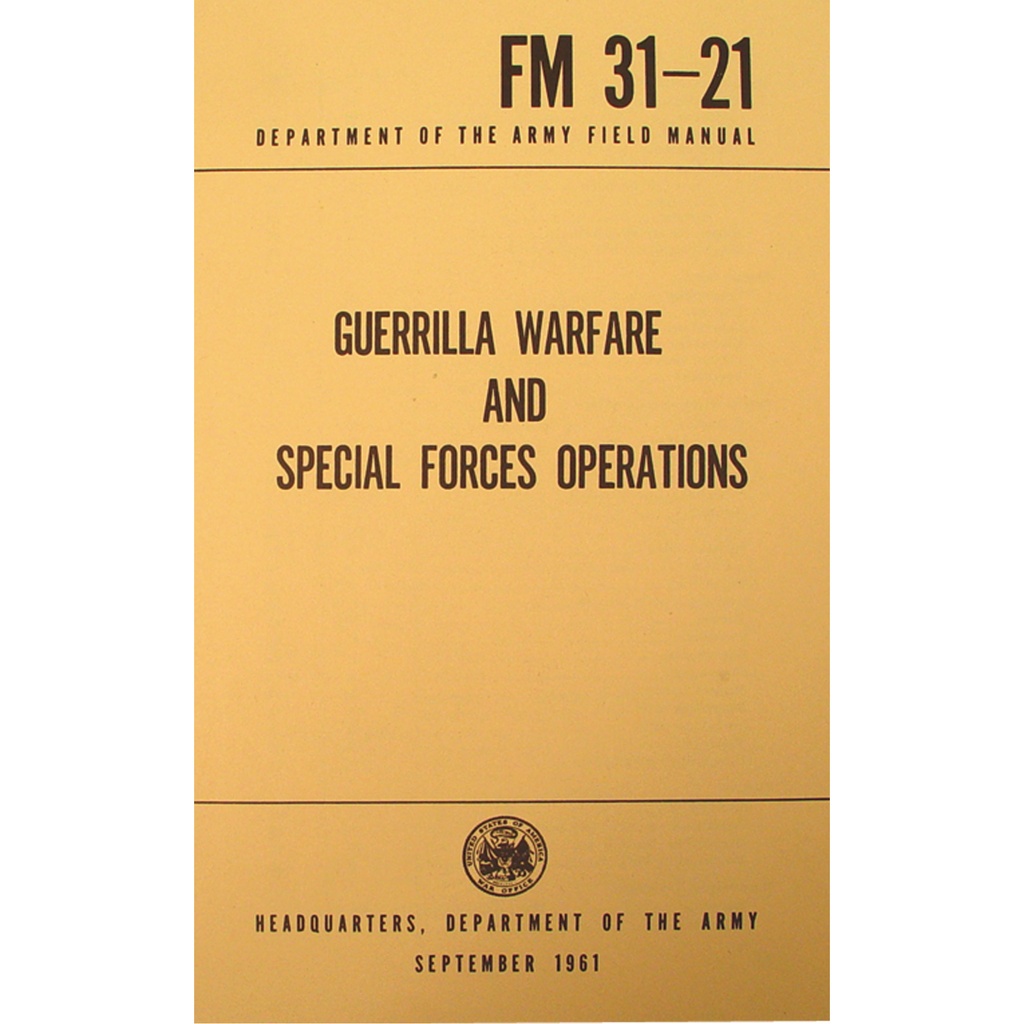
This Cold War Special Forces field manual is the real thing—FM 31-21, reprinted straight from the 1961 U.S. Army original. It lays out guerrilla warfare doctrine the way professionals first learned it: organization, logistics, intelligence, communications, and control. The bold yellow cover and Army seal make it a standout on any Texas shelf, whether you’re a historian, instructor, or collector. Stock the manual that still shapes modern thinking and speaks with clear, no-nonsense doctrine.
Cold War Field Manual with Real Special Forces Doctrine
This isn’t a modern summary or somebody’s opinion piece. The Cold War Origins Special Forces Doctrine Manual - Yellow Cover is a straight reprint of FM 31-21, the 1961 U.S. Army field manual on guerrilla warfare and Special Forces operations. It reads like what it is: original doctrine, written for men expected to use it in the field, not for armchair commentary.
For Texas buyers who collect edged weapons, tactical gear, and authentic military references, this manual sits in the same mental shelf space as a well-made automatic knife or combat-ready fixed blade: a purpose-built tool that tells you exactly what it does and why. Where an automatic knife or switchblade handles the close work, this book lays out the thinking behind the larger campaign.
Inside the Special Forces Doctrine Manual
FM 31-21 breaks guerrilla warfare down into clear, workable pieces—organization, control, logistics, intelligence, communications, and area command. The language is plain, the structure is tight, and the mindset is pure Cold War: practical, unsentimental, and focused on results.
Guerrilla Warfare Fundamentals, Explained by the Originators
Instead of theory for its own sake, this field manual walks through how a guerrilla force is raised, supported, directed, and tied into larger Special Forces operations. It covers:
- How guerrilla units are structured and led
- How supply, medical support, and logistics keep them alive
- How intelligence and counterintelligence shape every decision
- How communications link small units back to higher command
It’s the same mindset a good Texas collector brings to hardware: you don’t just admire an automatic knife or OTF knife for the finish—you want to understand the mechanism, the intent, and how it fits the larger system of tools.
Why the 1961 Text Still Matters
This manual was issued at a time when the U.S. Army was defining how Special Forces would think about unconventional warfare. A lot of what’s in here still echoes in modern doctrine, counterinsurgency work, and special operations training. For a Texas instructor or historian, it’s a primary source, not a secondhand retelling.
How This Manual Fits a Texas Collector’s Shelf
A serious Texas knife collector doesn’t just line up blades; they build context. An automatic knife or switchblade from a specific era, an OTF knife built for modern operators, and this Cold War field manual together tell a story of how warfighting evolved. The bold yellow cover and U.S. Army seal make it an instant focal point in any study, office, or shop.
Retailers who move tactical knives, survival gear, and field-ready equipment in Texas will find this manual plays well alongside gear that’s meant to be used, not babied. It’s the same customer who asks the right questions about mechanism—automatic knife vs OTF knife vs assisted opener—who will appreciate an original doctrinal source instead of a watered-down paperback.
Texas Context: From Doctrine to Dirt
Texas has long been home to veterans, instructors, ranchers, and lawmen who think in practical terms. This manual fits that mindset. It doesn’t glamorize guerrilla warfare; it breaks it into tasks, responsibilities, and command relationships.
On a Texas range, in a training class, or in a small-town shop that sells blades, gear, and military history side by side, this book serves as the quiet anchor on the shelf. While customers handle an automatic knife or look over a modern OTF knife, this field manual reminds them where a lot of that thinking started—small units, limited support, and a hard requirement to make every decision count.
Collector Value Beyond the Cover
The Cold War Origins Special Forces Doctrine Manual - Yellow Cover isn’t rare in the sense of a one-off custom switchblade, but it’s authentic in a way most modern books can’t touch. The FM number (31-21), the 1961 date, the Department of the Army imprint, and the simple yellow government layout all say the same thing: this is source material.
For Texas collectors who enjoy pairing objects with their history—a Vietnam-era automatic knife beside an appropriate field manual, a modern duty OTF knife beside current doctrine—this volume is the origin story for how America thought about unconventional warfare at the dawn of the Special Forces era.
Built to Be Read, Not Just Displayed
The softcover binding and straightforward layout make it easy to mark, annotate, and reference. This isn’t a fragile coffee-table piece; it’s closer in spirit to a glovebox map or range notebook. Instructors can assign sections, retailers can point to specific chapters when talking with serious buyers, and collectors can dig into the text when they want to understand the mindset behind the gear they own.
What Texas Buyers Ask About This Field Manual
How does this manual relate to automatic knives, OTF knives, and switchblades?
The manual itself doesn’t teach you how to run an automatic knife, OTF knife, or switchblade. Instead, it explains how Special Forces and guerrilla units were organized, supplied, and commanded. For a Texas collector, it’s the doctrinal backdrop: while your knives represent the tools of the trade—automatic for fast deployment, OTF for modern tactical use, switchblade as a classic side-opener—this book represents the plan behind the tools.
Is there anything in here that’s restricted or sensitive for Texas buyers?
No. This is a reprint of an unclassified 1961 Department of the Army field manual. Texas law doesn’t treat it any differently than any other book on military history or tactics. Owning an automatic knife, an OTF knife, or a switchblade in Texas has its own legal considerations, but a doctrinal manual like this is simply printed material—fully legal to own, stock, and sell in the state.
Why should a knife or gear collector add a doctrine manual to their collection?
Because tools make more sense when you understand the doctrine behind them. A Texas collector who knows the difference between an automatic knife, an OTF knife, and a traditional switchblade usually also wants to know where each fits into real-world use. This field manual gives you the bigger picture: how small units fight, move, communicate, and survive. It turns a drawer full of good gear into a collection with context and story.
In the end, the Cold War Origins Special Forces Doctrine Manual - Yellow Cover belongs with people who appreciate original sources. The same Texan who can tell a cheap switchblade from a well-made automatic knife at a glance will recognize what this is: the Army’s own words from a formative era. It’s a quiet book with a loud story, and it earns its place on any serious Texas shelf.