Desert Ritual Damascus Skinning Knife - Turquoise Horn
13 sold in last 24 hours
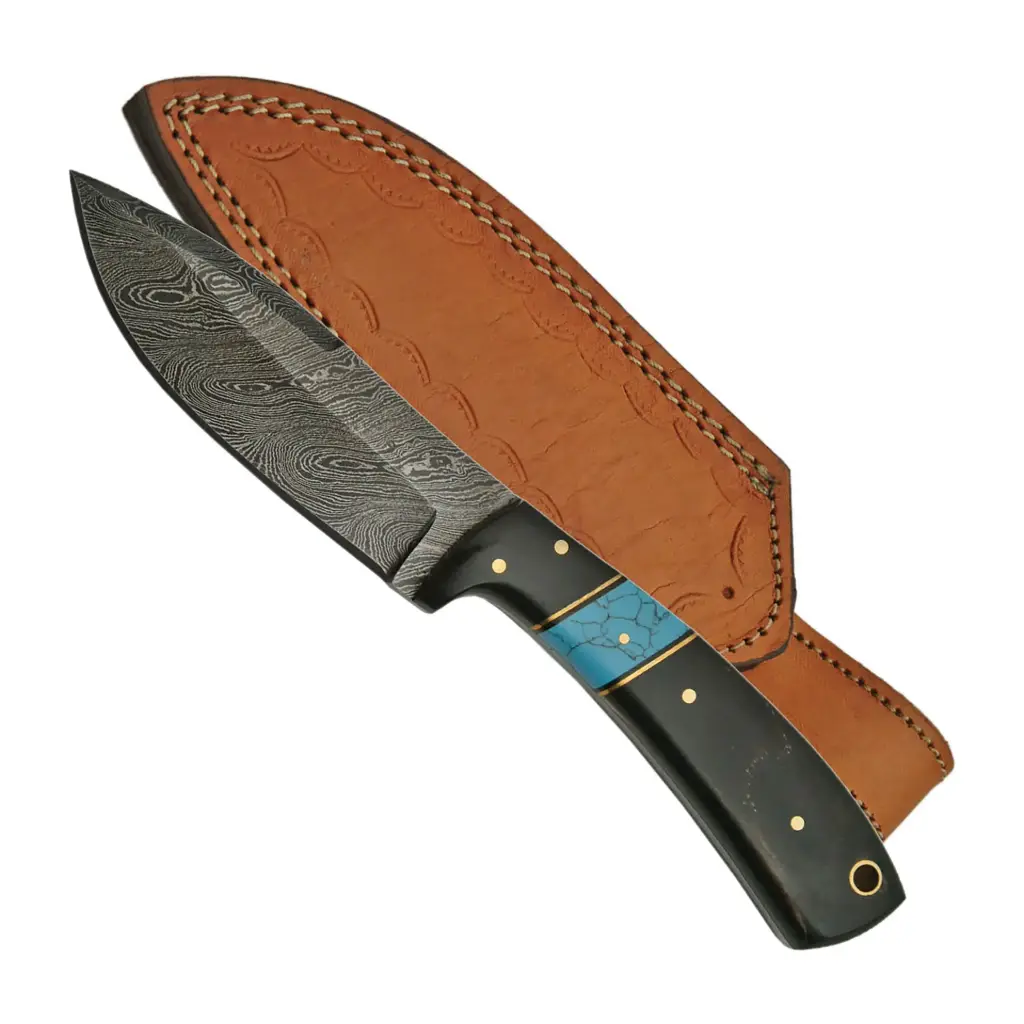
This Damascus skinning knife is a fixed-blade hunter first and a showpiece second. An 8-inch full-tang build with a 4-inch drop-point edge gives you the control you want when you’re breaking down a Texas whitetail. Turquoise inlay set in polished horn, brass spacers, and a tooled leather sheath bring Western character. It rides on your belt, works hard in the field, then earns its spot in a serious Texas collection.
| Blade Length (inches) | 4 |
| Overall Length (inches) | 8 |
| Blade Color | Silver |
| Blade Finish | Damascus |
| Blade Style | Drop Point |
| Blade Edge | Plain |
| Blade Material | Damascus Steel |
| Handle Finish | Polished |
| Handle Material | Horn |
| Theme | Damascus |
| Handle Length (inches) | 4 |
| Tang Type | Full Tang |
| Pommel/Butt Cap | Lanyard Hole |
| Carry Method | Belt Carry |
| Sheath/Holster | Leather Sheath |
Desert Ritual Damascus Skinning Knife for Texas Hunters
This is a true Damascus skinning knife, not a folding pocket knife, not an automatic knife, and not any kind of OTF knife or switchblade. It’s a fixed-blade skinner built for field dressing, caping, and breaking down game the way Texas hunters have done it for generations: blade out, sheath off, work first. The turquoise horn handle and tooled leather sheath just happen to make it collector-grade.
At 8 inches overall with a 4-inch Damascus drop-point blade, this skinning knife feels like an extension of your hand. The full tang runs straight through the turquoise and horn handle, pinned in brass, so what you feel in use is solid steel and balance—not a hinge, spring, or button.
What Makes a Damascus Skinning Knife Different?
Start with the steel. This is layered Damascus, etched to reveal the pattern but built to work. On a Texas hunting lease, that means this fixed blade is riding on your belt while the automatic knife and OTF knife stay in your pocket for camp chores and quick cuts. A switchblade is about speed; a skinning knife like this is about control.
The wide belly of the drop-point blade is tuned for long, sweeping cuts along hide and meat. Where a slim automatic knife or OTF knife might excel at opening feed bags or cutting cord, a Damascus skinner like this shines when you’re deep in a deer, hog, or exotics, needing a sure grip and predictable edge.
Full-Tang Confidence in the Field
Because this knife is full tang, the steel runs continuously from tip to pommel. There’s no lock, no pivot, and no deployment mechanism to think about—just a fixed blade that’s either in the sheath or in your hand. For Texas hunters who’ve dressed more animals than they can count, that simplicity matters more than any automatic opening trick.
Blade Geometry Built for Skinning
The drop-point shape and generous belly give you a long working edge. The plain edge makes sharpening straightforward, whether you’re at a Hill Country campfire with a pocket stone or back home at the bench. Damascus steel offers that mix of bite and character collectors look for, but the grind is pure working skinner.
Texas Carry Reality: Fixed Blade vs Automatic and OTF
In Texas, the law treats this Damascus skinning knife differently than an automatic knife, OTF knife, or switchblade. Under current Texas knife laws, a fixed blade like this is generally legal to own and carry for adults, and the old restrictions that singled out switchblades and automatic knives have largely been rolled back. Still, local rules and specific locations—schools, certain government buildings, and similar spots—can have their own limits.
Where this knife truly belongs is on private land, ranches, and leases: riding in its leather sheath on your belt or in a pack, ready when the animal is down. That’s the separation of duties for a Texas outdoorsman: a small automatic knife or OTF knife in the pocket for day-to-day use, and a fixed-blade skinning knife for when the real work starts.
Belt Sheath Built for Real Use
The stamped leather sheath isn’t decoration—it’s the working holster that keeps the blade secure and handy. Slide it on your belt before first light, and it’ll sit there quietly until the drag starts. No clip, no button, no spring, just leather and steel doing what they’ve done in Texas for decades.
Collector Details: Turquoise, Horn, and Damascus Pattern
Collectors notice what’s happening at the handle. The polished horn brings that dark, organic sheen you only get from natural material, while the turquoise inlay runs like a desert river through the grip. Brass spacers and pins tie it together, adding both structural integrity and a bit of warm color between the darker layers.
The Damascus blade pattern is bold and visible, not a faint etch. For a Texas knife collector, that means it reads as Damascus from across the room, not just when you’re nose-to-steel. Paired with the Western-leaning leather sheath and turquoise accent, this fixed-blade skinner lands squarely in that sweet spot between working ranch knife and show table centerpiece.
Why This Instead of a Flashier Switchblade?
For all the attention automatic knives, OTF knives, and modern switchblades get, a serious collector in Texas knows the story isn’t complete without good fixed blades. An automatic knife proves a mechanism; a Damascus skinning knife like this proves a maker’s understanding of grind, balance, and real use. It’s a different kind of satisfaction—quieter, but deeper.
What Texas Buyers Ask About Damascus Skinning Knives
How does this compare to an automatic knife, OTF knife, or switchblade?
This is a fixed-blade Damascus skinning knife, so there’s no automatic opening, no OTF mechanism, and no side-opening switchblade action. It rides in a sheath and comes out ready to work. Where an automatic knife or OTF knife excels at quick, one-handed cuts from the pocket, a skinner like this excels once the animal is on the ground. It’s built for control, not surprise, and that’s exactly what you want when you’re following a cut line along hide or joint.
Is this Damascus skinning knife legal to carry in Texas?
Texas law is generally friendly to knives today, including fixed blades, automatic knives, and OTF knives, and the old ban on switchblades has been lifted. For most adults, owning and carrying a Damascus skinning knife like this is legal. That said, certain locations—schools, some government properties, and specific posted venues—can restrict knives regardless of type. This piece is best treated as a hunting and ranch tool: carry it to the lease, the ranch, or private land, and respect posted rules anywhere else. When in doubt, check current Texas statutes before you strap it on in town.
Is this more of a working skinner or a display knife?
It’s both, and that’s the point. The full-tang build, 4-inch drop-point blade, and belt sheath say working skinner. The Damascus steel, turquoise inlay, horn handle, and brass hardware say display. A Texas collector will appreciate that it can dress game cleanly one weekend and sit in a glass-front cabinet the next. Owning it means you don’t have to choose between a pure user and a pure showpiece—you get a fixed-blade hunting knife that does both honestly.
Why This Damascus Skinner Belongs in a Texas Collection
Every serious Texas knife drawer has a few autos, maybe an OTF knife or classic switchblade for flavor—but the backbone is fixed blades that have actually seen the field. This Damascus skinning knife with turquoise horn handle fits that role. It’s sized right for whitetail and hogs, built on a full tang, and dressed in materials that carry real Western character.
If you’re the kind of buyer who knows the difference between a side-opening automatic knife, a double-action OTF knife, and a true switchblade, you already understand why a dedicated skinner matters. This one simply gives you a better story: layered Damascus steel, natural horn, turquoise inlay, and a leather sheath that looks right at home on a Texas belt. It’s the piece you reach for when the work is real and the piece you keep when the work is done.