Dojo Rhythm Balanced Shinai Practice Sword - Natural Bamboo
9 sold in last 24 hours
This shinai practice sword brings honest dojo balance to daily kendo training. Segmented natural bamboo, a fitted tsuba, and a leather-wrapped grip give it that “alive in the hand” feeling students remember. The white tip tracks clean through cuts and drills, helping Texas dojos and clubs build timing, distance, and control. It’s a straightforward, dojo-length shinai built for hard practice, partner work, and sparring rounds—not for the wall, but for the floor.
What This Shinai Practice Sword Really Is
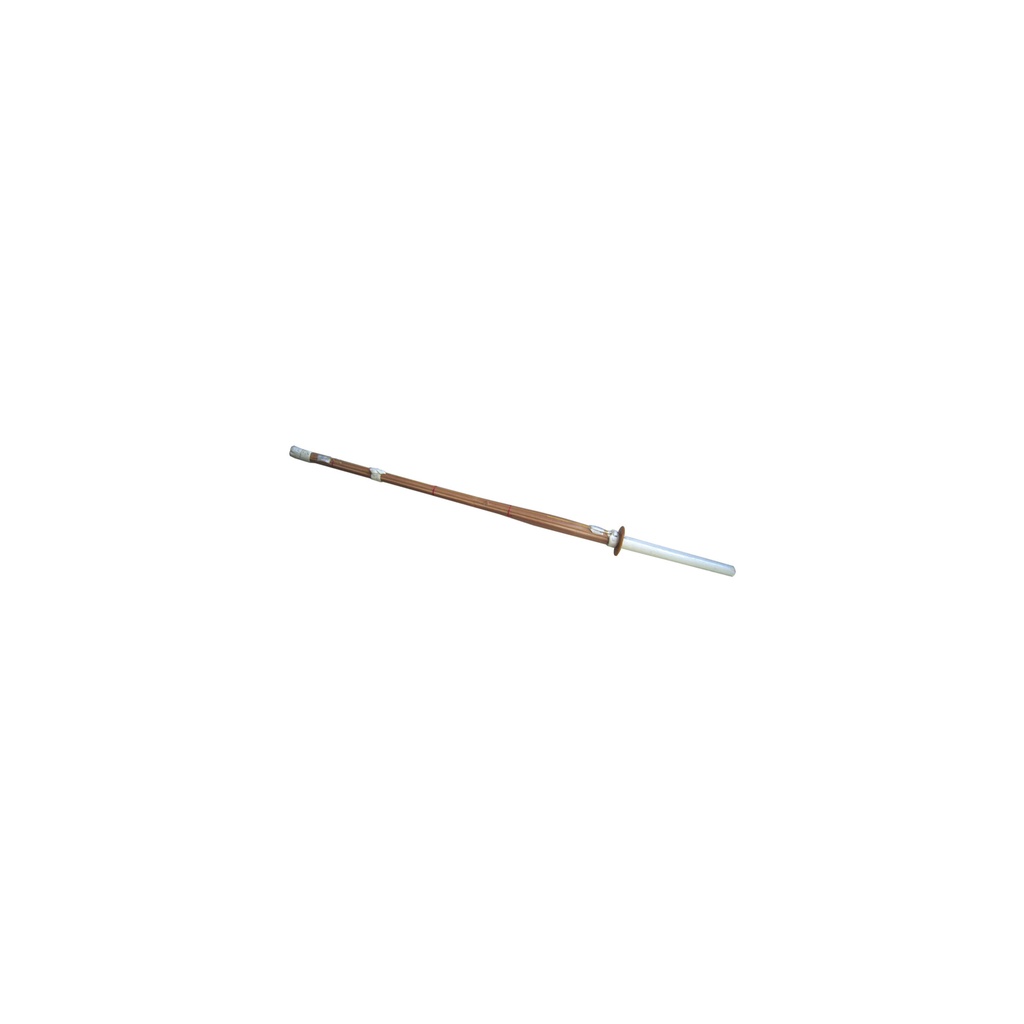
This isn’t a wall-hanger or a movie prop. The Dojo Rhythm Balanced Shinai Practice Sword - Natural Bamboo is a traditional kendo shinai built for honest training. Four segmented bamboo staves, a white safety tip, a round tsuba, and a leather-wrapped grip come together as a practice sword meant to be hit, blocked, and swung again. If you’ve ever stepped into a dojo in Texas or anywhere else, you’ll recognize it on sight.
Unlike a steel katana or a decorative sword, a shinai is made to take contact. It’s light, forgiving on impact, and meant for full-speed strikes in armor. This one follows that formula closely: straight, slightly tapered bamboo, secured bindings, and fittings that favor function over flash. It’s the training tool kendo students actually use when they line up across the floor for drills and sparring.
Shinai Practice Sword Mechanics: How It’s Built to Work
A shinai practice sword doesn’t cut—it teaches. The segmented natural bamboo body flexes on impact, spreading force instead of concentrating it along an edge. That’s why kendo can be practiced at speed and still stay inside dojo safety standards. Every strike carries sound, feedback, and consequence, but not the sharp danger of a live steel blade.
Segmented Bamboo That Feels “Alive”
The heart of this shinai is its natural bamboo. Four staves are shaped, matched, and bound so they track as a single blade in the air, then separate just enough on impact to absorb and release energy. That’s where the feeling of a “living” practice sword comes from—flex, sound, and rebound instead of dead weight.
Grip, Guard, and White Tip Details
The leather-wrapped grip sits light and sure in the hand, whether you’re a Texas beginner learning your first suburi or a seasoned club regular running endless men and kote drills. The round tsuba marks the hand line and keeps fingers safely behind the striking line, the same way a guard would on a live sword. The white tip makes tracking cleaner—students and instructors can see the line of the cut, check angle, and correct form without slowing down.
How a Shinai Practice Sword Differs from a Knife or Sword
Folks who collect automatic knives, OTF knives, or even classic switchblades know mechanisms matter. With a shinai, the mechanism isn’t a spring or button—it’s the way bamboo, binding, and flex all work together as a training system. This isn’t an automatic knife you’d carry in your pocket, and it’s not a steel sword you’d mount over the fireplace. It’s a dedicated practice sword built so you can swing full power at a partner in armor and both of you walk away ready for the next round.
Collector-minded Texans who already own side-opening automatics, OTF knives, or vintage switchblades often add a shinai practice sword for a different reason: to appreciate blade work as a discipline, not just a mechanism. Steel knives focus on edge and deployment. A shinai focuses on line, timing, and distance. They all belong in the same conversation about edged tools, but they play different roles on the ranch, in the shop, and in the dojo.
Texas Dojo Life: Training, Clubs, and Space
Texas has room to move—wide yards, big garages, and long drives. That same space turns out to be perfect for kendo practice. A shinai practice sword like this dojo-length bamboo build fits right into Texas martial culture: formal enough for a proper dojo, tough enough for garage training, and simple enough that students don’t have to baby it.
Instructors setting up kendo clubs in Texas need gear that can hold up to repeated class nights and weekend practices. This shinai is aimed squarely at that reality. Natural bamboo stands up to regular contact, the leather grip settles into your hand with sweat and time, and the white tip stays visible under fluorescent dojo lights or in a home training corner.
Texas Law Context: Shinai vs. Live Blades
Texas knife and sword laws focus on live steel, carry length, and where you can bring a bladed weapon. A shinai practice sword sits in a different category for most practical purposes: it’s a training tool, not a sharpened weapon. You’re not sliding this into a boot or clipping it next to your automatic knife; you’re slinging it over your shoulder in a gear bag headed for the dojo, a martial arts school, or a training meetup.
Texans who already know the rules around carrying an OTF knife or a switchblade in public usually treat the shinai like any other sports equipment—transported to and from practice, used in the right setting, and stored at home. It’s part of a training kit, not your everyday carry.
Collector Value: Why a Shinai Belongs Beside Your Knives
If your collection is already heavy with side-opening automatic knives, out-the-front knives, and a few hard-to-find switchblades, a natural bamboo shinai practice sword like this one adds a different kind of depth. It represents the training side of the blade world: footwork, discipline, repetition, and respect for what a real edge can do.
The visual is clean and traditional—natural bamboo, pale fittings, and a quiet profile. It doesn’t compete with Damascus patterns or anodized aluminum handles. Instead, it sets off your collection by showing that you understand more than just springs and lock-ups. You understand why people train with something safe before they earn the right to handle something sharp.
Built for Repetition, Not Just Display
Some swords are bought to hang and never move. This shinai practice sword is built for the opposite: thousands of cuts, blocks, and sparring exchanges. The bindings, tip, and grip are all chosen to survive that rhythm. For a Texas buyer, that reliability matters just as much as blade steel does on a favorite automatic knife.
What Texas Buyers Ask About Shinai Practice Swords
How does a shinai compare to automatic knives, OTF knives, and switchblades?
A shinai practice sword doesn’t have a deployment mechanism at all—no springs, no button, no side-opening action like an automatic knife, no straight-out motion like an OTF knife, and nothing that fits the legal idea of a switchblade. Instead, the “mechanism” is the four-piece bamboo body and bindings that flex on impact. If your interests run from folders and automatics to traditional sword work, the shinai sits on the training end of that spectrum, not the carry end.
Is it legal to own and train with a shinai in Texas?
Texas law is strictest about live blades, especially when carried in public or into restricted locations. A shinai practice sword is unsharpened bamboo designed for martial arts, so it’s generally treated more like sports gear than a weapon. That said, common sense still applies: transport it in a gear bag to and from your Texas dojo, don’t swing it around in public spaces, and respect any posted rules at schools, events, or venues.
Is this shinai practice sword suitable for beginners and club use?
Yes. The dojo-length balance, natural bamboo construction, and leather-wrapped grip make it right at home in a Texas kendo club, a university martial arts program, or a small-town dojo. The white tip gives instructors a clear read on cut lines, and the forgiving impact makes it appropriate for beginners in armor and more advanced students drilling full power. It’s a club-ready workhorse, not a fragile showpiece.
Closing: A Texas Take on Training Steel and Bamboo
Owning a Dojo Rhythm Balanced Shinai Practice Sword - Natural Bamboo alongside your automatic knives, OTF knives, and switchblades says something clear: you don’t just collect edge and action, you understand the work that goes into earning them. In Texas, where folks still respect a good blade and a good practice session, this kind of shinai fits right in—quiet, capable, and built for the long haul from first drill to last bow.