Field Grade USMC AR-15 Owner’s Guide - Desert Camo
15 sold in last 24 hours
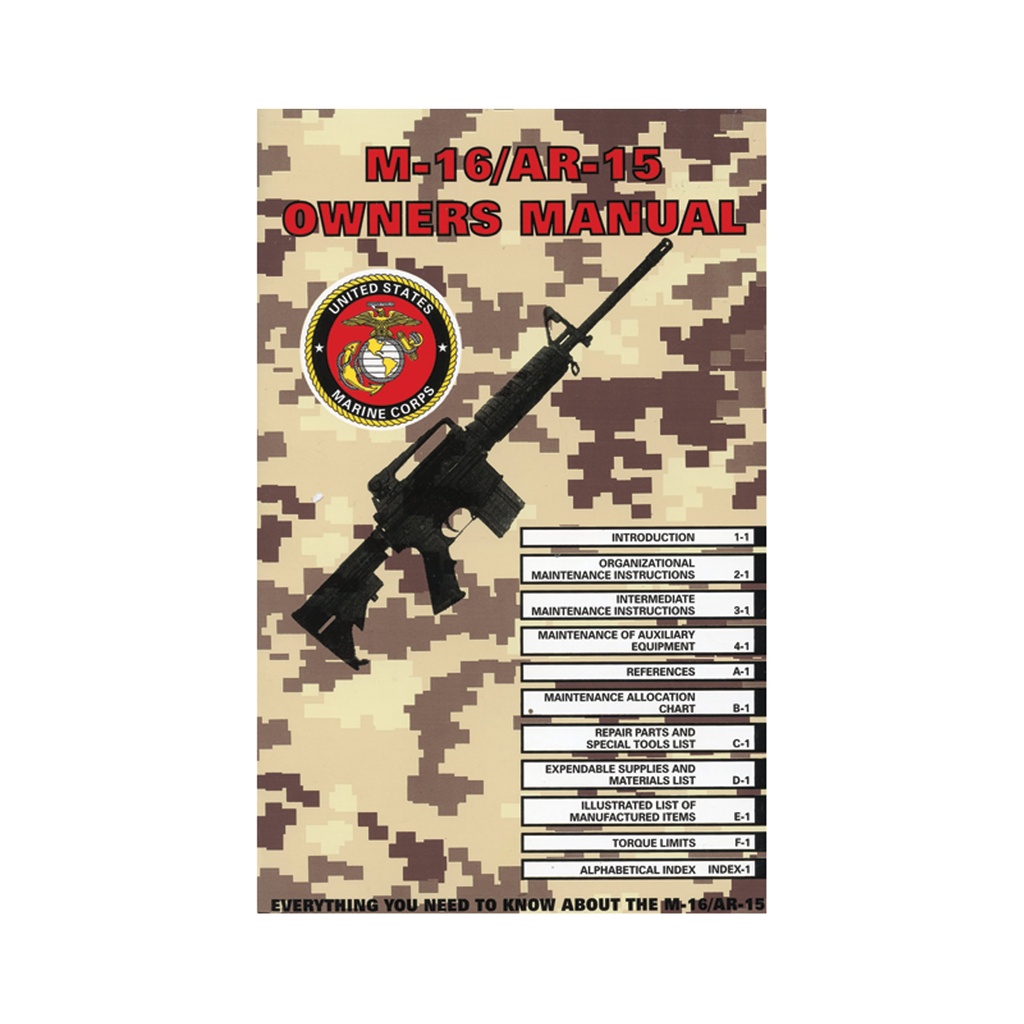
This Marine Field Armorer AR-15 Owner's Manual reads like having a USMC armorer at your Texas bench. Built around the M-16/AR-15 platform, it walks you through cleaning, inspection, repairs, reassembly, refinishing, torque specs, and tools in straight, no-nonsense language. The desert camo cover and Marine emblem signal what’s inside: field-tested knowledge for rifles that can’t afford a malfunction. Ideal for Texas shops, classes, and serious AR owners who’d rather do it right than ask twice.
What the Marine Field Armorer AR-15 Owner's Manual Really Is
This Marine Field Armorer AR-15 Owner’s Manual is not a coffee-table book and it’s not a generic pamphlet. It’s a bench manual modeled after USMC discipline for the M16/AR-15 family of rifles. If you own an AR in Texas and you treat it as more than a toy, this is the kind of straightforward, field-ready guide you want laying open next to the cleaning mat.
Instead of marketing fluff, you get step-by-step instructions on maintenance, inspection, repair, reassembly, refinishing, torque limits, parts, and tools. The desert digital camo cover and Marine Corps emblem aren’t decoration; they’re a promise that this manual was built from the mindset of an armorer who expects rifles to run when lives depend on it.
Inside the AR-15 Owner's Manual: Built Like a Marine Armorer Bench Guide
This AR-15 owner’s manual is laid out like a field technical reference, not a glossy gun-mag reprint. It keeps you focused on what matters: keeping an AR in Texas running clean, safe, and reliable.
Maintenance, Inspection, and Repair You Can Actually Follow
The manual breaks down the M16/AR-15 platform into logical sections. You get cleaning and lubrication guidance, inspection points that matter, and repair steps written like a seasoned Marine armorer is standing next to you. There’s no guesswork about which part goes where or what ‘good enough’ should look like.
Where other guides skim, this one leans in: pins, springs, gas system, upper and lower, bolt carrier group, furniture, and small parts are treated with proper respect. It’s the difference between ‘it runs for now’ and ‘it runs when it must.’
Tools, Torque Limits, and Parts Lists in One Place
Any serious AR-15 owner in Texas eventually builds or rebuilds a rifle. This manual does the unglamorous, essential work: listing armorer tools, torque specs, and complete parts breakdowns. That means fewer trips back and forth to the computer and fewer chances to over-torque, under-tighten, or order the wrong part.
It’s the kind of reference you keep out during a build, a deep clean after a long, dusty range day, or a pre-season inspection before that rifle rides in the truck all fall.
Why This AR-15 Manual Belongs on a Texas Bench
Texas doesn’t baby rifles. Between ranch dust, truck racks, hog hunts, and range weekends, an AR here sees more real use than most rifles in softer climates. This AR-15 owner’s manual fits that world. It expects you to shoot, carry, and maintain your rifle like a working tool.
For the Texas shop owner, instructor, or armorer, this manual is an easy upsell that actually helps your customers. Handing a buyer a rifle is one thing. Sending them home with a Marine-style guide to keep it running is another. It cuts down on ‘my gun stopped working’ calls and turns casual buyers into competent owners.
How an AR-15 Owner's Manual Fits Next to Automatic Knives and OTF Blades
On a serious Texas bench, the AR-15 sits right next to automatic knives, OTF knives, and classic switchblades. Different tools, same mindset: mechanical respect. This manual fits into that world without confusion because it knows its lane.
An automatic knife snaps open with a spring; an OTF knife rides a track and fires straight from the handle; a traditional switchblade is a side-opening automatic with its own history. This book isn’t about blades at all—but if you’re the kind of Texas buyer who cares about those distinctions, you’ll appreciate the way this manual treats the M16/AR-15 platform with the same kind of precision.
It’s not a ‘tactical lifestyle’ prop. It’s a working reference, like a good edge on a hard-used knife.
Texas Law, AR-15 Ownership, and Responsible Reference Material
Texas law has loosened up on knives—automatic knives, OTF knives, and many traditional switchblades are now legal to own and carry in most situations. Rifles live in a different lane of Texas law, but they share the same core expectation: if you’re going to own them, you ought to know what you’re doing.
This AR-15 owner’s manual doesn’t talk statutes or court cases. What it does is help you hold up your end of the responsibility. A clean, properly maintained rifle is safer, more predictable, and less likely to malfunction when you need it. In a state where rifles ride in ranch trucks and sit behind pickup seats, that matters.
Texas collectors and shooters respect knowledge. Whether you’re setting an automatic knife next to a well-built carbine or sorting OTF knives and switchblades in a display case, the same rule applies: understand the mechanism, respect the tool. This manual is how you do that with the AR platform.
Collector Value: Why a Texas Rifleman Keeps This Manual
For the Texas collector who already knows their way around an AR-15, this Marine Field Armorer manual earns its shelf space. It’s not trying to replace factory documentation; it’s adding a Marine-tested layer of clarity on top of it.
If you run multiple uppers, several lowers, or a small stable of AR-15s and M16-pattern rifles, having a dedicated armorer reference you can hand to a buddy, a student, or a new shooter is worth more than another accessory in a drawer. This camo-covered manual looks at home in a shop, on a range counter, or in a reloading room.
It’s the kind of piece that quietly proves you care more about the rifle’s long life than its latest paint job.
What Texas Buyers Ask About the AR-15 Owner's Manual
Is this AR-15 manual as detailed as a military armorer guide?
It’s modeled on the way a Marine armorer thinks: step-by-step, methodical, and focused on reliability. You get maintenance, inspection, repair, reassembly, refinishing notes, and tool and parts references in one place. It’s not a dry government spec book, but it covers the real work an AR-15 owner or shop in Texas actually does—right down to torque limits and parts lists.
Is it legal to own this AR-15 manual in Texas, and does it affect how I store or carry my rifle?
Owning an AR-15 owner’s manual like this is fully legal in Texas. It doesn’t change how the law treats your rifle; it just helps you maintain it correctly. For carry and transport, you still follow Texas and federal firearm laws. This manual simply makes you a more informed owner, the same way a good automatic knife guide doesn’t change whether you can carry the knife, it just helps you take care of it.
Who actually needs this manual—new AR-15 owners or experienced Texas shooters?
Both. A new AR-15 owner in Texas gets clear, no-nonsense guidance instead of forum guesses. A seasoned shooter or collector gets a bench reference that saves time when maintaining multiple rifles, teaching someone the platform, or doing deeper repair work. If you’ve got an AR that sees real use—range, ranch, hunt, or duty—this manual earns its keep.
In a Texas world where automatic knives, OTF knives, and classic switchblades share the same drawer as a hard-running AR-15, serious owners know one thing: respect the mechanism. The Marine Field Armorer AR-15 Owner’s Manual is how you show that respect on the rifle side of your collection. Plain-spoken, field-minded, and built to be used, it’s the kind of reference a Texas collector leaves out on the bench, not hidden on a shelf.