Frontier Gentleman Twin-Blade Pocket Knife - White Bone Damascus
13 sold in last 24 hours
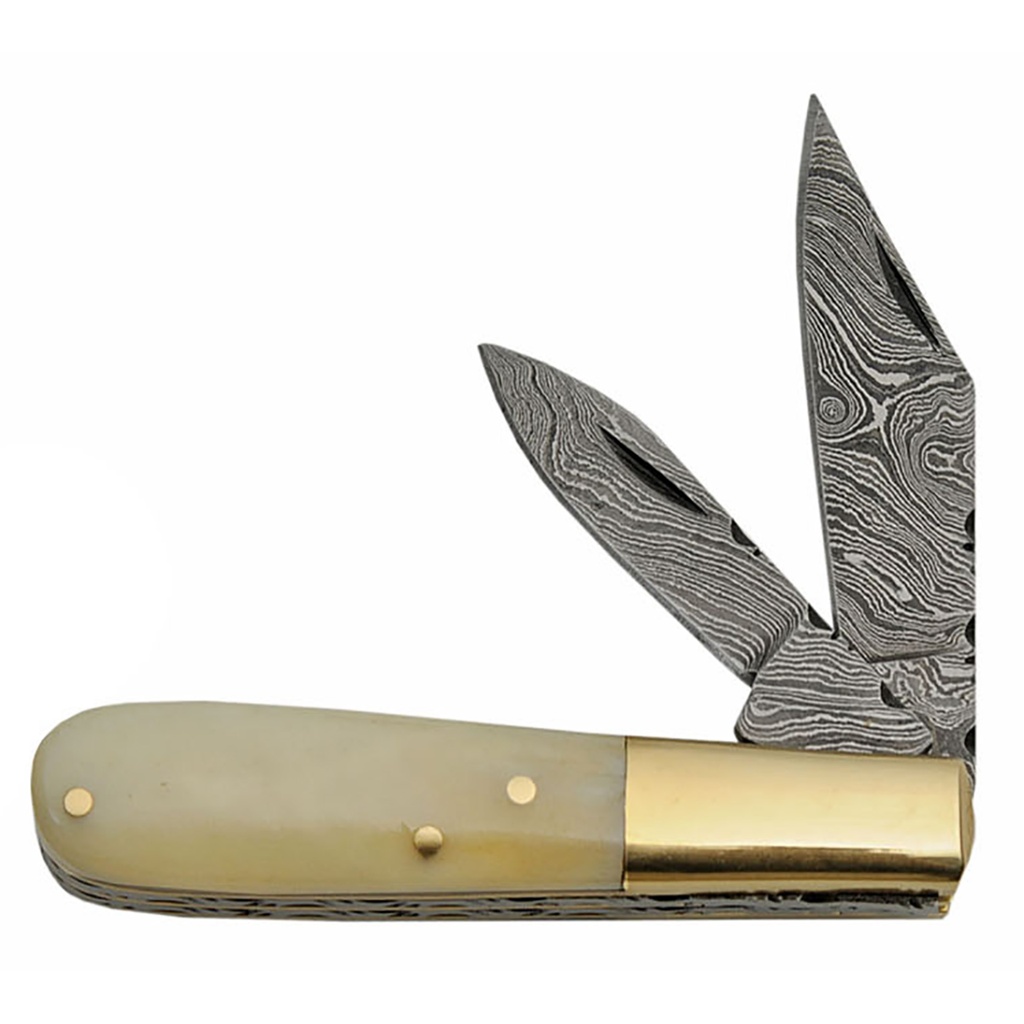
This Damascus pocket knife is a traditional slipjoint built for Texans who still appreciate a proper gentleman’s blade. Two hand-opening blades—clip point and pen—ride in a compact 3.5" frame with smooth white bone scales, brass bolster, and fileworked brass liners. It’s not an automatic knife, OTF knife, or switchblade; it’s the classic pocket knife you drop in your jeans before heading out to the lease, courthouse, or feed store—quietly upgraded in Damascus and bone for the collector who notices details.
Damascus Pocket Knife Built the Old Texas Way
This twin-blade Damascus pocket knife is a traditional slipjoint through and through. No springs, no buttons, no drama—just two nail-nick blades that open the way Texans have carried pocket knives for generations. Where an automatic knife snaps open with a spring and a switchblade or OTF knife uses a button or slider, this one relies on your thumb and a good, solid backspring.
For a Texas collector, that matters. This isn’t trying to be an automatic knife in disguise or an OTF knife without the slider. It’s an honest, manual slipjoint pocket knife dressed up with Damascus steel blades, a white bone handle, and brass appointments that look right at home from Hill Country to the High Plains.
Frontier Gentleman Twin-Blade Pocket Knife Details
Two Damascus Blades, Two Jobs
This pocket knife carries two Damascus steel blades: a larger clip point and a smaller pen blade. The clip point is your everyday cutter—from opening feed sacks to trimming leather. The pen blade handles finer work: cutting twine, sharpening a pencil, or working in tight spots where a full-sized blade would feel clumsy.
Both blades are manual open with nail nicks, riding on a slipjoint mechanism. That means you get a firm backspring snap without a locking system or any automatic knife hardware. The Damascus patterning across both blades gives you that layered, rippled look collectors expect when they hear the word "Damascus," instead of a plain satin blade.
White Bone, Brass Bolster, and Fileworked Liners
The handle is smooth white bone pinned over brass liners, finished off with a polished brass bolster. That combination—bone and brass—reads as classic Texas pocket knife from across the room. Along the spine, the brass liner filework adds a custom-shop touch you don’t see on most production slipjoint knives.
Closed, the knife measures about 3.5 inches. Open, you’re at roughly 6 inches overall. That’s true pocket size, not belt-brick. It fits right in the coin pocket of your jeans or the watch pocket of a pair of pressed slacks when you’re headed to town.
How This Pocket Knife Differs from Automatics, OTF Knives, and Switchblades
Texas buyers care about the difference between a manual pocket knife, an automatic knife, an OTF knife, and what most folks casually call a switchblade. This piece stays firmly in the traditional camp.
- Manual slipjoint: Both blades open with a nail nick and close against a strong backspring. No button, no switch, no lock.
- Not an automatic knife: There is no spring-powered opening. You provide all the opening force with your hand.
- Not an OTF knife: No blade sliding straight out the front, no thumb slider. This is a side-opening folding knife, like your granddad carried.
- Not a modern side-opening switchblade: While some folks use "switchblade" loosely, this knife doesn’t meet that description. It’s a traditional manual folder.
For a Texas collector trying to build a well-rounded roll—one row of OTF knives, one of automatic knives, and one of old-school slipjoints—this knife clearly belongs in the traditional manual column.
Texas Carry Reality for a Damascus Pocket Knife
Texas is friendlier to knives than it used to be, but most folks still like the comfort of a classic pocket knife that doesn’t raise eyebrows. A compact manual slipjoint with two blades, a bone handle, and brass bolsters looks more like a ranch tool or gentleman’s knife than anything tactical.
Because this knife is a manual folding pocket knife—not an automatic knife, not an OTF knife, and not a push-button switchblade—it fits into the most conservative reading of Texas knife culture. It rides easy in a front pocket, disappears into a tackle box, or tucks into a leather slip in your jacket without drawing the kind of attention that a big OTF knife might at the office or the courthouse.
Everyday Texas Uses
On a Texas ranch, this knife opens feed, trims twine, and cleans up odds and ends in the barn. In town, it’s the sort of Damascus pocket knife that cuts cigar tips, opens letters, and quietly reminds people you appreciate good steel and old patterns. It’s not the knife you grab for fast deployment like an automatic knife or OTF knife; it’s the one you reach for when you’ve got a minute and prefer doing things the slow, right way.
Collector Value: Damascus, Bone, and Filework
What earns this pocket knife a spot in a Texas collection isn’t just the Damascus blades. It’s the combination: twin Damascus steel blades, white bone scales, polished brass bolster, and fileworked brass liners. That filework alone gives it a custom look without a custom-shop price tag.
Serious Texas knife people often build out three lanes: modern automatics, OTF knives and tactical folders on one side, and traditional bone-handled slipjoints on the other. This piece lives in that traditional lane, but with enough Damascus drama to sit comfortably next to flashier automatic knife builds.
If you already own a row of modern switchblade-style automatics and a few OTF knives, this one brings balance: a calmer, more classic pocket knife that still feels special when you roll it open and see those layered Damascus lines.
What Texas Buyers Ask About This Damascus Pocket Knife
Is this considered an automatic knife, OTF knife, or switchblade in Texas?
No. This is a manual slipjoint pocket knife. Both blades open with a nail nick and simple hand pressure against a backspring. There’s no push-button, lever, or spring-powered mechanism like you’d find on an automatic knife or modern switchblade, and there’s no out-the-front sliding action like an OTF knife. For a Texas buyer keeping categories straight, this is squarely a traditional folding pocket knife.
How does Texas law generally treat a pocket knife like this?
Texas has loosened many knife restrictions, and a small manual pocket knife like this is about as conservative as it gets. It’s not an automatic knife, not an OTF knife, and not a switchblade with a firing button—just a regular folding pocket knife opened by hand. As always, Texans should check the latest state law and any local rules, but in terms of design and mechanism, this Damascus pocket knife is built to sit on the safe, traditional end of the spectrum.
Why would a collector pick this over a modern automatic or OTF knife?
A Texas collector doesn’t have to choose just one type. You buy an automatic knife or OTF knife when speed and mechanical novelty are the point. You pick up a knife like this when you want heritage: Damascus blades, bone handle, brass bolster, and slipjoint walk-and-talk. It fills the gap between your high-tech side-openers and OTF knives and the kind of pocket knife your grandfather might’ve carried, only dressed sharper for a modern collection.
For Texans Who Know Their Knives
This twin-blade Damascus pocket knife is for the Texan who can tell the difference between a switchblade, an OTF knife, an automatic knife, and a true slipjoint without reaching for a glossary. It doesn’t try to be tactical. It doesn’t pretend to be an automatic. It’s a small, honest folding pocket knife with Damascus blades and white bone scales that feels as natural in a pearl snap shirt as it does in a suit coat.
If your collection runs from work-worn ranch knives to high-end automatics, this one settles in quietly between them—carried often, admired up close, and appreciated most by folks who know exactly what they’re looking at.