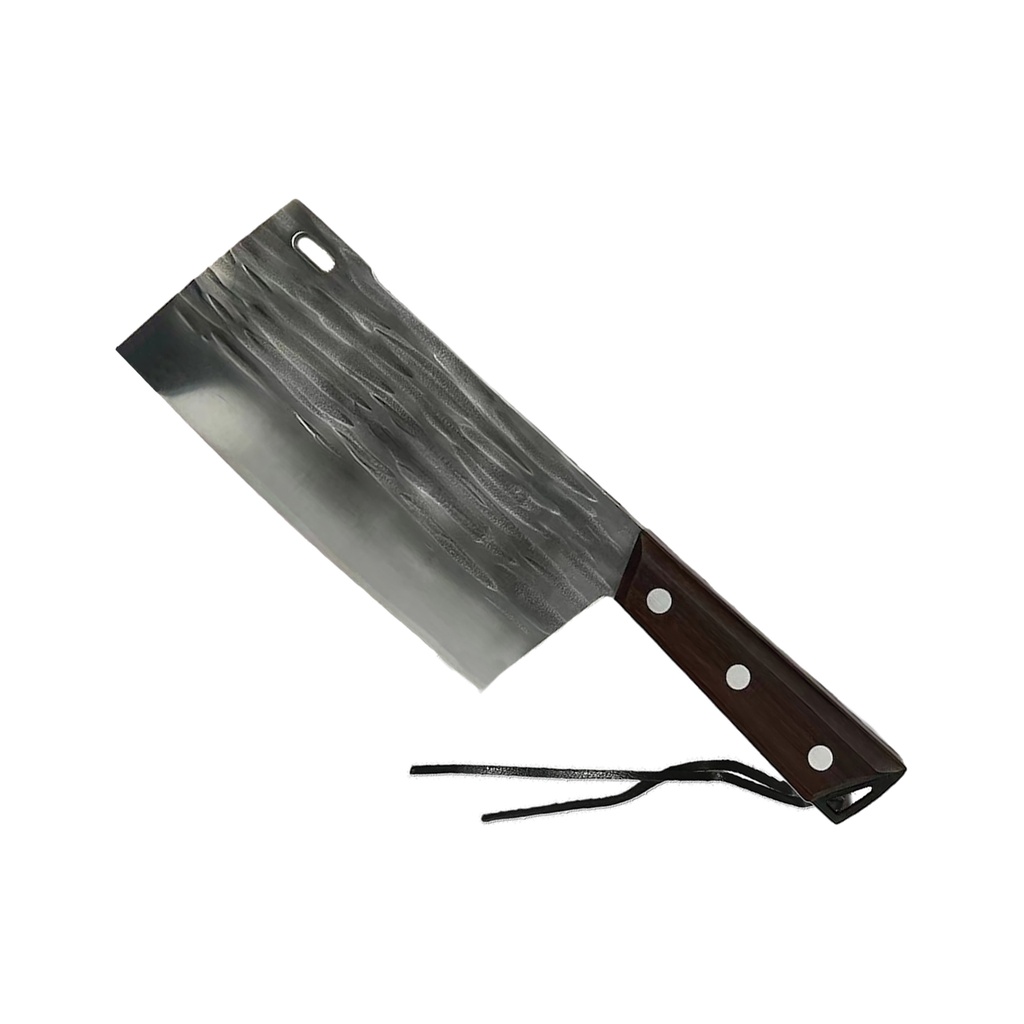
Full-Wave Forge Butcher Meat Cleaver Knife - Brown Pakkawood
7 sold in last 24 hours
This meat cleaver is built like a proper forged tool—no gimmicks, just steel and balance. The rippled 1080 high carbon blade drives cleanly through bone-in cuts and Texas-sized prep, while the full-tang brown pakkawood handle keeps your hand locked in. At 12.5" overall with a 7.75" working edge, it feels inevitable when it hits the board. For the Texas cook who runs a smoker on Saturday and a serious kitchen every day, this is the cleaver that earns its spot on the block.
| Blade Length (inches) | 7.75 |
| Overall Length (inches) | 12.5 |
| Blade Color | Silver |
| Blade Finish | Rippled |
| Blade Style | Cleaver |
| Blade Edge | Plain |
| Blade Material | 1080 high carbon steel |
| Handle Finish | Glossy |
| Handle Material | Pakkawood |
| Theme | Rippled Blade |
| Handle Length (inches) | 4.75 |
| Tang Type | Full Tang |
| Pommel/Butt Cap | Exposed tang |
What This Meat Cleaver Is—and What It Isn’t
This is a hand-forged meat cleaver knife with a full-tang build and a rippled 1080 high carbon steel blade. It doesn’t fold, it doesn’t flip, and it doesn’t pretend to be an automatic knife, OTF knife, or switchblade. It’s a fixed blade butcher tool meant to live on a cutting board or at a Texas smokehouse prep table, doing the heavy work that pocket knives were never meant to do.
At 12.5 inches overall with a 7.75-inch cutting edge, this cleaver trades tricks for torque. The blade’s full-wave forging texture tells you exactly what it is the moment you pick it up: a purpose-built meat cleaver meant to break down dense cuts, slice through racks, and keep pace with a long afternoon of prep.
Mechanics of a Fixed Blade Meat Cleaver Knife
Collectors in Texas know the difference between a fixed blade and any kind of automatic knife, OTF knife, or side-opening switchblade. This cleaver is as straightforward as it gets: a solid, full-tang slab of 1080 high carbon steel running from tip to pommel, pinned into a pakkawood handle. No springs, no buttons, no sliders—just a kitchen and butcher tool that’s ready the moment you reach for it.
Full-Tang Strength You Can Feel
The visible tang and triple-rivet construction give this meat cleaver the kind of backbone you want when you’re dropping it into bone, cartilage, or frozen sections. Where an automatic knife or OTF knife relies on internal tolerances and springs, a proper meat cleaver knife like this relies on blade geometry, mass, and a continuous run of steel. That full tang, combined with the 7.75-inch cleaver blade, turns downward pressure into clean, confident cuts.
1080 High Carbon Steel for Real Work
1080 high carbon steel has long been a working steel for blades that actually see daily use. In a meat cleaver, it means you can put a keen edge on it without babying the sharpening process, then bring it back quickly as your Texas cookouts and backyard brisket sessions stack up. This isn’t a stainless showpiece—it’s a tool meant to patina and tell its story in steel.
The Texas Kitchen Reality: Where This Cleaver Belongs
In Texas, the line between kitchen knife and outdoor tool blurs. One day this meat cleaver is riding the board next to a stockpot; the next it’s out by the smoker, turning whole packer briskets, ribs, and pork shoulders into clean, even portions. A fixed blade meat cleaver like this fills a different role than any automatic knife, OTF knife, or switchblade ever could—it’s about board work, not belt carry.
The brown pakkawood handle shines in that setting. It offers the warm feel of wood with better resistance to kitchen moisture and grease, and the glossy finish wipes clean without much fuss. On a crowded Texas prep table, the exposed tang with lanyard hole and cord gives you quick grab-and-go control when you’re juggling pans, cutting boards, and hot foil-wrapped meat.
Texas Law, Fixed Blades, and Where Knives Fit
Texas buyers are rightly careful about what’s legal to carry and where. This meat cleaver is a fixed blade kitchen and butcher tool, not an automatic knife, OTF knife, or switchblade, and it’s meant for home, ranch, or commercial kitchen use—on the board, not in the pocket.
Under Texas law, the big focus has been on how long a blade is and how it’s carried in public, especially with pocketable automatic knives, OTF knives, and traditional switchblades. A full-size meat cleaver knife like this naturally lives in the kitchen or at the pit. Treat it as a dedicated kitchen and barbecue tool, just like your other large fixed blades and chef’s knives, and you’ll stay in the clear and in control.
Collector Value in a Working Meat Cleaver Knife
Even if you collect automatic knives, OTF knives, and classic switchblades, there’s a place in a serious Texas collection for a forged meat cleaver that actually sees work. The rippled, full-wave finish on this blade sets it apart from the slick, machine-polished kitchen knives that all start to look the same on a rack.
Forged Texture with a Purpose
The rippled forging marks aren’t just decoration. They speak to blade stock that’s been worked under heat and pressure, giving the cleaver knife a bit more character and bite. Up top, that texture catches light like hammered metal; down low, the polished edge does the quiet job of parting meat and cartilage cleanly. For a Texas buyer who already understands mechanisms—who can tell an automatic knife from an OTF in one glance—this cleaver adds a different kind of story to the lineup: the story of steel that lives in the kitchen and at the pit.
Why This Cleaver Earns Its Spot on the Block
Between the 1080 high carbon steel, full-tang build, and pakkawood handle, this meat cleaver lands in that sweet spot: tough enough for bone work, refined enough to pull duty on finer prep. It’s the knife you reach for when your EDC automatic knife closes and the real work begins on the board. Owning a piece like this says you understand roles—pocket knives for carry, OTF and switchblade mechanisms for specific tasks, and a forged cleaver for the heavy lifting.
What Texas Buyers Ask About Meat Cleaver Knives
Is a meat cleaver knife anything like an automatic knife, OTF knife, or switchblade?
No. A meat cleaver knife is a fixed blade kitchen and butcher tool, not a folding or spring-driven mechanism. An automatic knife uses a spring to snap the blade open from the side at the push of a button. An OTF knife sends the blade straight out the front along a track. A traditional switchblade is a type of automatic knife. This cleaver doesn’t open or deploy—it’s already at full strength the second you pick it up off the board.
Is it legal to own and use a meat cleaver like this in Texas?
Yes. In Texas, owning and using a meat cleaver knife in your home, at your ranch, or in a commercial kitchen is standard practice. It’s treated like any other kitchen knife or butcher tool. The legal questions you hear most often—about automatic knives, OTF knives, and switchblades—have to do with public carry and blade mechanisms, not a board-bound meat cleaver you use for cooking. Use it where it belongs: on the block, at the pit, and in the kitchen.
Why would a knife collector in Texas care about a meat cleaver?
Because a serious Texas knife collection isn’t just about pocket clips and deployment tricks. A forged meat cleaver knife shows you understand the other half of the story: knives that live in the kitchen and earn their keep every day. If you already collect automatic knives, OTF knives, and switchblades, adding a full-wave forged cleaver rounds out your lineup with a tool that puts in real hours on beef, pork, and game. It’s a working anchor piece, not a drawer queen.
In the end, this meat cleaver knife fits right into a Texas life where briskets are big, meals are shared, and steel is expected to pull its weight. You can keep your automatic knives, OTF knives, and switchblades for carry and collection; this forged full-tang cleaver is for when the cutting board comes out, the fire’s already going, and you want a blade that feels inevitable the moment it hits the board.