Gatekeeper Spiked Medieval Battle Axe - Brown Wood
11 sold in last 24 hours
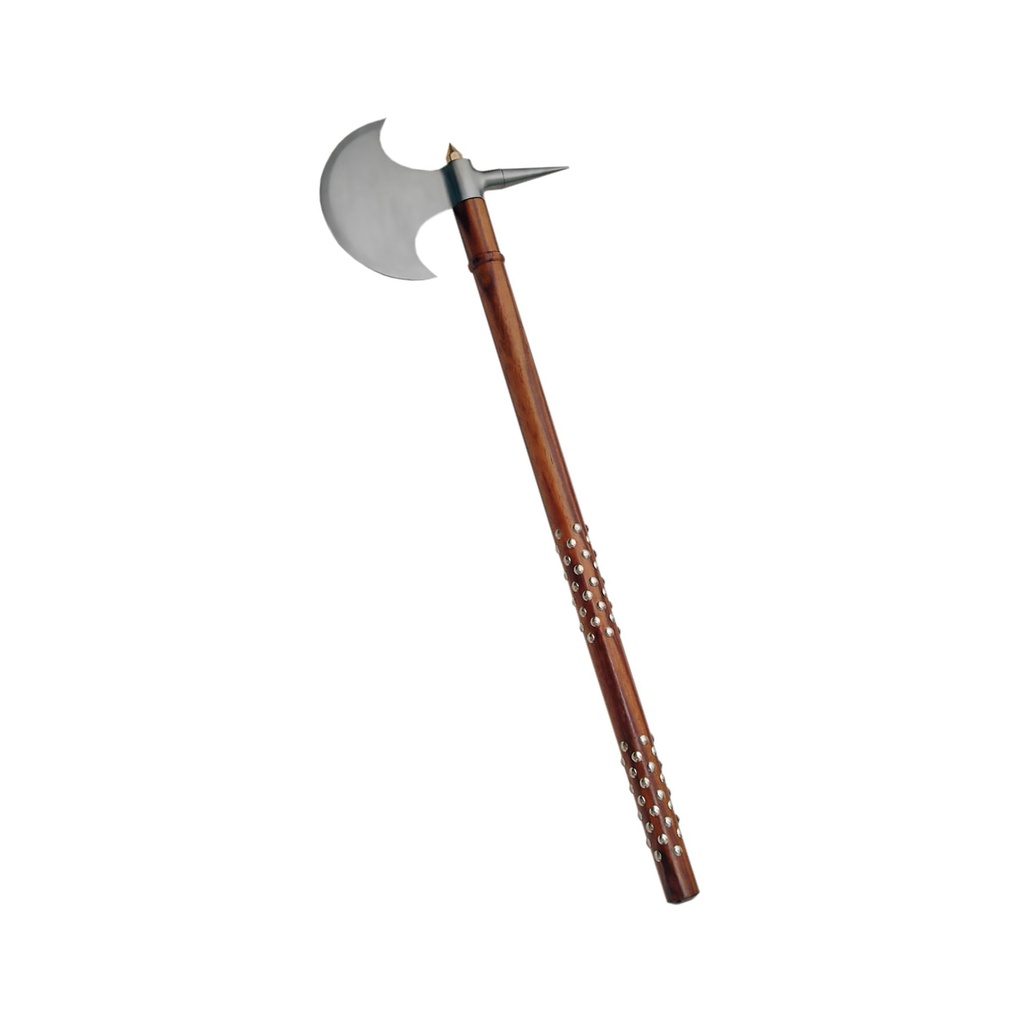
This spiked medieval battle axe looks like it just came off a castle wall. A 32-inch reach, crescent blade, and rear spike ride on a studded, two-handed wood handle that feels right at home in a Texas game room, shop, or armory-style display. It’s not a pocket knife, not an automatic, not an OTF—this is a full-length battle axe built for presence. For collectors, it’s the statement piece that sets the tone for the rest of the steel on the wall.
What This Medieval Battle Axe Really Is
This is a full-length spiked medieval battle axe, built on a 32-inch wood handle with a crescent blade and rear spike in polished steel. It isn’t an automatic knife, it isn’t an OTF knife, and it sure isn’t a switchblade. This is old-world steel meant for two hands, a wall mount, and a story. Texas collectors who keep their automatics, OTF knives, and switchblades in the case often reserve a spot on the wall for exactly this kind of centerpiece.
Spiked Medieval Battle Axe Mechanics and Feel
There’s no spring, button, or assisted mechanism here—just leverage and balance. The studded wood handle gives you a solid two-handed grip, with enough texture to stay put without looking tactical or modern. The crescent axe head does the visual talking, while the rear spike adds that fortress-ready profile collectors want from a medieval battle axe.
Knife folks in Texas who are used to quick-deploy automatic knives and OTF knives will notice the difference immediately. A switchblade lives in your pocket; this battle axe lives on your wall or in your hand for demonstrations, cosplay, or reenactment. Same love of steel, different purpose.
Head Design: Crescent Blade with Rear Spike
The polished steel head runs a classic crescent shape on the business side, with a defined cutting edge line that catches light from across the room. Opposite that, the rear spike brings a war-axe presence—more fortress rampart than ranch tool. For a Texas collector who already owns modern tactical blades, this medieval profile fills a gap nothing automatic or OTF knife can touch.
Two-Handed Studded Wood Handle
The handle is long, warm-stained wood with visible grain and rows of metal studs set for grip and visual punch. It’s sized for a genuine two-handed hold, but it’s just as comfortable hung vertically beside rifles, swords, or framed Texas memorabilia. A pocket switchblade hides until you need it; this axe is meant to be seen all the time.
How This Battle Axe Fits a Texas Collection
Most Texas knife collectors start with folders—automatic knives for quick deployment, maybe an OTF knife or two for the mechanical novelty, and a classic switchblade because every serious collection has one. A medieval battle axe like this steps outside the pocket and onto the wall, tying the whole room together with a piece that looks like it belongs in a stone keep instead of a glove box.
In a Texas game room, bar area, or office, the first thing most visitors will spot is the polished crescent head and rear spike. They’ll ask about the axe before they ask to see your automatics or your favorite OTF. That’s the job of a statement piece: it anchors all the quieter blades you own.
Display, Cosplay, and Reenactment Ready
This spiked medieval battle axe works naturally as a display weapon, cosplay prop, or stage piece. It has the look of steel that guarded castle gates, with enough presence to stand beside fantasy swords or historical reproductions. Collectors who already have a lineup of automatic knives, OTF knives, and switchblades will recognize this as the big visual exclamation point in the room.
Texas Law, Knives, and Where a Battle Axe Sits
Texas has loosened up a lot over the years when it comes to knives. Automatic knives, OTF knives, and traditional switchblades are now broadly legal to own and carry for most adults, with some location-based exceptions. This battle axe lives in a different world: it’s not a pocket carry tool, it’s a display or home/land decor weapon. That alone pulls it out of the everyday carry conversation and into the realm of responsible ownership and common sense.
Inside a Texas home, shop, or private collection, a medieval battle axe like this is typically treated like any other decorative weapon—display it safely, mount it securely, and keep it out of reach of kids. When you take it outside, treat it the way you’d treat a visible long gun or sword in public: know your local ordinances, understand context, and remember you’re carrying something built to draw eyes.
What Texas Buyers Ask About Medieval Battle Axes
How does a medieval battle axe compare to an automatic or OTF knife?
Mechanically, they’re worlds apart. An automatic knife or switchblade uses a spring and a button or lever to snap the blade open from the side; an OTF knife drives the blade straight out the front of the handle using an internal track and spring. This medieval battle axe has no modern deployment at all—what you see is what you get. The steel head is fixed to a long wooden shaft. For a Texas collector, the axe isn’t competing with an OTF or automatic; it’s complementing them by giving your collection a historical and visual anchor.
Is owning or displaying a medieval battle axe legal in Texas?
Owning a medieval battle axe as part of a collection or display is generally legal in Texas, just as owning automatic knives, OTF knives, and switchblades is legal under current state law for most adults. Where the law tightens up is in specific locations and context—schools, certain government buildings, and other restricted areas have their own rules. For a home display piece, hung on the wall or kept in a private armory-style room, Texas collectors usually focus less on carry law and more on safe, secure mounting and responsible storage.
Why would a serious knife collector add a battle axe?
Because a collection built only on pocket steel can start to look the same, even when you’re rotating through OTF knives, automatics, and different switchblades. A spiked medieval battle axe breaks that pattern. It brings height, wood, and a different kind of steel geometry into the room. It shows that you’re not just buying mechanisms—you’re curating a story. For a Texas buyer, it’s the piece that says, “I know my modern knives, and I also know where they came from.”
Why This Piece Earns Its Place in a Texas Armory
The Fortress Edge-style profile—crescent blade, rear spike, studded wood handle—lands this spiked medieval battle axe firmly in the "seen and remembered" category. It sits alongside your favorite automatic knives and OTF knives not as competition, but as context: this is what edged weapons looked like long before buttons, springs, and front-deploy tracks showed up.
For the Texas collector who knows the difference between an automatic, an OTF, and a switchblade, this axe scratches a different itch. It’s not about quick draw or pocket legality. It’s about stepping back a few centuries, putting something worthy on the wall, and letting the steel do the talking without a single word of explanation.