Heritage Barrage Knuckle-Guard Assisted Trench Knife - Gold
6 sold in last 24 hours
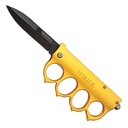
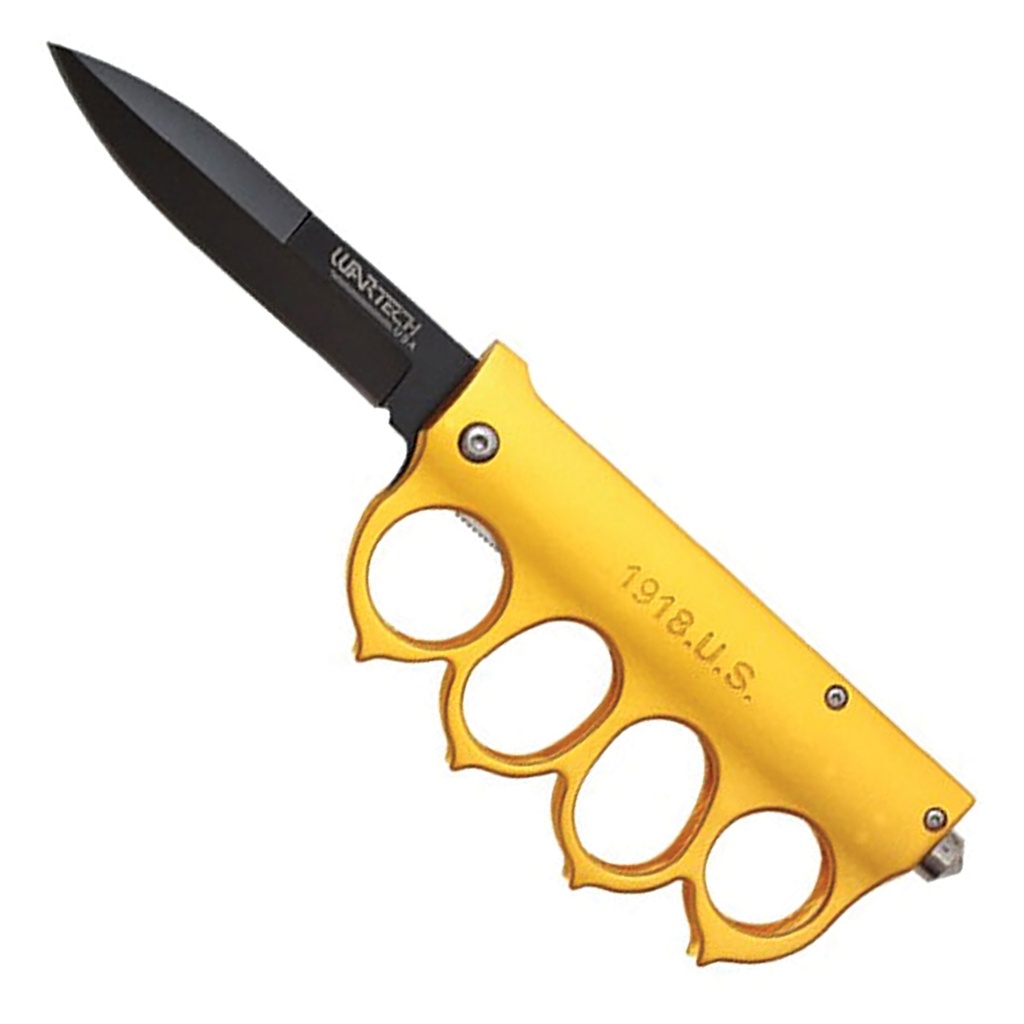
This assisted opening trench knife brings the classic 1918 knuckle-guard profile into a fast, modern pocket build. A gold metal handle with four finger holes, “1918 U.S.” engraving, and a black dagger blade give it instant display value, while the spring-assisted mechanism snaps it open with a firm nudge. It isn’t an OTF or a switchblade; it’s a side-opening assisted knife that Texas collectors will recognize on sight and reach for when they want heritage with everyday bite.
| Blade Color | Black |
| Blade Finish | Matte |
| Blade Style | Dagger |
| Blade Edge | Plain |
| Handle Finish | Matte |
| Handle Material | Metal |
| Theme | Trench Knife |
| Pocket Clip | No |
| Deployment Method | Spring-assisted |
What This Assisted Trench Knife Really Is
The Heritage Barrage Knuckle-Guard Assisted Trench Knife - Gold starts with a simple truth: this is a spring-assisted folding knife built in the shape of a 1918 trench knife. It looks like the old fixed-blade knuckle trench knives from the Great War, but it behaves like a modern assisted opening pocket knife. That distinction matters if you’re a Texas buyer who cares about how an automatic knife, an OTF knife, and a switchblade are each treated under the law and in your collection.
This piece is not an OTF knife. The blade doesn’t fire straight out the front. It’s also not a traditional automatic knife or classic switchblade where a button kicks the blade out on its own. Instead, you thumb the blade open, the internal spring takes over, and the dagger-style blade snaps into place. That assisted opening mechanism keeps it firmly in the assisted category while letting you enjoy the aggressive trench-knife look and knuckle-guard feel.
Assisted Trench Knife Mechanics for Texas Collectors
Mechanically, this assisted trench knife is a side-opener with spring help, not a push-button automatic knife. You start the motion; the spring finishes it. For a Texas collector who owns a few autos, maybe an OTF knife or two, and at least one old-school switchblade, that difference is more than just trivia. It’s the reason this knife rides differently in your rotation.
The black matte dagger blade folds out from the gold knuckle-guard handle, pivoting from the side like any other assisted knife. No firing button, no front-opening mechanism, no confusion. You get the feel of a fast knife without stepping into full automatic or OTF territory. That makes it a smart bridge piece for someone who likes the romance of a switchblade and the mechanical intrigue of an OTF knife but wants a simpler assisted opener with trench-knife attitude.
Knuckle-Guard Handle, Pocket-Ready Format
The visual hook is the knuckle-guard handle: four finger holes, a bold gold finish, and that "1918 U.S." engraving that tells you exactly what era it’s channeling. Unlike the original fixed-blade trench knives, though, this one folds. The glass-breaker style point at the base and the exposed hardware keep the tactical look honest, while the assisted opening keeps it practical.
There’s no pocket clip, which fits its role: this is the knife that lives in a bag, glove box, or display case, then gets carried when you feel like making a statement. The knuckle-guard gives you a secure grip when deployed, and the dagger blade profile suits light cutting, opening boxes, or just flipping open for conversation around a Texas gun show table.
Dagger Blade Look, Everyday Use Reality
The dagger-style blade here is about presence as much as performance. Twin edges in appearance, black matte finish, and a clean plain edge give it that trench-knife silhouette. It’s not a bayonet, not a fighting-issue spear; it’s an assisted opening trench knife built for collectors who want a piece of that history in the pocket-size world.
In a drawer full of modern automatic knives and a couple of well-worn switchblades, this assisted trench knife stands out because it looks like it shouldn’t fold—and then it does, smoothly, every time.
Texas Context: Carrying an Assisted Trench Knife
In Texas, the story around blades has changed a lot in the past decade. Larger blades and more types, including many automatic knives and even some switchblades, have found a place under Texas law. An assisted opening trench knife like this one fits comfortably in that world: side-opening, spring-assisted, and clearly distinct from an OTF knife that fires straight out or a push-button automatic that’s classically called a switchblade.
This isn’t a legal opinion, and any serious Texas collector already knows to check current Texas statutes and local rules before carrying a knuckle-guard style piece. But from a mechanism standpoint, you’re dealing with an assisted knife—no hidden release, no mystery about how it operates. That clarity is exactly what Texas knife buyers look for when they’ve been burned by vague product pages that call everything a switchblade.
Where It Belongs in a Texas Carry Setup
This assisted trench knife is not your slim Sunday-pocket gentleman’s folder. It’s the glove-compartment companion on a West Texas highway run, the bag knife at a Hill Country lease, or the piece you drop into a jacket pocket when you’re headed to a show in Houston or Dallas. It sits alongside your true automatic knife, your OTF knife curiosity, and that one old switchblade you’ll never sell.
It’s big on presence, realistic on use, and honest about what it is: an assisted opener dressed in trench-knife clothes.
How It Differs from an Automatic Knife, OTF Knife, or Switchblade
If you collect across categories, you already feel the difference in your hand long before you use the terms. An OTF knife gives you that straight-line track and distinctive sound as the blade rides its rails. A classic automatic knife or switchblade jumps to life with a button, side-opening in an instant. This 1918-style assisted trench knife asks for a thumb nudge first.
That one step changes the whole equation. You’re still faster than a manual folder, but you’re not dealing with the internal complexity of a double-action OTF knife or the button-and-spring relationship of a traditional automatic switchblade. For a Texas buyer, that keeps this knife in the sweet spot: dramatic enough to show, simple enough to use, and easy to explain when someone asks, “Is that a switchblade?” You can say, plainly, "No, it’s an assisted opening trench knife," and you’ll be right.
Collector Position in a Three-Knife-Type Collection
Lay out three blades on a Texas kitchen table: a side-opening automatic knife, a double-action OTF knife, and this assisted trench knife. The auto wins on classical switchblade charm. The OTF wins on mechanical curiosity. This assisted trench knife wins on story.
The "1918 U.S." engraving and knuckle-guard handle tell a heritage story that the others simply can’t. It looks like something a doughboy might have carried, but it opens like the assisted knife you already know how to use. That blend of history and modern mechanism is what gives it staying power in a serious collection.
What Texas Buyers Ask About Assisted Trench Knives
Is this an automatic knife, an OTF knife, or a switchblade?
This is a spring-assisted opening knife, not an OTF knife and not a classic automatic switchblade. The blade pivots from the side like a regular folder. You start the opening with your thumb, then the internal spring kicks in and snaps it open. There’s no button like on an automatic knife and no straight-out-the-front action like on an OTF. For Texas collectors, that puts it firmly in the assisted opening category—easy to distinguish once you’ve flipped it a few times.
Is this assisted trench knife legal to carry in Texas?
Texas has grown more permissive over the years with blade types, including many automatic knives and what most folks casually call switchblades. That said, laws can change, and knuckle-guard or brass-knuckle style features sometimes trigger different rules. Mechanically, this is an assisted knife, not an OTF knife or push-button automatic, but you should still check the current Texas statutes and any local restrictions before you make it a daily carry. Treat it like what it is: a heritage-style knuckle-guard assisted knife that deserves a little legal homework before it leaves the house.
Where does this fit in a Texas collection full of autos and OTFs?
Think of this piece as the story knife in a three-type collection. Your automatic knife and traditional switchblade cover the classic side-opening auto category. Your OTF knife scratches the mechanical itch. This assisted trench knife sits between them, offering a familiar assisted mechanism but with trench-knife styling and a bold gold finish that draws comments at every Texas gun and knife show. It’s the one you hand over when someone asks about your oddest piece that still sees real pocket time.
Why This 1918-Style Assisted Knife Belongs in a Texas Drawer
Owning the Heritage Barrage Knuckle-Guard Assisted Trench Knife - Gold says two things about you as a Texas knife buyer. First, you know your history. The 1918 trench knife lines, the knuckle-guard grip, and the dagger blade silhouette are all there on purpose. Second, you know your mechanisms. You can look a seller in the eye and explain why this assisted opening trench knife is different from an automatic knife, an OTF knife, or a switchblade—and you’ll be right.
That’s the kind of quiet authority Texas collectors respect. This knife isn’t trying to be everything at once. It’s a modern assisted trench knife that looks like it stepped out of a history book and into your pocket, filling a very specific spot in a collection that values both story and mechanical honesty.