Heritage Trail Curve Compact Kukri Knife - Wood Handle
5 sold in last 24 hours
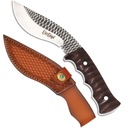
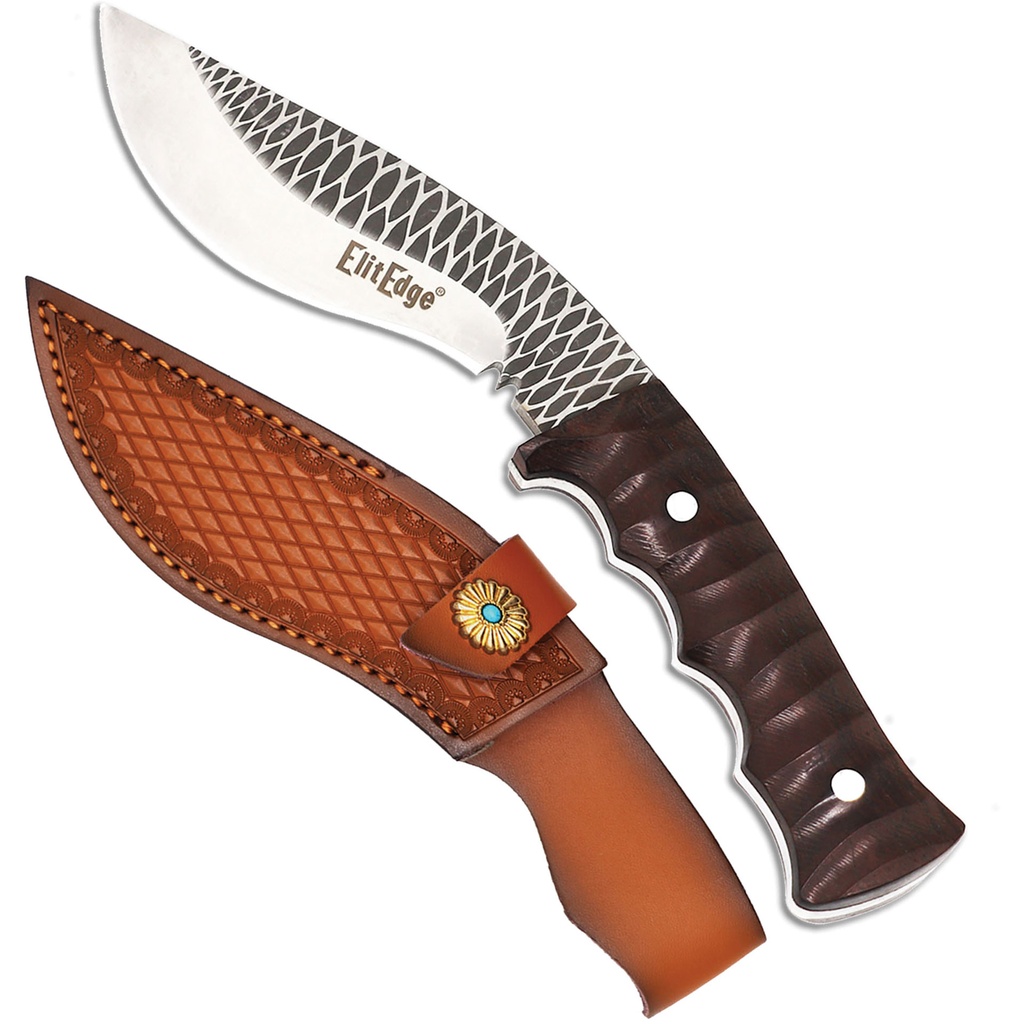
This compact kukri knife brings the heritage curve down to trail size without losing its bite. A 4-inch satin kukri blade in full-tang stainless does the chopping, splitting, and camp prep you’d expect from a bigger knife. Finger grooves in the polished wood handle lock your grip, while the basketweave leather sheath rides belt-high and ready. It carries like a small fixed blade, hits like a kukri, and feels right at home from Texas lease roads to high-country trails.
| Blade Length (inches) | 4 |
| Overall Length (inches) | 8.75 |
| Weight (oz.) | 7.91 |
| Blade Color | Silver |
| Blade Finish | Satin |
| Blade Style | Kukri |
| Blade Edge | Plain |
| Blade Material | Stainless steel |
| Handle Finish | Polished |
| Handle Material | Wood |
| Theme | Kukri |
| Handle Length (inches) | 4.75 |
| Tang Type | Full tang |
| Spine Thickness (inches) | 0.197 |
| Pommel/Butt Cap | Exposed tang |
| Carry Method | Belt loop |
| Sheath/Holster | Leather sheath |
Heritage Trail Curve: What This Compact Kukri Knife Really Is
The Heritage Trail Curve is a compact kukri knife built like a field tool, not a desk ornament. This is a fixed blade, full-tang kukri-style knife with a 4-inch satin stainless blade and a finger-grooved wood handle that fills the hand without taking over your belt. It doesn’t flip, it doesn’t spring, and it doesn’t pretend to be an automatic knife, an OTF knife, or a switchblade. It’s a traditional, belt-carried work knife with a heritage curve that does real cutting.
That forward-bellied kukri profile is what sets it apart from a straight field knife. You get more chopping power out front, better slicing in the belly, and a tip that still handles camp chores. For Texas buyers who already own an automatic or a favorite switchblade, this compact kukri knife fills the fixed-blade slot—where strength, not deployment speed, is the point.
Compact Kukri Knife Mechanics vs. Automatic, OTF, and Switchblade
Mechanically, this compact kukri knife is as simple and honest as it gets. Full-tang stainless steel runs from tip to exposed pommel. There’s no spring, no button, no slider. The blade doesn’t fold and doesn’t fire. That’s the fundamental difference between a fixed kukri knife like this and an automatic knife, an OTF knife, or a classic side-opening switchblade.
Fixed Blade Strength Where It Counts
Because the blade on this compact kukri is fixed, you’re not worrying about lock strength when you baton kindling or clear a branch. With an automatic knife or a switchblade, deployment is the story; with this kukri knife, the story is what happens after the cut starts. The 0.197-inch spine thickness and full-tang construction turn that 4-inch blade into a small but serious chopper.
How It Complements Your Autos and OTF Knives
If you already carry an automatic knife or OTF knife in your pocket for quick cuts and everyday tasks, this compact kukri sits on your belt as the heavy hitter. Think of your switchblade or automatic as the fast-draw scalpel; this kukri knife is the trail hatchet you don’t have to think twice about leaning on. Different tools, same collection.
Trail-Ready Design: Blade, Handle, and Sheath Details
The blade on this compact kukri knife runs 4 inches in satin-finished stainless steel with a plain edge and a traditional forward curve. That curve gives you three working zones: the heel for controlled carving, the deep belly for slicing and chopping, and the point for detail or starting notches. A subtle textured pattern near the spine adds visual interest without getting in the way of sharpening.
The handle is polished dark wood, shaped with finger grooves that index your grip. At 4.75 inches, it gives you a full, secure hold without feeling bulky on the hip. The exposed tang at the butt and dual holes offer options for a lanyard or field lashing.
Riding on the belt is a tooled leather sheath with basketweave texture and a floral concho on the snap strap. It’s classic trail gear: tan leather, belt loop carry, and a secure snap. No clips, no plastic, just leather that looks as at home on a Texas lease as it does on a mountain trail.
Kukri Knife Use in Texas: From Lease Roads to Creek Beds
Texas terrain asks a lot from a blade. Mesquite thorns, yaupon, and cedar don’t care what you paid for your knife. This compact kukri knife gives you a curve that bites into stubborn brush, trims small limbs, and still preps camp meals. It carries like a small fixed blade, so you’re not swinging a full-size kukri around the cab or the campsite.
For a Texas hunter who already pockets an automatic knife or a favorite switchblade for fine work, this kukri knife earns its belt space as the camp and trail companion. It’ll open feed bags, trim shooting lanes, and split kindling for a cook fire. That heritage kukri curve isn’t a gimmick; it’s a working profile that’s been earning its keep for generations, now scaled down for modern trail use.
Texas Law, Fixed Blades, and Where This Kukri Knife Fits
Texas law is friendlier to blades than most places, but it still pays to know the lines. While there’s a lot of attention on whether an automatic knife, OTF knife, or switchblade is legal to carry, this compact kukri knife sits in a different bucket: it’s a fixed-blade, belt-carried tool, not a spring-fired pocket piece.
As of recent Texas law changes, most restrictions focus on location and blade length rather than the automatic or switchblade mechanism itself. This compact kukri sits in the under-10-inch overall range with a 4-inch blade, making it a more manageable and less conspicuous field companion than a big fighting kukri. It’s built for ranch roads, leases, camps, and backyards, not for courthouse pockets.
This isn’t legal advice, and every buyer should confirm current Texas knife laws for themselves, but from a collector’s perspective, this kukri knife is clearly a fixed-blade field tool. It doesn’t blur into the automatic knife or switchblade categories that tend to raise more questions at the legal and social level.
What Texas Buyers Ask About This Compact Kukri Knife
Is a compact kukri knife like this the same as an automatic, OTF, or switchblade?
No. A compact kukri knife like this is a fixed blade, which means the blade is permanently extended and part of a full tang. An automatic knife uses a spring to open the blade from a closed position when you hit a button. An OTF knife (out-the-front) sends the blade straight out of the handle with a slider or button. A switchblade is a type of automatic, usually side-opening with a button release. This kukri doesn’t open at all—it’s already in working position, built for strength instead of speed.
Can I legally carry this compact kukri knife in Texas?
Texas law has grown more knife-friendly over time, but rules can change and certain locations still restrict bigger blades. This compact kukri knife, with its 4-inch blade and clear role as a field and trail tool, generally draws less attention than a large fighting kukri or a flashy switchblade or OTF knife. That said, you’re still responsible for knowing current Texas statutes and any local rules where you live or travel. Treat it like what it is: a working fixed-blade trail knife, not a concealed automatic.
Where does a compact kukri fit in a serious Texas collection?
For a Texas collector with a drawer full of automatic knives, OTF knives, and classic switchblades, this compact kukri knife occupies a different lane. It’s the heritage field piece—the one that goes on your belt when you actually leave the pavement. The curve makes it interesting enough for the display case, but the stainless full tang, wood handle, and leather sheath mean it’s meant to be used. It bridges Old World kukri tradition and modern Texas trail use in a size you’ll actually carry.
Why This Compact Kukri Knife Earns Its Place
In a world full of flippers, automatics, OTF knives, and dressy switchblades, the Heritage Trail Curve compact kukri knife stands out by going back to basics: a fixed blade with a purposeful curve, honest materials, and a sheath that looks right on a Texas belt. It doesn’t compete with your automatic knife; it complements it. One covers quick cuts, the other covers hard work.
For the buyer who knows the difference between a kukri knife, an automatic, an OTF, and a switchblade—and cares—this piece feels right. It’s the kind of knife that goes from deer lease to daypack without fuss, does the job, wipes clean, and hangs by the door ready for the next trip. That’s how a working Texan keeps knives: not as labels, but as tools that earn their keep.