Highland Knot Gentleman Sword Cane - Mirror Polished Aluminum
8 sold in last 24 hours
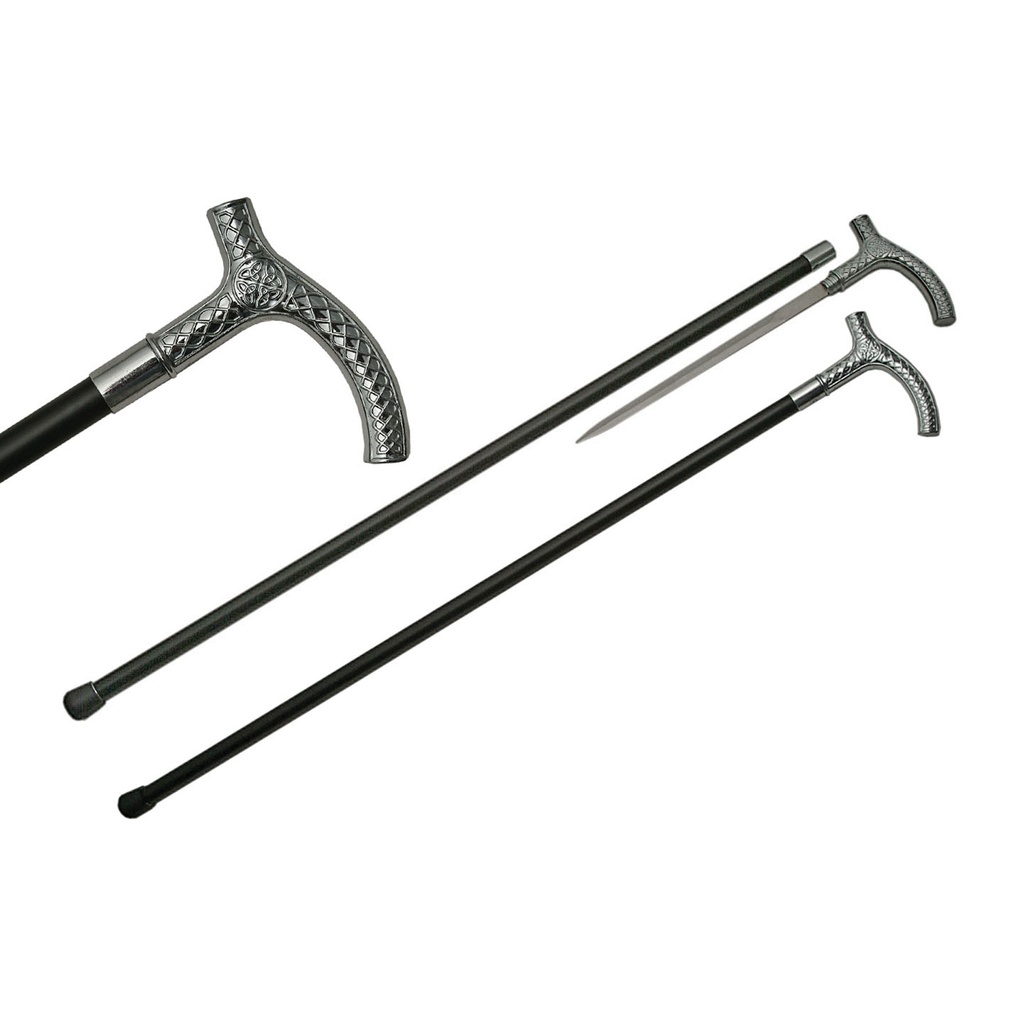
This Highland Knot gentleman sword cane carries its secret the way Texans like it: quiet, capable, and ready. The mirror-polished aluminum handle wears crisp Celtic knotwork, while the slim black shaft hides a narrow spike blade inside. On the street it passes as an elegant walking cane; on the wall it anchors a heritage display. For Texas collectors who know their steel, this isn’t a gimmick—it’s a Celtic sword cane with real presence and a story in the hand.
| Overall Length (inches) | 37 |
| Theme | Celtic |
| Concealment Type | Sword Cane |
Celtic Heritage, Hidden Edge: What This Sword Cane Really Is
The Highland Knot Gentleman Sword Cane is exactly what it looks like at first glance—a refined walking cane with a Celtic handle—and exactly what it doesn’t look like until you draw the steel. Inside that slim black shaft rides a hidden blade, making this a true sword cane, not just a decorative stick with an ornament on top.
The mirror-polished aluminum handle carries tight Celtic knotwork and lattice engraving, curved into a classic T-style grip. The shaft stays simple and black on purpose, letting the handle do the talking while the blade stays out of sight. For a Texas buyer who knows the difference between a wall-hanger and a working piece, this sword cane lands squarely in the middle: display-worthy, but with a real hidden edge.
Inside the Mechanism: How This Sword Cane Works
This is not an automatic knife, not an OTF knife, and not a switchblade. It’s a fixed hidden blade housed inside a cane shaft. There’s no button, no spring, no out-the-front deployment. You separate the handle section from the shaft to reveal the narrow spike-style blade concealed within. That distinction matters to Texas collectors who care about mechanisms as much as looks.
Where an automatic knife uses a spring to fire a side-opening blade, and an OTF knife runs its blade on internal tracks through the front of the handle, a sword cane like this relies on one simple motion: pull, and the blade is there. No assisted opener tricks, no modern switchblade complexity—just old-world hidden steel blended into a gentleman’s walking cane profile.
Hidden Blade Construction
The blade itself is slender and spike-like, built more for thrust than for chopping. That fits the traditional role of a sword cane: discreet defensive capability and a strong visual presence, not camp chores. The metal collar at the joint keeps the connection clean and the draw repeatable, while the rubber tip at the cane’s base gives you real walking support on smooth floors and sidewalks.
Why Collectors Care About the Cane Format
Knife guys in Texas often start with pocket knives—automatic knives, OTF knives, the occasional switchblade. A sword cane scratches a different itch. It’s still edged steel, but it lives full-length, out in the open, under everyone’s nose. The appeal isn’t speed of deployment; it’s the blend of heritage design, concealed blade, and the everyday object disguise. That’s a different story on the wall and in a collection.
Sword Cane vs. Automatic Knife, OTF Knife, and Switchblade
On a site that talks straight about automatic knives, OTF knives, and switchblades, it’s worth laying this out plainly. A Texas collector looking at this Highland Knot sword cane usually already owns at least one of the three:
- Automatic knife: Side-opening blade, fired by a button or switch. Pocket-sized, spring-driven.
- OTF knife: Blade travels straight out the front of the handle on rails or tracks, usually double-action with a thumb slide.
- Switchblade: Legal and collector term that often overlaps with automatic knives, depending on design and state law.
This sword cane is none of those. It’s a concealed fixed blade inside a cane shaft. No springs, no front-opening action. In a Texas collection, it doesn’t replace an automatic knife or an OTF knife; it sits beside them as the long-gun equivalent in a room full of pistols. Same family of edged weapons, very different role.
Where It Fits in a Texas Collection
If your safe or wall already holds a couple of autos, maybe an OTF knife, and that one old switchblade your uncle slipped you when you turned eighteen, this cane is the piece that changes the silhouette of the room. It stands in a corner, shines from across the space, and starts conversations that pocket knives never will. The Celtic handle theme gives it a specific identity—a little Old World, a little story-driven—that still plays fine in a Texas home.
Texas Context: Carrying and Displaying a Sword Cane
Texas law has loosened over the years on blades, including many automatic knives and certain switchblades, but sword canes still live in a narrower lane. They combine a concealed blade with the appearance of a walking aid, and that can trigger a different legal analysis than dropping an OTF knife in your pocket. Any Texas buyer thinking about real-world carry should read current state and local statutes before taking a sword cane onto the street.
Where this piece really shines for Texans is on private property: ranch house entryways, office corners, game rooms lined with mounts and blades. A mirror-polished Celtic handle riding above a simple black shaft feels right next to framed maps, old rifles, and the automatic knives and switchblades you keep under glass. It looks like part of the story instead of a movie prop.
Display Presence for Texas Collectors
At 37 inches overall, the sword cane has presence a pocket automatic knife simply can’t match. The bright silver-tone handle catches light from across the room, while the long dark shaft anchors it visually like a piece of furniture. Lift it from a rack or umbrella stand and the room tends to quiet a bit—that’s the kind of attention this format draws.
Collector Value: Why This Sword Cane Earns Its Space
Collectors in Texas don’t buy every automatic knife or switchblade they see; they buy the ones with a story. This sword cane brings three stories at once: Celtic knotwork heritage, concealed blade engineering, and gentleman cane style. It’s not chasing tactical trends. It’s not pretending to be an OTF knife. It’s leaning into the old-world idea of a walking cane that isn’t as harmless as it looks.
The mirror-polished aluminum handle is a big part of that value. It gives you detailed engraving without the weight of solid brass, and it keeps the shine that catches an eye from the doorway. The black shaft and rubber tip keep it grounded and usable—more refined walking cane than costume staff—so you can actually move with it in the hand instead of just hanging it on a nail and forgetting it.
What Texas Buyers Ask About Sword Canes
Is a sword cane like this the same as an automatic knife, OTF knife, or switchblade?
No. A sword cane is its own category. This Celtic piece hides a fixed blade inside the cane shaft. You draw the blade by separating the handle from the shaft—no spring, no button, no out-the-front mechanism. An automatic knife fires a side-opening blade with a spring; an OTF knife sends the blade out the front, usually with a sliding control; a switchblade is often used as a legal or collector term for certain automatics. This cane is a concealed-blade walking stick, not a pocket knife and not a switchblade under most mechanical definitions.
Are sword canes legal to carry in Texas?
Texas laws on knives, including automatic knives and some switchblades, are more permissive than they used to be, but sword canes can fall into different categories because of the concealed blade and cane disguise. Regulations can change, and local rules may differ from state statutes. Before carrying this sword cane anywhere in Texas, especially in public or restricted places, buyers should check current Texas law and local ordinances or consult an attorney. Many collectors keep sword canes as display pieces or on private property to stay on the safe side.
Is this sword cane built for daily support or mainly for collection and display?
The Highland Knot Gentleman Sword Cane can be used as a light walking aid thanks to the rubber tip and full-length shaft, but it’s not a medical-grade mobility device. Its real strength is as a collector’s piece: a Celtic-themed hidden-blade cane that anchors a display and sits alongside your automatic knives, OTF knives, and switchblades as the long, quiet cousin in the corner. If you want primary support, buy a purpose-built cane; if you want heritage steel with presence, this one earns its spot.
For a Texas collector who knows the difference between an automatic knife, an OTF knife, and a switchblade, this Highland Knot sword cane is a deliberate choice. It doesn’t try to be fast in the pocket. It doesn’t try to win tactical arguments. It stands its ground as a Celtic gentleman’s cane with a hidden blade, at home in a Texas entryway or study, telling its story every time you lift it from the rack.