Hill Country Heritage Field Knife - Natural Stag
15 sold in last 24 hours
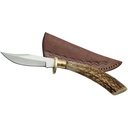
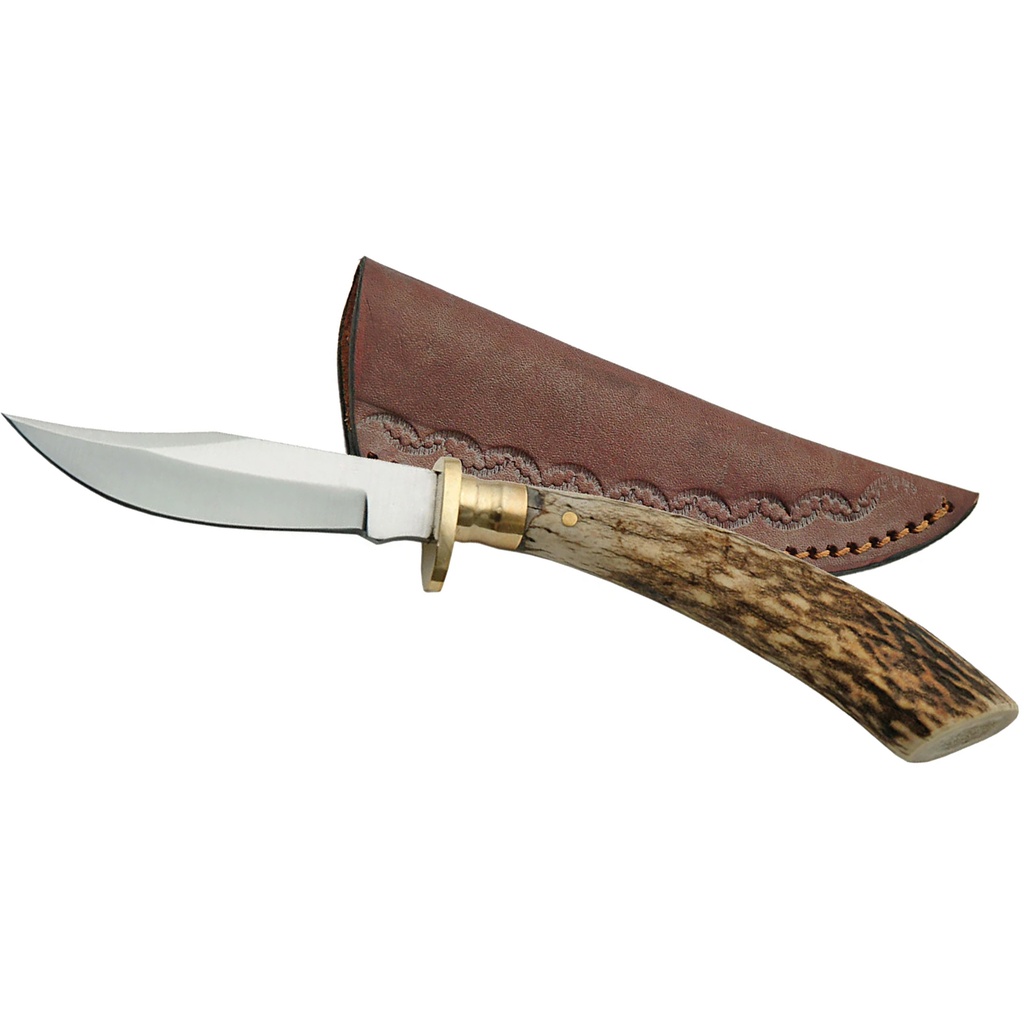
This fixed blade hunting knife is built for Texas field work and front-porch storytelling. A 7.5-inch clip point blade handles dressing and camp chores with calm control, anchored by a natural stag handle and brass guard on a full tang. It carries easy on the belt in a fitted leather sheath, rides even easier in the hand, and feels like the kind of field knife that earns a place in the family hunting kit—not just the drawer.
| Blade Length (inches) | 7.5 |
| Overall Length (inches) | 7.5 |
| Blade Color | Silver |
| Blade Finish | Satin |
| Blade Style | Clip Point |
| Blade Edge | Plain |
| Blade Material | Steel |
| Handle Finish | Natural |
| Handle Material | Stag |
| Theme | None |
| Tang Type | Full Tang |
| Pommel/Butt Cap | Stag |
| Carry Method | Belt Carry |
| Sheath/Holster | Sheath |
What This Fixed Blade Hunting Knife Really Is
This is a fixed blade hunting knife in the classic Texas sense of the term. No buttons, no springs, no tricks—just a full-tang clip point blade, natural stag handle, and leather belt sheath built for real field use. Where an automatic knife snaps open with a spring and an OTF knife rides its blade inside the handle, this piece lives in its sheath until you draw it, wrap your hand around the stag, and go to work.
The 7.5-inch clip point blade gives you reach for camp chores and precision for field dressing. Satin finished steel, brass guard, and a curved stag handle keep the balance right where it belongs: steady in the hand, tip easy to guide. It's the kind of hunting knife a Texas hunter packs for a weekend on the lease and never thinks twice about.
Fixed Blade Hunting Knife vs. Switchblade and OTF
Texas collectors know not every sharp object is a switchblade. This is a fixed blade hunting knife—different animal entirely from an automatic knife, OTF knife, or side-opening switchblade. The blade is permanently fixed in the open position, running full tang through the stag handle, with no folding joints and no automatic mechanism.
A switchblade or automatic knife uses a button or lever to release a spring-loaded blade from a closed position. An OTF knife sends its blade straight out the front of the handle on a track. Useful tools in their own lanes, but they solve a different problem: quick pocket deployment. This fixed blade hunting knife solves the old problem that still matters most in Texas country—reliable cutting power on demand, no moving parts to fail, and nothing to gum up when the work gets bloody, muddy, or cold.
Mechanics of a Texas Field Hunter
Full Tang Strength and Field Control
Mechanically, this knife is as straightforward as Texas bedrock. Full tang means the steel of that 7.5-inch clip point runs all the way through the handle, with the natural stag pinned on both sides. That’s what gives a hunting knife its backbone. No pivot, no lock to worry about, just a solid piece of steel anchored by organic material that locks into your grip.
The clip point profile does two things well for Texas hunters: gives you a capable belly for sweeping cuts, and a defined tip for careful work inside a deer or hog without punching where you don’t mean to. Where an automatic knife might shine in fast one-handed openings, this fixed blade hunting knife shines once it’s already in hand—steady, predictable, and easy to steer.
Natural Stag Handle and Brass Guard
Natural stag isn’t a fashion statement here; it’s a working material choice. The texture of the stag gives you grip when your hands are cold, wet, or tired. Each handle is slightly different, so no two knives look exactly alike—a quiet bonus for Texas collectors who appreciate character in their field gear.
The brass guard earns its keep when you’re bearing down on a tough cut. It gives your index finger a hard stop so you can lean into the blade without sliding forward. That’s the kind of small detail you notice after a long morning in the skinning shed, not just on a spec sheet.
Texas Carry, Camps, and Lease Life
In Texas, a fixed blade hunting knife like this one makes the most sense where the mesquite and live oak start crowding in. It rides on the belt in a fitted leather sheath, right where you can reach it stepping out of the truck, climbing into a blind, or dressing game by the light of a lantern. The sheath’s scalloped stitching and welted edge aren’t just for looks—they keep steel and leather from chewing each other up over seasons of use.
Unlike a pocket-sized automatic knife or OTF knife that disappears in your jeans, this is deliberate carry. You strap it on when you’re headed to the lease, the river bottom, or camp—not when you’re walking into the office in Houston. It’s a hunting tool first, a piece of Texas kit second, and only then a collectible.
Texas Law Context for a Fixed Blade Hunting Knife
Texas knife law has loosened over the years, and that benefits everyone from automatic knife fans to fixed blade hunters. This knife is a traditional fixed blade hunting knife, not a spring-loaded switchblade or OTF knife, and that distinction matters to buyers who remember when certain automatic knives were tightly restricted.
As always, Texas buyers should check current state and local rules where they live and hunt, especially around schools, government buildings, and posted locations. The good news is, a belt-carried hunting knife headed to camp or the deer lease has a long cultural and legal history in this state. That’s where this one belongs—on the road to the ranch, not forgotten under a truck seat in town.
Collector Value in a Traditional Fixed Blade Hunting Knife
Why This Piece Belongs in a Texas Collection
Serious Texas knife collectors who already own their share of automatic knives, OTF knives, and modern folders often circle back to one truth: a collection without a solid stag-handled fixed blade hunting knife feels unfinished. This knife fills that gap with the right mix of usability and heritage.
The long clip point blade, brass guard, and natural stag handle hit that classic North American hunting profile that never goes out of style. It’s the knife you can take to camp, actually use on whitetail or hogs, and still set down on a felt-lined tray at home beside your higher-end pieces without apology.
Because each stag handle is different, Texas collectors get something else they like: individuality at a glance. You can line up ten of these and pick yours out instantly, the way you recognize your own hat in a pile.
What Texas Buyers Ask About Fixed Blade Hunting Knives
How does a fixed blade hunting knife compare to an automatic knife, OTF knife, or switchblade?
A fixed blade hunting knife like this one is the simplest of the four. The blade is permanently open and runs full tang through the handle. An automatic knife or switchblade has a spring-loaded blade that deploys from a closed position with a button or lever. An OTF knife sends its blade straight out the front of the handle on a track. For Texas field work—processing game, camp chores, and ranch tasks—a fixed blade hunting knife wins on strength, ease of cleaning, and reliability when things get dirty or cold. The automatic and OTF crowd still has its place in pockets and collections, but this is the one you want on your belt when the work gets real.
Is it legal to carry a fixed blade hunting knife like this in Texas?
Texas law today is far friendlier to knives than it used to be, including many automatic knives and switchblades. A traditional fixed blade hunting knife is generally treated more leniently than restricted automatic or OTF configurations once were. That said, the smart move is always to check the current Texas statutes and any local rules about length limits or sensitive locations. In plain Texas terms: wear it to the lease, the pasture, or camp without worry; pay more attention when you’re headed into town or any place with posted restrictions.
Is this fixed blade hunting knife meant to be a user or a safe queen?
This knife is built first as a user. The 7.5-inch clip point, full tang construction, and leather belt sheath are all field choices, not display-only decisions. But that doesn’t mean Texas collectors won’t appreciate it in a rack. The natural stag gives each knife its own look, and the brass guard and satin blade sit well with more expensive custom pieces. It’s the kind of hunting knife you won’t feel bad about sharpening, bloodying, and cleaning up again—because that honest wear is exactly what makes a traditional fixed blade interesting to own in Texas.
In the end, this fixed blade hunting knife speaks the same language as a good Texas story: simple, direct, and better with a little use on it. If your collection already covers the automatic knives, OTF knives, and switchblades you wanted, this is the piece that brings it back to where most Texas knife histories started—a stag-handled belt knife, a leather sheath, and enough steel to get the job done without fuss.