King’s Judgment Twin-Head Fantasy War Flail - Silver Steel
13 sold in last 24 hours
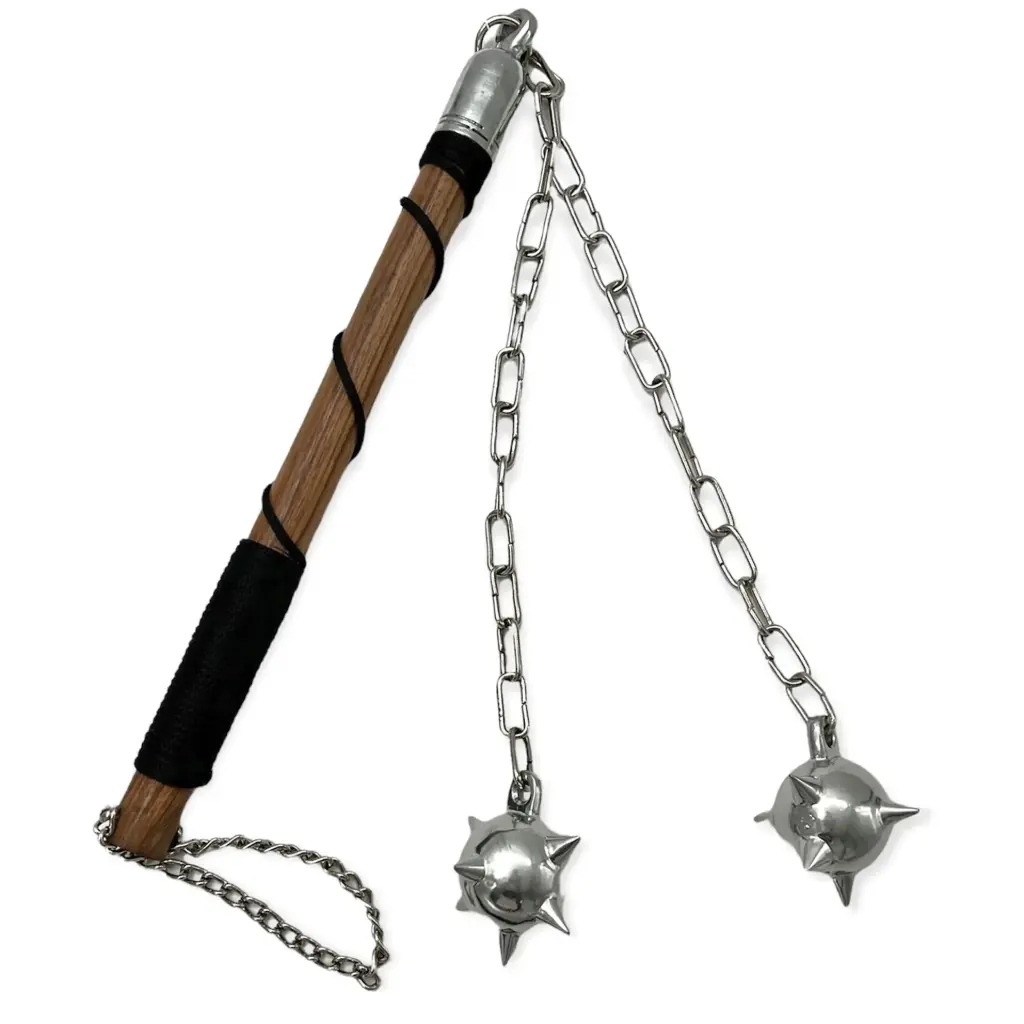
The King’s Judgment Twin-Head Fantasy War Flail brings medieval menace into modern display. Twin chains, dual spiked heads, and a spiral‑wrapped wood handle give it that armory‑wall presence, while the polished silver finish keeps it cosplay‑ready and camera‑bright. At 32 inches overall, it commands space in a Texas game room, shop wall, or convention booth. Built from solid steel with a secure wrapped grip, it looks like legend in the hand and on the wall.
King’s Judgment Twin-Head Fantasy War Flail – What It Really Is
This isn’t a knife, not an automatic knife, not an OTF knife, and not a switchblade. The King’s Judgment Twin-Head Fantasy War Flail is an old-world impact weapon brought into the fantasy realm—a dual‑head medieval flail built for display, collection, and cosplay. Twin chains, twin spiked steel heads, and a spiral‑wrapped wood handle give it that storybook armory look, while the bright silver finish makes it pop on a wall or Texas convention floor.
For a Texas collector who already knows the difference between a switchblade and an OTF knife, this flail scratches a different itch. It’s about presence, history, and fantasy drama—not edge geometry or deployment speed. It belongs in the same room as your automatic knives and display blades, but it plays a different role in the story.
Medieval Flail Mechanics vs. Modern Knife Mechanisms
With knives, we argue over automatic knife springs, OTF knife track tolerances, and whether a switchblade belongs in a pocket or a safe. With a medieval flail like this, the mechanism is simpler and more brutal: gravity, momentum, and control. The wood handle anchors the piece, the steel top cap ties into two oval‑link chains, and each chain ends in a solid steel spiked ball head.
Instead of a button firing a blade like on a switchblade, your “trigger” here is your arm. The swing creates the power; the chains add unpredictability; the spikes focus the force. For display and cosplay use, you’re not swinging for impact, but the form is authentic enough that any Texas buyer who’s handled real tools will feel the lineage the moment they pick it up.
Dual-Head Chain Layout
The twin chains run clean and parallel from the top ring, spreading slightly under their own weight. That gives you a wide visual profile on the wall and a bigger silhouette in photos. Each chain uses oversized oval links that read clearly at a distance and catch light off the silver finish, turning motion into shimmer when the heads move.
Handle, Wrap, and Control
The straight wood handle gives you traditional medieval geometry—no gimmicks, no fantasy curves. A black spiral wrap rides the upper portion for texture, while a thicker black grip wrap sits lower where your hand actually lives. That combination gives Texas collectors something solid and familiar in the palm: wood under the skin, wrap under the fingers, and enough traction to feel secure if you stage a pose or choreograph cosplay shots.
Texas Walls, Game Rooms, and Cosplay Floors
In Texas, folks hang more than deer mounts and guitar straps. This medieval flail fits right into a game room, home bar, or shop wall where blades, fantasy weapons, and old tools share space. At about 32 inches overall, it sits nicely above a doorway, beside a sword rack, or anchoring a retail display without overwhelming the room.
Cosplayers get a lot of mileage out of this layout. The silver finish photographs clean, the dual heads read instantly as “medieval weapon,” and the wood handle with black wrap keeps it grounded instead of toy‑bright. Whether you’re walking a Texas convention floor in full armor or pairing it with a leather duster and fantasy getup, the silhouette tells the story from twenty feet away.
Texas Context: Medieval Flail, Not a Switchblade
Knife laws in Texas talk at length about blades—automatic knives, OTF knives, and the old term “switchblade.” This medieval flail lives in a different category: an impact‑style fantasy weapon. That distinction matters to collectors who care about what’s in which drawer and why.
If you’re the kind of Texan who keeps your automatic knife and OTF knife legality straight, you’ll appreciate keeping this flail in the “display and costume” column. It’s designed for the wall, for photo shoots, and for themed rooms—not as an everyday carry piece. Knowing what job a tool was built for is part of owning it right.
Display and Collection Over Daily Carry
A switchblade or other automatic knife locks into a pocket clip world: jeans, trucks, and ranch work. This medieval flail has no place on a belt or in a pocket. It belongs on a hook, bracket, or mount. Treat it the way you treat a replica sword or fantasy axe—respected, visible, and out where the craftsmanship can be appreciated.
Collector Value: Why a Texas Knife Person Buys a Flail
A serious Texas knife collector already has their favorite automatic knife, their dependable OTF, and that one switchblade they show only to people who’ll appreciate it. A medieval flail like the King’s Judgment isn’t competing with those—it’s rounding out the armory.
The twin‑chain, dual‑head layout is the main draw. Most wall flails are single‑head; this one doubles the visual impact without getting cartoonish. The solid steel construction with a polished silver finish gives it enough weight and brightness to feel like something you could have dragged out of a castle, then shined up for a modern room.
For Texas retailers, this is a front‑of‑rack attention grabber. The twin heads pull the eye, the wood handle warms up the metal, and the fantasy‑meets‑medieval style stops people long enough to notice the rest of your knives, OTFs, and switchblades on the wall.
Material Story: Steel, Wood, Silver Finish
Solid steel heads and chains carry the visual authority here. The silver finish is bright but not gaudy, reflecting just enough room light to keep the contours and spikes defined. The brown wood handle feels traditional, while the black spiral and lower wrap give it a touch of modern grip logic. Nothing on it looks cheap or costume‑store flimsy; it sits comfortably with real knives and real tools on display.
What Texas Buyers Ask About Medieval Flails
How is a medieval flail different from an automatic knife, OTF knife, or switchblade?
They’re different tools for different eras. An automatic knife or switchblade uses a spring and a button or lever to fire a blade out of the handle; an OTF knife sends the blade straight out the front on rails. A medieval flail like this doesn’t have a deployment mechanism at all—it’s a wood handle, chains, and spiked heads relying on swing and impact, not edge and lockup. If you’re shopping knives, think pocket and cutting; if you’re shopping this flail, think walls, costumes, and medieval atmosphere.
Is owning a medieval flail in Texas treated the same as owning a switchblade?
Texas law has eased up on many blade types, including what used to be called switchblades and other automatic knives, but this medieval flail still sits in a different practical category. It’s an impact‑style fantasy weapon meant for display and costume use, not an everyday carry blade like an OTF knife. Responsible Texas buyers treat it like a decorative or collector piece—kept at home, shown with care, and used for reenactment or cosplay settings where everyone understands what it is and why it’s there.
Does this flail belong with my knife collection or my decor?
For most Texas collectors, the answer is both. It looks right hanging beside swords, fantasy blades, and that one showcase automatic knife, but it also serves as room decor in a bar, theater room, or game den. If your collection already distinguishes between OTF knives, side‑opening automatics, and classic switchblades, this flail becomes the medieval counterweight—the piece that says you know the broader history of weapons, not just modern pocket hardware.
Closing: A Texas Armory Piece for the Collector Who Knows
The King’s Judgment Twin-Head Fantasy War Flail belongs to the Texan who can flip an automatic knife, explain how an OTF knife rides in the pocket, and still appreciate the raw simplicity of chain, wood, and steel. It doesn’t pretend to be a switchblade, and it doesn’t need to. It hangs on the wall, lives in photographs, commands attention in a room, and tells anyone who walks in that the owner understands weapons across centuries, not just across marketing terms.