Onyx Dynasty Three-Blade Samurai Sword Set - Black Gold
14 sold in last 24 hours
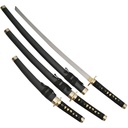
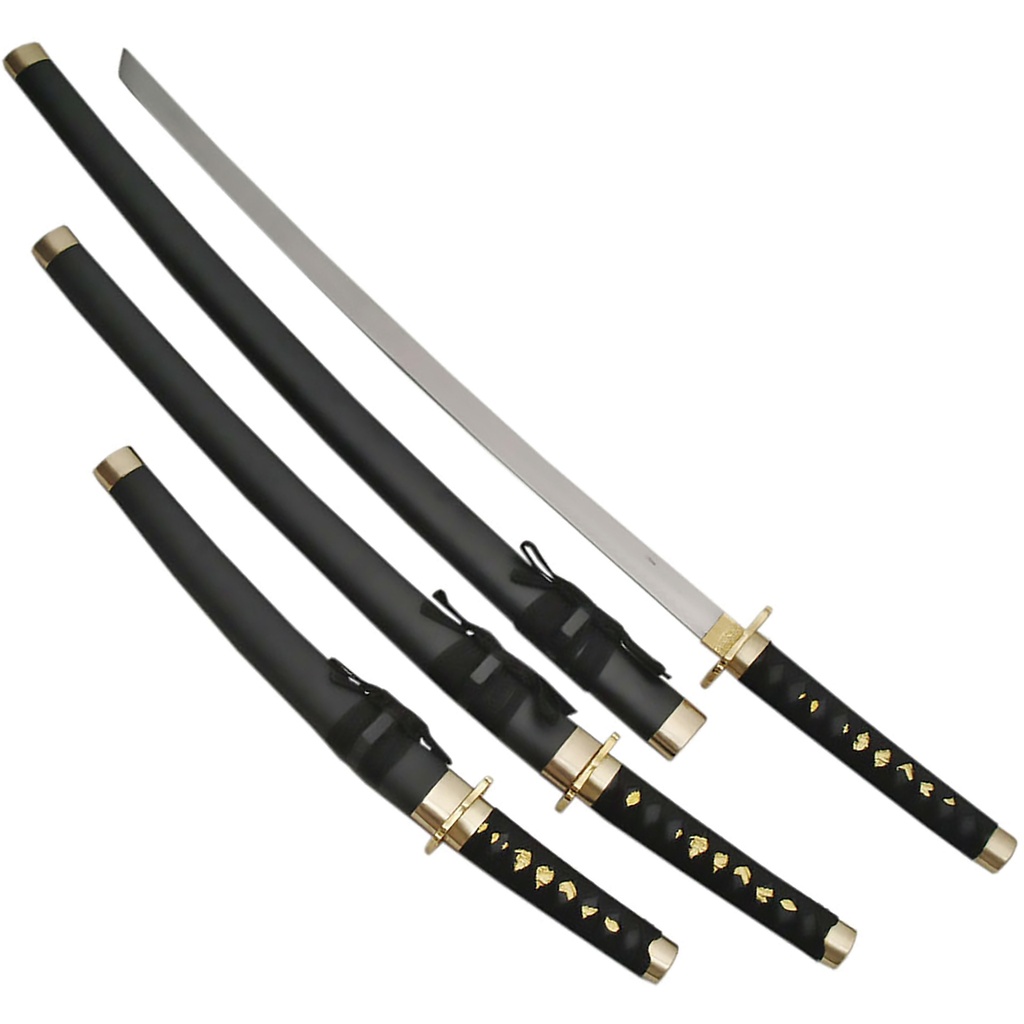
This three-blade samurai sword set brings the full onyx-and-gold story to one stand: katana, wakizashi, and tanto in a clean, coordinated display. Smooth black scabbards, gold tsuba and pommels, and traditional wrap details give each piece presence while keeping the focus on the silver blades. It ships ready to stage on the matching stand, whether it’s heading for a Texas dojo wall, a collector’s office, or the centerpiece of a samurai-themed display.
Onyx Crest Samurai Sword Set: A Three-Blade Story in Black and Gold
The Onyx Crest Three-Blade Samurai Sword Set is built around one clear idea: tell the full samurai story in a single, coordinated display. Katana, wakizashi, and tanto share the same black scabbards, gold hardware, and silver blades so your eye reads them as one family, not three random pieces. This isn’t an automatic knife, OTF knife, or switchblade — it’s a traditional-style sword set meant to live on a stand and set the tone of a room the way only three matched blades can.
Samurai Sword Set Design, Not Pocket Mechanism
Collectors who know their gear don’t confuse a samurai sword set with any kind of automatic knife. There’s no button, no spring, no OTF knife track hiding in the handle. Each piece in this sword trio is a fixed blade with a single-edged, lightly curved profile, built around traditional Japanese-inspired lines.
Where a switchblade or OTF knife is all about how quickly the blade leaves the handle, this set is about how the three blades look and relate to each other at rest. The smooth black scabbards line up cleanly on the stand. Matching gold tsuba, pommels, and end caps echo across the katana, wakizashi, and tanto. The traditional crisscross wrap over black handles with gold inlays gives you that classic samurai look without shouting.
Three Blades, One Visual Language
The katana anchors the set, blade drawn to show off the bright silver steel against black and gold fittings. The wakizashi and tanto ride in their scabbards, backing up the main sword like a loyal guard detail. Everything points toward a single theme: onyx darkness framed by gold accents, with the blades themselves as the only bright interruption.
Why This Matters to a Texas Collector
Most decor swords look like they came out of a bargain bin: mixed fittings, loud graphics, and no real sense of cohesion. This samurai sword set feels curated. For a Texas buyer who already has an automatic knife or OTF knife collection in the safe, this is the piece that lives out in the open — the one you put on the bookshelf, office credenza, or dojo wall because it looks intentional.
Mechanism vs. Display: How This Differs from an Automatic Knife
When you talk about knife mechanisms — automatic knife, OTF knife, side-opening switchblade — you’re talking about how a pocket blade deploys. None of that applies here. Each sword in this samurai set is a fixed blade paired with its own scabbard. There’s no spring, no release button, and no internal track. You draw, you resheath, and that’s the whole story.
That clear distinction matters for Texas collectors. If your drawer is already full of autos and the occasional OTF knife, this set scratches a different itch. It’s not a mechanism conversation; it’s a silhouette and symmetry conversation. The square tsuba guards, the clean scabbard lines, and the balanced curve of the blades give you traditional samurai presence without trying to pretend these are tactical switchblades or field knives.
Materials and Visual Finish
All three swords share the same core look: silver blades with a gentle curve, black handles wrapped in a traditional crisscross pattern, and gold inlays peeking through the diamonds of the wrap. The scabbards are smooth, matte black with black cord ties, capped with gold-colored fittings that tie back to the guards and pommels. You get enough shine from the gold to catch the light, but the overall impression stays dark and refined.
Texas Display Reality: From Dojo Wall to Office Shelf
Texas buyers think in terms of where a piece actually lives. An automatic knife rides in the pocket. An OTF knife might live in the truck console. A switchblade might be a weekend carry or a range-bag backup. This three-blade samurai sword set, though, is a display resident. It belongs on a stand in a place where you can see the full onyx-and-gold story at a glance.
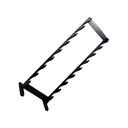
The included display stand makes it easy: katana up top, wakizashi in the middle, tanto at the bottom. Line the scabbards so the gold fittings stack in a clean column of hardware, or angle the blades to spread the visual weight. Either way, the set reads well from across a Texas living room, office, or home bar — even before anyone steps close enough to notice the wrap details.
Texas Law Context for a Samurai Sword Set
Texas law treats long blades differently than pocket gear, and a sword set like this sits squarely in the “decor and collection” lane for most buyers. Where automatic knife and switchblade questions focus on assisted deployment, button-activated opening, and OTF knife mechanisms, this samurai set sidesteps that entire discussion by being unapologetically fixed-blade and display-focused. As always, a serious Texas collector checks current statutes and local rules if they plan to transport or publicly wear any full-size blade, but for most, this trio never leaves the house or dojo wall.
Collector Value: A Complete Samurai Trio in One Purchase
Collectors appreciate completeness. Picking up a katana on its own is easy. Finding a matched katana, wakizashi, and tanto that actually look like a family — shared colors, shared fittings, shared proportion — is harder. This samurai sword set removes the hunt and gives you a full three-blade arrangement in one shot.
For the Texas knife collector who already owns automatic knives, OTF knives, and the odd switchblade, this becomes the visual centerpiece that doesn’t compete with pocket gear. It doesn’t try to be a tactical tool or a legal gray area. It just stands there, black and gold, and quietly sets a higher standard for how a themed display should look.
Where It Fits in a Serious Collection
Think of this samurai sword set as the room’s headline piece. Your folders, autos, and OTF knife builds stay in the case. This lives where people sit and talk. The coordinated scabbards, the gold tsuba line, and the traditional wrap pattern say you care about more than just mechanisms and steel types — you care about presentation and story.
What Texas Buyers Ask About Samurai Sword Sets
Is this anything like an automatic knife, OTF knife, or switchblade?
No. This three-blade samurai sword set has nothing in common with an automatic knife, OTF knife, or switchblade beyond the fact that they all have edges. There’s no spring-assisted action, no button, and no out-the-front mechanism. Each piece is a fixed samurai-style sword with its own scabbard, meant for drawing and resheathing by hand and then going back on the stand.
Are samurai-style swords legal to own and display in Texas?
Texas is generally friendly to blade collectors, including owners of automatic knives and switchblades, and the same culture supports sword collectors. Most Texans buy a samurai sword set like this for home or dojo display, not carry. As with any blade — from an OTF knife to a full-length sword — responsible owners keep up with current Texas statutes and any local rules, but for most collectors this set stays on private property as a decor and collection piece.
Why would a knife collector add a samurai sword set to the mix?
Because at some point a collection needs a focal point. Pocket autos and OTF knife builds are personal tools; they disappear into jeans or a truck console. A black-and-gold samurai sword set like this takes up intentional space. It tells visitors you think beyond mechanisms and model numbers; you care about lineage, silhouette, and the way three related blades can tell one story from across the room.
In the end, the Onyx Crest Three-Blade Samurai Sword Set feels right at home in Texas — a place where folks might carry an automatic knife every day, argue the finer points of OTF knife design, and still save the prime wall space for a clean, coordinated samurai display. It’s for the collector who knows their switchblade from their side-opener, but also knows sometimes the best blade in the room is the one that never leaves its stand.