PivotLink Field-Ready 2-to-1 Rifle Sling - Black Nylon
6 sold in last 24 hours
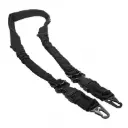
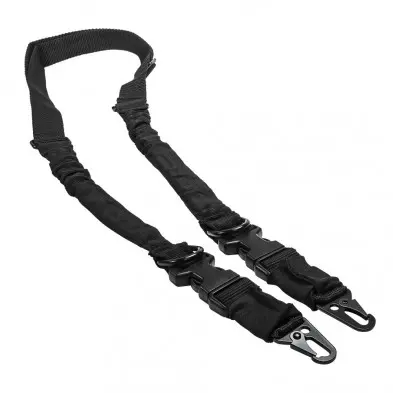
This 2 point rifle sling is built for Texans who actually run their rifles. The PivotLink system rides flat and quiet, then clips into a single point sling off the D-ring when you step into tighter spaces. Dual bungee sections soak up bounce, metal spring clips lock into standard mounts, and quick-release buckles keep setup simple. On the range, on patrol, or moving fences on the back forty, it gives you that clean, predictable carry only a well-thought-out sling can.
If you run a rifle in Texas heat, you already know a sling isn’t an accessory—it’s the difference between a rifle that works with you and one that fights you. This PivotLink 2-to-1 Quick-Convert Rifle Sling is a purpose-built 2 point rifle sling that converts into a single point sling in one clean move, without tools, drama, or extra hardware flopping around.
What this 2 point rifle sling actually does
Mechanically, this is a straightforward 2 point rifle sling: 1.25-inch black nylon webbing, dual bungee shock cords near each end, and metal spring clips that hook into your rifle’s sling loops. In that role, it anchors the rifle across your chest or back so you can move, climb, or go hands-on without the muzzle wandering or the gun slamming your knees.
The quick trick is the PivotLink conversion. Each side of the sling has a metal D-ring sitting just ahead of a polymer quick-release buckle. Clip one spring hook into the opposite D-ring, and your 2 point rifle sling becomes a true single point sling. Same webbing, same bungee sections, same hardware—just a different anchor point and a very different way the rifle hangs and moves with you.
Why a 2 point rifle sling matters more in Texas
Texas shooters don’t always live on the flat range. One weekend you’re working VTAC boards outside Austin, the next you’re walking fence lines outside Lubbock, or running patrol-style drills near Houston. A 2 point rifle sling shines in all that crossover space. It spreads the rifle’s weight, controls muzzle direction, and keeps the gun from printing or swinging when you’re covering distance or stepping in and out of trucks.
Length on this sling runs from 55 to 72 inches, so you can set it over plate carriers in San Antonio, a field jacket up in the Panhandle, or just a t-shirt in August heat. Once adjusted, the twin bungee sections take over the fine work—absorbing shock when you break into a run or drop to a knee, so the rifle stays close and predictable instead of whipping around.
Mechanics of the PivotLink 2 point rifle sling
Dual bungee control where it counts
Both bungee sections are tucked under sleeves near the ends of the 2 point rifle sling. That placement keeps the central webbing flat across your shoulder while the elastic gives just enough when you move hard or need to bring the rifle up fast. It doesn’t feel like a rubber band; it feels like the slack disappears when you mount the gun, then returns when you go hands-free.
Metal clips, D-rings, and quiet hardware
Metal spring clips at each end provide solid interface with standard sling loops on ARs and patrol rifles. The matte black finish and low-profile geometry keep glare and noise down—an underrated detail if you’re working at dawn in the deer blind or moving with a team down in South Texas brush. The paired metal D-rings next to the polymer quick-release buckles are the heart of the conversion system: route one clip to the opposite D-ring and you’ve gone from 2 point rifle sling to single point sling in seconds.
2 point rifle sling vs single point sling: when PivotLink earns its keep
There’s a reason Texas trainers still teach both 2 point and single point sling setups. A 2 point rifle sling is what you want for control, retention, and long carries—across pastures, through structures, or while working around vehicles. A single point sling earns its place when you’re shoulder-switching around barricades or moving in tight hallways where you need the rifle to float in front of you, not hang across the body.
This convertible design cuts the either/or decision. Stage it as a 2 point rifle sling while you’re moving distance or working administrative tasks, then clip into the D-ring when your drill, match stage, or scenario demands faster transitions. Because you’re not changing gear—just changing anchor points—you keep the same familiar feel in both modes.
Texas carry reality: making this rifle sling work with your setup
Texas is generous on long gun carry, but unforgiving when it comes to sloppy muzzle discipline and bad setups. Whether you’re toting an AR in the truck under Texas open carry norms or hauling a bolt gun to the lease, a well-fitted 2 point rifle sling keeps the muzzle down, the rifle secure, and your hands free when you need them. That matters as much on a Hill Country ranch road as it does in a structured class outside Dallas.
This sling’s 55–72 inch adjustment window covers most Texas body types and gear stacks without needing extra hardware. The triglide lets you fine-tune length so you can mount from low-ready without fighting webbing. The quick-release buckles let you strip the sling for cleaning, storage, or swapping between rifles without cutting, unthreading, or reweaving anything.
Setting up your 2 point rifle sling for Texas ranges
For square range work, start with the 2 point rifle sling adjusted so the rifle sits high enough to draw into your shoulder without lifting the muzzle above the berm. Confirm the bungee is doing the work of absorbing movement. If you’re running drills that include vehicles, consider setting the sling slightly looser to keep the rifle from binding on the seat belt, then convert to single point sling mode once you’re out and moving.
What Texas Buyers Ask About 2 Point Rifle Slings
How does this 2 point rifle sling compare to other setups?
A fixed 2 point rifle sling gives great retention but can feel slow when you need to shoulder switch or move aggressively. A pure single point sling is fast and fluid but lets the rifle swing and bang into things if you’re not on it constantly. This PivotLink design keeps the best of both—serious 2 point control when you’re covering ground, and a true single point sling feel when you clip into the D-ring for faster transitions.
Is there anything in Texas law I should know about using this sling?
Texas law focuses on how and where you carry firearms, not the type of 2 point rifle sling or single point sling you use. A sling like this doesn’t change the legal status of your rifle. What it does change is how safely and securely you carry it—keeping the muzzle under control in public spaces, on private land, or moving to and from the range. When in doubt, know your local ordinances and keep your rifle carried responsibly, sling or no sling.
Why would a Texas shooter choose a convertible 2 point rifle sling?
A collector or serious shooter in Texas usually owns more than one rifle, but they don’t need a different sling for every role. A convertible 2 point rifle sling like this PivotLink gives you one rig you can trust across ARs, patrol carbines, and working ranch rifles. It’s simple, quiet, and durable enough to standardize—less thinking about gear, more attention on wind, targets, and terrain.
In a state where rifles ride in truck racks, patrol cars, and deer blinds in the same week, the right 2 point rifle sling becomes part of your kit, not just another accessory. This PivotLink design respects that. It stays out of the way when you’re moving, comes alive when you need to mount the rifle, and lets you shift to single point mode without breaking stride. If you’re the kind of Texan who knows why sling choice matters as much as optics, this is the kind of rig that quietly earns its place in your lineup and stays there.