Radioactive Reaper Spring-Assisted Folding Knife - Toxic Yellow
13 sold in last 24 hours
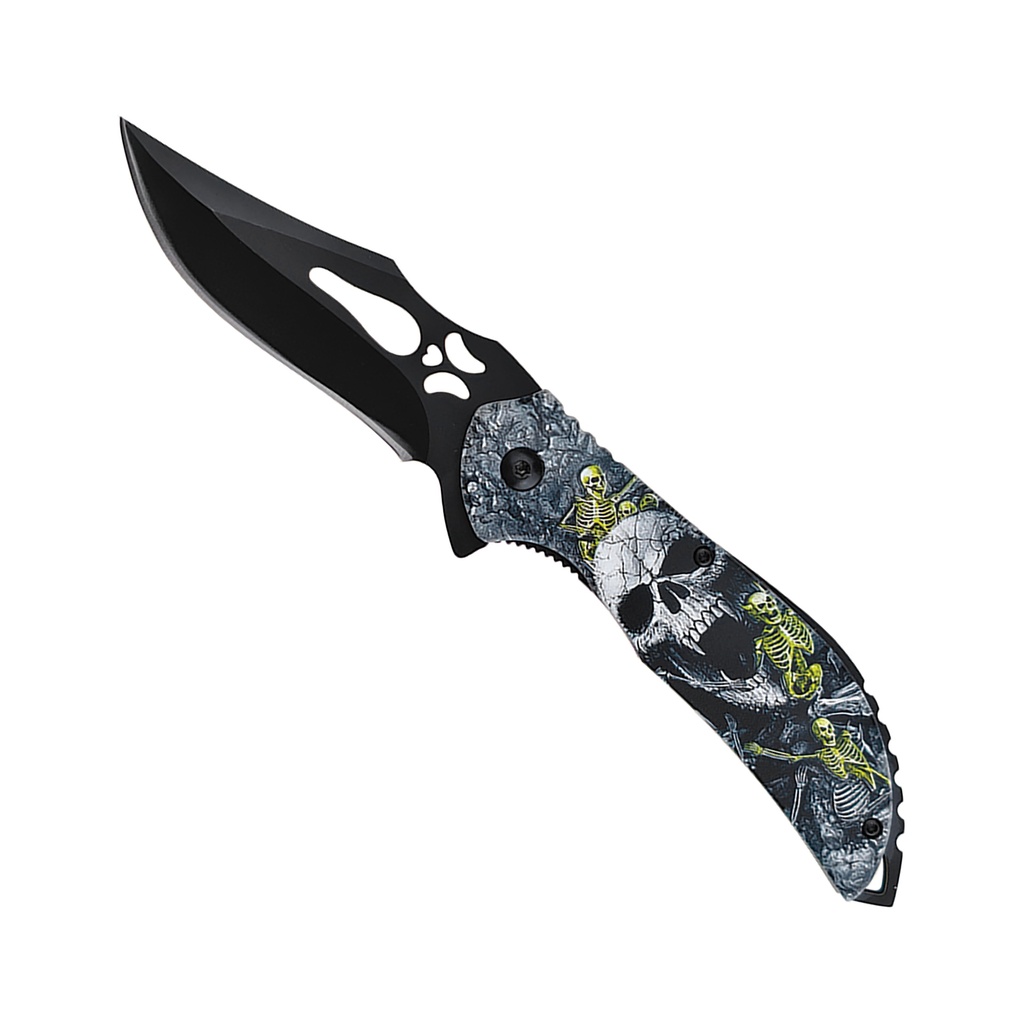
This spring-assisted folding knife brings toxic attitude to everyday carry. The Radioactive Reaper pairs a black oxidized drop-point blade with a skull-embossed electric yellow aluminum handle that you won’t lose at the bottom of a truck console. One-handed deployment snaps the blade into place with a liner lock and pocket clip keeping it ready. For Texas buyers who know the difference between an assisted knife, an automatic, and an OTF, this one’s the loud, skull-heavy folder that still works like a practical EDC.
| Blade Length (inches) | 3.36 |
| Overall Length (inches) | 8.15 |
| Closed Length (inches) | 4.78 |
| Blade Color | Black |
| Blade Finish | Black oxidized |
| Blade Style | Drop Point |
| Blade Edge | Plain |
| Blade Material | 3CR13 Stainless Steel |
| Handle Material | Aluminum |
| Theme | Skull |
| Pocket Clip | Yes |
| Deployment Method | Spring-assisted |
| Lock Type | Liner lock |
Spring-Assisted Folding Knife Built for Texas Hands
The Radioactive Reaper is a spring-assisted folding knife with a clear job: fast, one-handed deployment without crossing the automatic or switchblade line. This is not an OTF knife and it’s not a push-button automatic. It’s a side-opening assisted knife that starts like a manual folder and finishes with spring help. For Texas buyers who know their mechanisms, that distinction matters more than any paint on the handle.
What Makes This Spring-Assisted Knife Different
This knife runs a classic liner-lock, side-opening spring-assisted mechanism. You nudge the flipper or thumb stud, the spring takes over, and the black oxidized drop-point blade snaps into lock-up. No sliding track like an OTF knife, no button-fired switchblade mechanics, and no confusion about what you’re carrying. Just a straightforward assisted-opening folder that combines speed with control.
With a 3.36-inch 3Cr13 stainless steel blade and 8.15 inches overall length, it sits right in that sweet-spot pocket size. Big enough for ranch chores, warehouse days, or breaking down boxes in a Houston shop, but compact enough to ride clipped inside a pair of Wranglers without dragging your pocket down.
Mechanism Detail: Assisted, Not Automatic
A lot of sites blur the line between an automatic knife, a switchblade, and a spring-assisted folder. This piece doesn’t. The blade only moves when you start it manually. Once you put that initial pressure on the flipper, the internal spring finishes the job. That makes it an assisted-opening knife, not a true automatic knife and not an OTF switchblade. The difference is mechanical, and in Texas, it can be legal as well as practical.
Blade and Build for Real Use
The 3Cr13 stainless steel drop-point blade wears a black oxidized finish that shrugs off glare and everyday scuffing. The plain edge makes it easy to touch up with a pocket stone or ceramic rod. On the handle, embossed aluminum keeps the weight down while giving you that skull-and-skeleton relief pattern you can feel as well as see. Finger grooves and jimping along the spine give you a positive grip whether you’re cutting feed bags or slicing open a shipment in a Dallas warehouse.
Texas Carry Reality: Assisted Knife That Stays Put
Texas law has loosened up on blade carry over the years, but it still pays to know what you’ve got in your pocket. A spring-assisted folding knife like this opens with your hand on the blade, not with a push-button. That keeps it squarely in the assisted category, distinct from a button-activated automatic knife or a double-action OTF knife that rockets straight out the front.
The pocket clip and liner lock mean it carries low and rides secure. Clipped inside your jeans or work pants, it’s the kind of knife a Texas buyer can keep handy from jobsite to rodeo parking lot. No sheath, no fuss, no mystery about how it opens when a deputy or security guard takes a closer look. In a state where folks still talk about switchblade laws out of habit, clarity is its own kind of comfort.
Skull Theme and Collector Appeal in a Texas Drawer
Most Texas collectors don’t need another plain black folder. What earns a place in the drawer now is character. This knife brings that in spades with its skull-embossed electric yellow handle—loud, toxic, and unapologetically over the top. The cracked-stone texture behind the skulls and bones isn’t just paint; it’s part of the embossed pattern, giving your fingers extra traction.
For a collector who already owns a few automatics, maybe an OTF or two, this spring-assisted knife fills a different slot: fast, legal-friendly, and visually wild. The toxic yellow color makes it easy to spot on a workbench or in the truck, and that screaming skull motif speaks to the horror, biker, and fantasy side of knife collecting that’s as Texan as a custom belt buckle.
How It Sits Beside Your Automatics and OTF Knives
On one side of your case you’ve got your automatic knives and switchblades—push-button, coil-spring, side-openers that fire as soon as you hit the release. Beside them, maybe a couple of OTF knives—double-action sliders that shoot the blade in and out of the handle. This Radioactive Reaper belongs on the assisted-opening side: it’s still fast and satisfying to deploy, but you remain part of the action every time you thumb it open.
That contrast is what makes a serious Texas collection interesting: one drawer, three types—automatic knife, OTF knife, and spring-assisted folder—each with its own sound, feel, and legal story.
What Texas Buyers Ask About Spring-Assisted Knives
Is a spring-assisted knife the same as an automatic, OTF, or switchblade?
No, and that’s where a lot of confusion starts. A spring-assisted knife like this one requires you to start opening the blade manually with a flipper or thumb stud. Once the blade passes a certain point, the spring finishes the opening. An automatic knife or switchblade opens from a closed, locked position with a button or release, no manual start. An OTF knife sends the blade straight out the front on a track, usually driven by a sliding switch. All three use springs, but the way they open—and how the law sees them—differs.
Are spring-assisted knives legal to carry in Texas?
As of current Texas law, assisted-opening folders like this are generally treated as ordinary knives, not restricted switchblades or banned automatic knives. Texas removed the old switchblade prohibition and focuses more on blade length and location (like schools or certain premises) than on the exact mechanism. That said, laws change, and some cities or venues may have their own rules. A serious Texas collector checks current state and local regulations rather than assuming yesterday’s law still stands.
Why would a Texas collector choose this over a true automatic or OTF?
Because sometimes you want speed without the baggage. A spring-assisted knife like this opens almost as fast as an automatic knife but tends to draw less scrutiny in mixed company. It’s easier to explain—"It’s just an assisted folder"—and it still gives you that snap and satisfaction. Add in the toxic skull theme and bright electric yellow handle, and you’ve got a piece that stands out visually without begging to be the most controversial thing in your pocket.
Why This Assisted Knife Earns a Spot in a Texas Collection
The Radioactive Reaper isn’t trying to compete with your grail-level switchblade or your high-dollar OTF knife. It’s here to be the loud, skull-heavy spring-assisted knife you actually clip on and use. Mechanically, it’s honest: a side-opening assisted folder with a liner lock and pocket clip. Visually, it’s pure attitude: skull-embossed electric yellow aluminum wrapped around a dark, work-ready blade.
For a Texas buyer who knows their mechanisms and cares about calling things by the right name, this knife hits that sweet spot between collectible and usable. It’s the kind of piece you can toss in the truck, loan to a buddy who respects his tools, and still lay out on the table when you’re talking automatic knives, OTF knives, and assisted openers over a long evening. It belongs with folks who know exactly what they’re carrying—and why.