Ridge Line Flow Fixed Hunting Knife - Stag & Brass
15 sold in last 24 hours
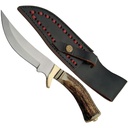
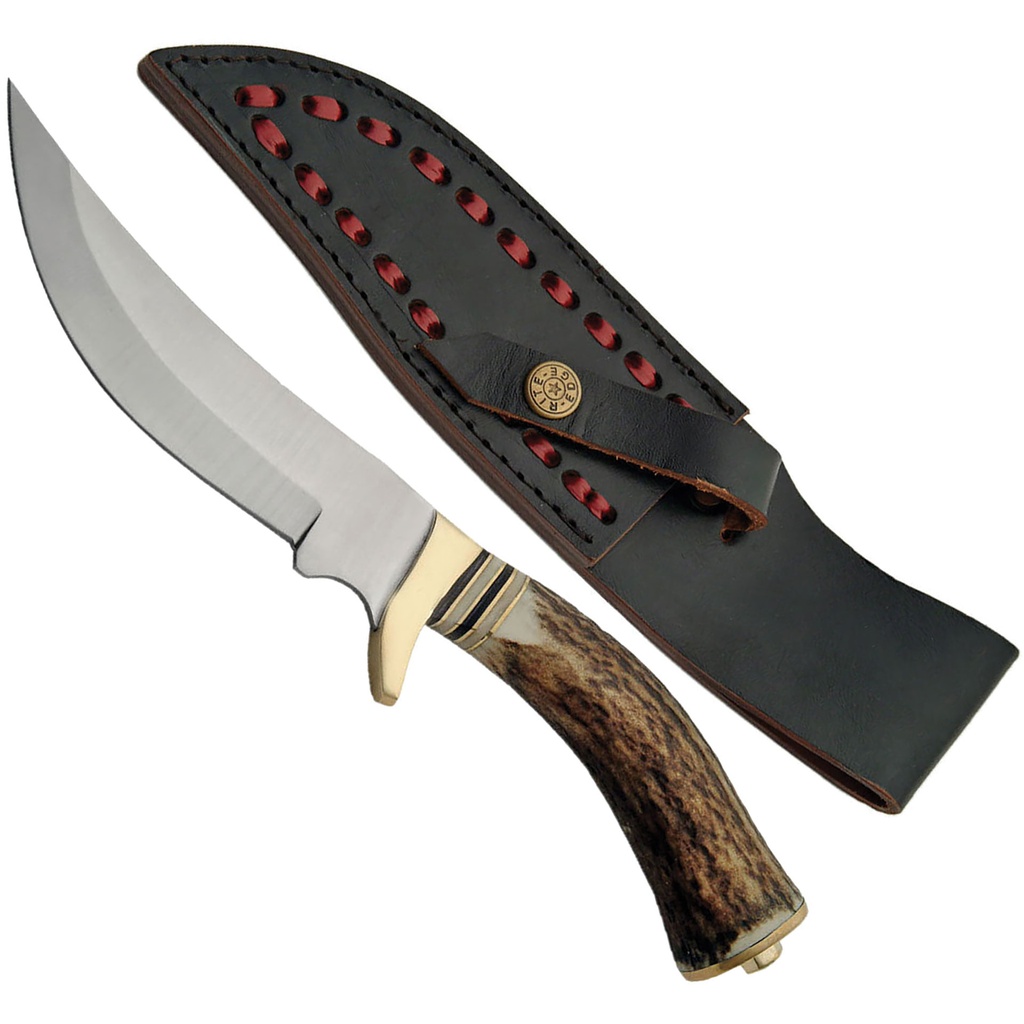
This fixed blade hunting knife is built for Texas country where the work starts after the shot. A 5.5-inch satin trailing point glides through hide and meat, while the stag handle and brass guard lock your grip in wet or cold. Riding in a leather belt sheath, it stays handy on long walks from Hill Country senderos to Panhandle breaks—a classic, no-nonsense field knife for hunters who know a folder, an automatic, and a switchblade all stay in the pocket when it’s time to dress game.
| Blade Length (inches) | 5.5 |
| Overall Length (inches) | 10 |
| Blade Color | Silver |
| Blade Finish | Satin |
| Blade Style | Trailing Point |
| Blade Edge | Plain |
| Blade Material | Steel |
| Handle Material | Stag |
| Theme | Hunting |
| Handle Length (inches) | 4.5 |
| Tang Type | Hidden tang |
| Pommel/Butt Cap | Brass |
| Carry Method | Belt |
| Sheath/Holster | Leather Sheath |
What This Fixed Blade Hunting Knife Really Is
This is a fixed blade hunting knife built the way Texas hunters have trusted for generations: simple, solid, and ready the second you clear leather. No springs, no buttons, no OTF mechanism to figure out with cold hands—just a 5.5-inch satin trailing point fixed to a stag handle with brass guard and pommel. When it’s time to dress game, a side-opening automatic knife, an OTF knife, or a switchblade all stay in the pocket. This is the tool that actually does the work.
Fixed Blade Hunting Knife vs. Automatic, OTF, and Switchblade
Collectors in Texas know there’s a place for all three: an automatic knife rides in the pocket for quick everyday tasks, an OTF knife satisfies that mechanical itch with a blade that shoots straight out the front, and a switchblade gives you that classic side-opening snap. But a fixed blade hunting knife like this stag-and-brass High Country piece does something different: it’s already open, already locked, and already full-length.
There’s no deployment step between you and the cut. In the blind, on the tailgate, or down in the brush working a whitetail, you’re not wondering if a spring will fail or a button will hang up. That’s why serious Texas hunters might collect automatic and OTF knives for fun and carry, but they reach for a fixed blade when it’s time for honest field work.
Mechanism: The Strength of a Simple Fixed Blade
This knife runs a hidden tang fixed blade construction. The steel trailing point is one solid piece that disappears into the stag handle, anchored and capped by brass. There’s no pivot screw, no liner lock, no spring channel to clean. Where an OTF knife needs internal rails and an automatic switchblade needs a strong spring and sear, this hunting knife just needs a strop and a wipe-down. Simpler steel, fewer moving parts, more confidence after a long, messy field dressing job.
Blade Profile Built for Game
The 5.5-inch satin trailing point is made for hide and meat. The gentle upswept curve lets you draw long, controlled cuts without digging in. That’s a very different job than most automatic knives or OTF knives are asked to do—those are often optimized for quick puncture or utility slicing. This fixed blade hunting knife is tuned for opening up rib cages, unzipping legs, and caping when you take your time and do it right.
How This Hunting Knife Rides and Works in Texas
From Hill Country leases to West Texas ranch country, a fixed blade hunting knife on the belt is part of the uniform. This one ships with a leather belt sheath that holds the knife low and quiet, with a retention strap and brass snap you can open by feel. Compared to a pocket-clipped automatic knife or a switchblade tucked out of sight, this belt rig is honest, visible gear—everyone at camp knows exactly what it is and why it’s there.
Texas hunts involve walking senderos, climbing into stands, and working in tight brush. A ten-inch overall length gives you real reach without feeling like a bowie. The stag handle fills the hand even with gloves, and the brass guard stops you from sliding forward when things get slick. You don’t baby this one. You wipe it on your jeans, oil it back at camp, and hang it by the sheath until the next weekend.
Texas Law, Fixed Blades, and Where This Knife Fits
Texas law used to tie knots around blade types and lengths, but the landscape changed. Today, for most adults in Texas, carrying a fixed blade hunting knife is legal in many everyday contexts, with special rules for certain locations and age limits. The important part for a collector who also hunts: this is not an automatic knife, not an OTF knife, and not a switchblade. There’s no push-button, no spring-assist, and no front-firing mechanism.
That clear mechanical difference matters when you’re reading statutes or explaining your gear to someone who only knows the word “switchblade.” In the field, at camp, or on private land, this fixed blade hunting knife is right at home alongside your favorite autos and OTFs back in the truck. You enjoy the mechanical fun of those, and you lean on this stag-handled blade when the tag is filled.
Texas Collector Context
Texas collectors rarely stop at one category. You may have a drawer full of side-opening automatic knives, a couple of OTF knives just because the action is addictive, and a classic switchblade or two for the history. This fixed blade hunting knife is the counterweight to all of that—traditional materials, no mechanism to fail, and a purpose that predates any spring or button. It’s the knife that would still make sense to your grandfather, and it still makes sense in a modern Texas gun safe.
Why This Fixed Blade Hunting Knife Earns a Spot in a Collection
For a collector who already owns a dozen complicated mechanisms, this knife offers something simpler—and that’s the point. Stag and brass are timeless hunting materials in Texas. The natural antler has its own grain and color, so no two handles are identical. The brass guard and pommel bookend that texture in warm metal that will take on its own patina after seasons of use.
Set it next to your favorite automatic or OTF knife and you can see the contrast: modern alloys and machined slabs versus bone and brass that could have ridden a saddle scabbard in the 1950s. That mix—mechanized autos and honest fixed blades—gives a Texas collection depth. You’re not just stacking switchblades; you’re telling the story of how knives are actually used here.
Field-Ready, Not Safe-Queen Fragile
The 5.5-inch satin blade is long enough for deer, hogs, and exotics, but short enough to handle fine work. With a hidden tang and solid fittings, it’s meant to get dirty. You won’t flinch about blood, fat, or grit the way you might with an expensive OTF knife filled with springs and tracks. This is the knife you volunteer when someone at camp says, “Who’s got a good hunting knife on them?”
What Texas Buyers Ask About Fixed Blade Hunting Knives
Is a fixed blade hunting knife different from an automatic, OTF, or switchblade?
Yes, very different. A fixed blade hunting knife like this one is always open—no springs, no buttons, and no sliding mechanism. An automatic knife uses a spring to snap the blade out from the side when you hit a button. A switchblade is that same family of side-opening automatic knives. An OTF knife sends the blade straight out the front along internal rails. For Texas hunters, those three live in the pocket; the fixed blade hunting knife lives on the belt and does the field dressing.
Is it legal to carry a fixed blade hunting knife in Texas?
Under current Texas law, most adults can legally carry a fixed blade hunting knife, with specific restrictions for certain places and for minors. The key is that this is not an automatic knife, not an OTF knife, and not a switchblade, so it avoids the older bans tied to those mechanisms. As always, check the latest Texas statutes and local rules, but in general this style of hunting knife is the one Texas game wardens are most used to seeing on a belt.
Why would a collector add this if they already own autos and OTFs?
Because a serious Texas collection isn’t just about springs and tricks—it’s about purpose. This fixed blade hunting knife gives you the classic stag-and-brass profile your automatic knives and OTF knives don’t cover. It’s the piece you can actually bloody on a South Texas deer lease, then wipe off and lay next to a high-end switchblade in the display case. It balances your collection with something that feels earned, not just engineered.
Closing: A Texas Knife for Folks Who Know the Difference
Owning this fixed blade hunting knife says you understand where each tool belongs. The automatic knife rides in your jeans, the OTF knife satisfies your mechanical curiosity, the switchblade sits there with its own outlaw charm—and this stag-handled, brass-guard fixed blade waits on your belt for when the work starts. That’s a Texas collector’s mindset: not just stacking knives, but matching the right blade to the right job, and knowing the difference without having to make a speech about it.