Ruck-Ready Doctrine Survival Field Manual - Signal Yellow
9 sold in last 24 hours
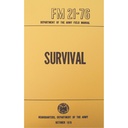
This survival field manual is a straight reprint of the U.S. Army FM 21-76 from October 1970, in a hard-to-lose signal yellow cover. Clear, no-nonsense doctrine walks you through navigation, water, food, firemaking, cooking, and survival in special areas. It’s the kind of battle-tested survival manual a Texas knife collector drops in the pack next to their favorite automatic or OTF—because when things go sideways, you want proven pages, not theory.
What This Survival Field Manual Really Is
The Ruck-Ready Doctrine Survival Field Manual - Signal Yellow is a straight, no-drama reprint of the U.S. Army FM 21-76 survival manual from October 1970. It’s not a coffee-table book and it doesn’t care about pretty pictures. It’s doctrine—field-tested instructions meant for people who carry tools that have to work, whether that’s an automatic knife, an OTF knife, or a good old side-opening folder.
For a Texas buyer who already knows the difference between a switchblade and an assisted opener, this survival manual fills the other side of the kit: the knowledge side. Your blade handles cutting. These pages handle decisions.
Survival Manual Built for Real-World Use
This survival manual comes from a time when the U.S. Army wrote for soldiers who might be wet, tired, cold, and out of options. FM 21-76 walks through navigation, water, food, firemaking, cooking, and survival in special areas in a voice as plain as a West Texas horizon. No fluff, no camping romance—just what to do and how to do it.
Where your automatic knife or OTF knife gives you fast deployment, this survival manual gives you slow, steady thinking. It shows how to work with what you’ve got: a blade, some cordage, maybe a canteen, and a patch of Texas ground that doesn’t care who you are. The text assumes you have a knife, but it doesn’t argue side-opening vs. switchblade vs. OTF. It just shows you how to turn steel and terrain into shelter, fire, and food.
Why Texas Knife Collectors Pair Steel with a Survival Manual
Serious Texas knife collectors don’t stop at steel. They collect knowledge, too. The same eye that notices the difference between an automatic knife’s coil spring and an OTF knife’s dual-action track will appreciate how this survival manual lays out technique without wasting a word.
If you carry a switchblade legally in Texas, this book shows you field tasks that justify that edge: making feather sticks, cutting notches, building deadfalls, prepping tinder, and dressing game. If you favor an OTF knife, the manual’s sections on shelter and firemaking give that fast-deploying blade a job beyond opening boxes. And if your main ride is a side-opening automatic knife, FM 21-76 reminds you why a reliable lock and solid edge matter when you’re building something that needs to hold through a Hill Country wind.
Signal Yellow: Made to Be Found in Your Kit
Field-Ready Visibility
The signal yellow cover isn’t a style choice; it’s a field choice. In the bottom of a truck, on the tailgate, or buried in a ruck next to gear and a couple of favorite automatic knives, this color stands up and says, “Here I am.” In low light, dusty camps, or cluttered barns, that bright yellow is easier to spot than any earth-tone cover.
Official Army Look, Collector-Friendly Feel
The FM 21-76 designation, Department of the Army label, and classic circular seal make this survival manual look exactly like what it is: official doctrine. For a Texas buyer who collects military-style blades—OTF knives with spear-point profiles, automatic knives with bayonet grinds, or traditional switchblades—this field manual sits perfectly beside them. It’s a paper companion to the kind of hardware you already collect.
Texas Survival Context: From Pasture Gate to Backcountry
In Texas, “survival” doesn’t just mean deep wilderness. It can be a busted truck on a lease road, a sudden blue norther on the lake, or a long walk back from a stand with weather rolling in. This survival field manual treats those moments as problems to be solved, not stories to be told later.
Where your automatic knife or OTF knife handles quick cutting tasks, FM 21-76 shows you how to plan the next twelve hours: finding water, building a windbreak, signaling, and making a fire that will actually stay lit when the Panhandle decides to remind you who’s boss. It’s just as useful to a rancher checking fence as it is to a collector heading to a knife show, then slipping off for a night under the pines.
Understanding the Kit: Survival Manual vs. Automatic, OTF, and Switchblade
How It Complements Different Knife Types
This survival manual doesn’t play favorites, and it doesn’t confuse terms. An automatic knife is any side-opening blade that springs open with a button or switch. An OTF knife fires straight out the front on a track. A switchblade, in common Texas use, usually refers to that classic side-opening automatic style. FM 21-76 assumes you’ve got a knife—whatever style you like—and then shows you how to use it intelligently.
Instead of arguing OTF vs. automatic knife, the book focuses on tasks: carving, splitting kindling, shaping stakes, building traps, and prepping food. You bring the mechanism you trust—coil-spring automatic, dual-action OTF knife, or traditional switchblade. The manual shows you what to do once it’s open.
What Texas Buyers Ask About This Survival Manual
How does this manual fit with my automatic, OTF, and switchblade collection?
If you’ve already got a drawer full of steel—automatic knives, OTF knives, and classic switchblades—this survival manual is the piece that ties them to real-world use. It reads like the field-side explanation that never came in the box with your knife: here’s how to use that edge to actually stay warm, dry, fed, and found. Collectors appreciate it because it turns a display into a toolkit.
Is there anything in this manual that conflicts with Texas knife laws?
No. This survival manual is information, not instruction on breaking laws. Texas allows adult carry of automatic knives, OTF knives, and switchblades, with some location-based limits and common-sense restrictions. FM 21-76 focuses on survival skills—navigation, water, shelter, firemaking, food—not on anything that would put you on the wrong side of Texas law. You’re responsible for knowing where you can legally carry your blade; this book just helps you use it well once you’re there.
Why choose this 1970 doctrine over a modern survival book?
Texas collectors like this survival manual because it’s doctrine from a working army, not a weekend influencer. The October 1970 FM 21-76 came from an era when gear was simple, blades were tools, and training had to hold up far from home. It doesn’t get lost in gadgets, and it doesn’t assume a truck full of backup. If your idea of a good kit is a solid automatic knife or OTF knife, a canteen, and some cordage, this manual speaks your language.
Why This Survival Manual Belongs in a Texas Kit
A Texan who knows their knives knows that steel is only half the story. The Ruck-Ready Doctrine Survival Field Manual - Signal Yellow gives you the thinking that goes with the edge you carry—automatic, OTF, or switchblade. It’s compact, bright, and honest, with a voice as unhurried and direct as a good campfire talk. Slide it into the same bag as your favorite blade and you’re not just someone who owns knives—you’re someone who knows what to do when the road ends and the country gets quiet.