Samurai Rhythm Butterfly Knife Balance - Silver
6 sold in last 24 hours
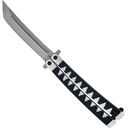
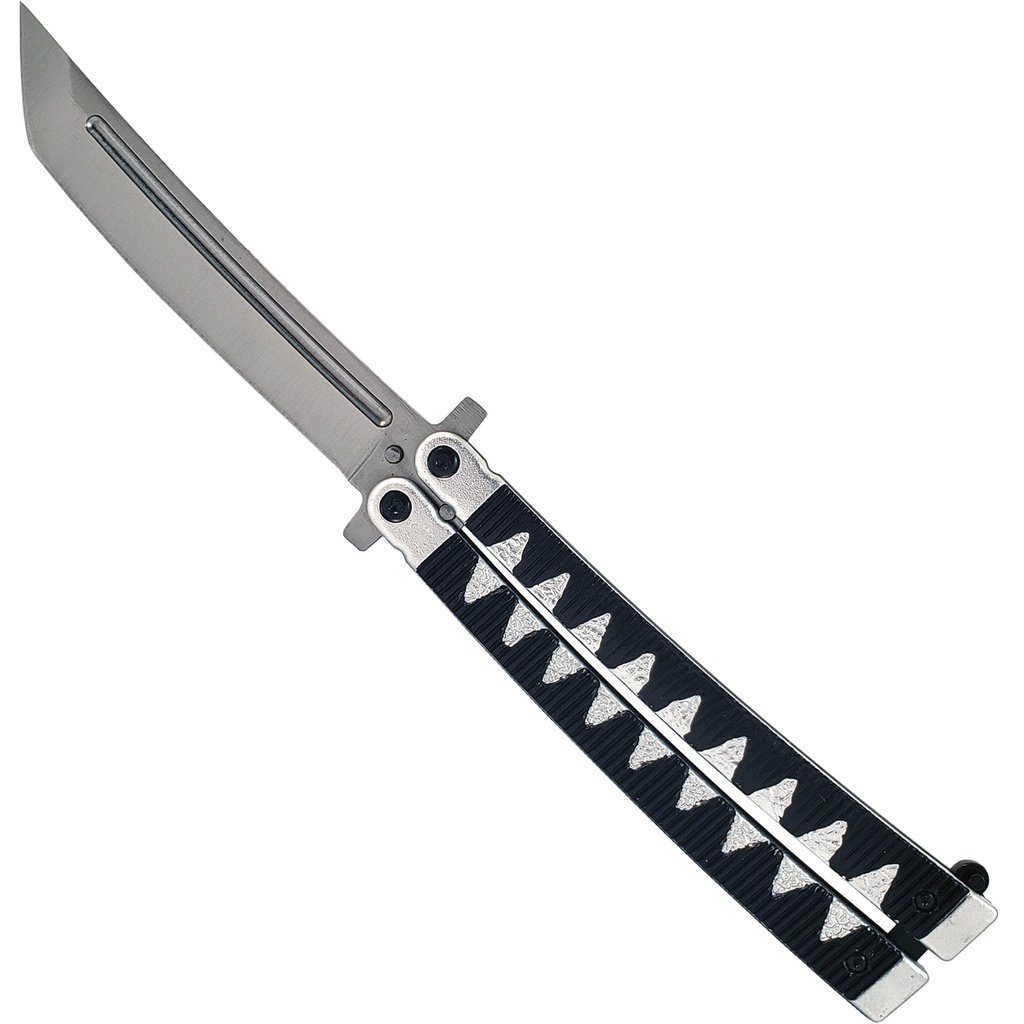
This butterfly knife brings katana heritage into the balisong world with a tsukamaki-inspired metal handle and a Japanese tanto blade that feels right at home in a Texan’s hand. The stainless steel construction gives it honest weight for smooth, predictable flipping, while the latch keeps it locked down when you’re done. In a state where folks know their steel, this is the kind of butterfly knife that stands out in a case and feels even better in motion.
| Blade Length (inches) | 4.25 |
| Overall Length (inches) | 9.75 |
| Closed Length (inches) | 5.75 |
| Weight (oz.) | 5.1 |
| Blade Color | Silver |
| Blade Finish | Matte |
| Blade Style | Japanese Tanto |
| Blade Edge | Plain |
| Blade Material | Stainless Steel |
| Handle Finish | Matte |
| Handle Material | Metal |
| Theme | Katana Wrap |
| Latch Type | Latch |
| Is Trainer | No |
What This Katana-Inspired Butterfly Knife Really Is
This is a true butterfly knife, built on a classic balisong mechanism, dressed in katana clothes. Two metal handle arms swing around a central Japanese tanto blade, locking up with a simple latch. No springs, no buttons, no automatic assist. Just clean, manual action that rewards good technique. The tsukamaki-style grip is cast into the metal, so you get the look of a wrapped katana handle without anything to fray or shift over time.
In Texas, collectors know the difference between a butterfly knife, an automatic knife, and a switchblade. This piece earns its place by being honest about what it is: a manual balisong with samurai lines, not an OTF knife or push-button automatic hiding behind fancy marketing.
Butterfly Knife Mechanism: How This Balisong Works
A butterfly knife, or balisong, lives and dies by its pivots and balance. Here, the stainless steel blade rides between two solid metal handles with visible hardware anchoring each pivot. You open it by hand, swinging the handles around the blade’s tang until everything lines up and locks into a single straight profile. The bottom latch secures the handles when closed, and can also hold the knife open once you’re in position.
Manual Action Versus Automatic and OTF Knives
Where an automatic knife uses a spring and button to snap the blade out from the side, and an OTF knife rides a track straight out the front, this butterfly knife is all about manual control. Nothing deploys until you move it. That matters for Texas buyers who want a clear line between a balisong they flip, an automatic they carry, and a switchblade that opens with a single press.
Balance, Weight, and Flipping Rhythm
At 5.1 ounces with a 9.75-inch overall length, this butterfly knife sits in that sweet spot where gravity helps, but never bullies, your flips. The full metal construction gives each swing a predictable arc, and the long fuller on the blade trims just enough weight to keep it from feeling nose-heavy. Once you find your rhythm, the knife flows like a metronome—steady, repeatable, and satisfying.
Design Story: Katana Lineage in a Butterfly Knife
The visual story starts at the handle. The alternating silver “diamonds” over a dark base mimic traditional tsukamaki wrapping from a Japanese katana, but here it’s cast in metal. No cloth, no leather, just a permanent pattern that nods to sword history while standing up to pocket life. Paired with the Japanese tanto-style blade, you get a straight, confident line from guard to tip that looks more like a scaled-down sword than a typical butterfly knife.
Japanese Tanto Edge with Texas Practicality
The Japanese tanto profile gives you a strong, reinforced tip and a clean plain edge, with a matte silver finish that doesn’t scream for attention. It’s a practical cutting shape for light everyday tasks, but let’s be honest: for most Texas collectors, this one’s about the blend of form and motion. It flips like a balisong, looks like a pocket katana, and sits in the display case like it belongs there.
Butterfly Knife Reality for Texas Buyers
Texas has a long memory when it comes to knife laws, and collectors here tend to keep the categories straight. A butterfly knife like this is a manual folder with two handles, not an automatic knife and not an OTF knife masquerading as something else. That distinction matters for folks who carry different tools for different roles: a side-opening automatic knife in the truck, maybe a switchblade in the safe, and a butterfly knife like this at home or the ranch for flipping and collection value.
The solid metal construction and 5.75-inch closed length give it some presence in the pocket. This isn’t a dainty little keychain blade; it feels like a compact piece of sword history that happens to fold. For many Texas buyers, that makes it less of a daily rider and more of a deliberate choice—something you take along when you want to show a bit of skill or talk steel with somebody who understands the difference between a balisong and a button-lock automatic.
What Texas Buyers Ask About Butterfly Knives
Is a Butterfly Knife the Same as an Automatic, OTF, or Switchblade?
No. A butterfly knife is its own thing. You open this balisong by hand, swinging two handles around a fixed pivot until the blade locks in line. An automatic knife uses a spring to fire a side-opening blade with a button or lever. An OTF knife sends the blade straight out the front on rails, usually with a thumb slider. A switchblade is the broader family of spring-driven automatics. This katana-inspired piece is a manual butterfly knife only—no springs, no buttons, no OTF mechanism.
How Do Butterfly Knives Fit into Texas Knife Culture and Law?
Texas collectors watched the laws loosen over the years, and that’s opened the door for more honest talk about knife types. While you should always check the current Texas statutes and your local rules, the trend has favored treating knives like tools instead of contraband, whether it’s a butterfly knife, an automatic knife, or a classic switchblade. That said, many Texans still choose where and how they carry each type with some care—keeping a balisong like this close to home, at the ranch, or in the collection where they can enjoy the flipping without worrying about confusing it with an OTF or other automatic in public settings.
Is This Butterfly Knife Built for Serious Collectors or Just Display?
The answer is both. The tsukamaki-inspired handle and Japanese tanto blade give it display-case charisma, but the full metal build, working latch, and real edge make it a functional butterfly knife, not a toy. For a Texas collector with a drawer full of automatics, OTF knives, and old-school switchblades, this piece stands out by offering something different: a balisong that carries katana lineage without pretending to be anything else. It’s the knife you pull when you want to talk about design, heritage, and mechanism in the same breath.
Why This Butterfly Knife Belongs in a Texas Collection
There are plenty of butterfly knives on the market, and more than a few automatic knives and OTF options clogging up the same search results. This one earns its place by being specific: a katana-inspired balisong with a tsukamaki-style metal handle, a Japanese tanto blade, and honest manual action. No confusion, no marketing shortcuts.
For a Texas buyer who already knows the difference between a switchblade, an OTF knife, and a butterfly knife, that clarity matters. You’re not just buying another folder—you’re adding a piece that tells a clean story. Samurai lines, balisong mechanics, and a grounded, working-knife feel. It’s the kind of knife that sits in the case next to your favorite automatic and still manages to start the better conversation. In a state full of people who know their steel, that’s the kind of company worth keeping.