
Service Rifle M1 Garand Armorer’s Technical Manual - Army Yellow
8 sold in last 24 hours
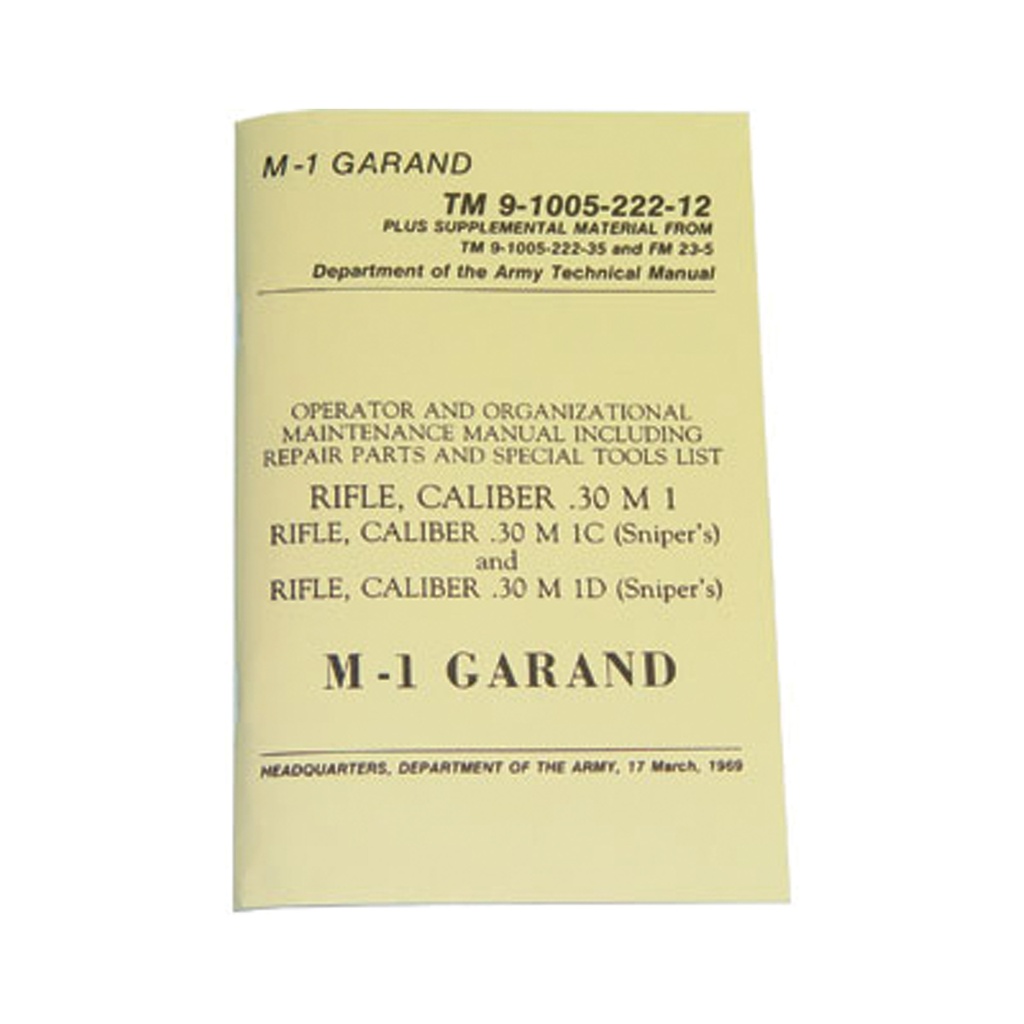
This M1 Garand armorer’s technical manual is the ordnance-yellow field book that should live on every Texas workbench. Reproduced in classic Department of the Army format, it walks you through operator and organizational maintenance for the M1 rifle plus M1C and M1D sniper variants with clear procedures, parts lists, and diagrams. Whether you’re a Garand collector in Houston or a range regular in Abilene, this is the no-nonsense reference that keeps a service rifle running right and historically correct.
M1 Garand Armorer’s Technical Manual for Serious Texas Riflemen
This isn’t a coffee-table history piece; it’s a working M1 Garand armorer’s technical manual in classic ordnance yellow, built for a Texas workbench. Reproduced in the original Department of the Army format, it covers operator and organizational maintenance for the M1 rifle, plus the M1C and M1D sniper variants, with the kind of step-by-step procedures and diagrams armorers actually use. If you own a Garand in Texas and care how it runs, this is the book that belongs next to your tools and grease, not your souvenirs.
What This M1 Garand Technical Manual Really Is
This is a Department of the Army Technical Manual (TM 9-1005-222-12) in softcover form, with supplemental material drawn from TM 9-1005-222-35 and FM 23-5. In plain English, that means you’re getting:
- Operator-level instructions: how to safely run, clean, and inspect an M1 Garand
- Organizational-level procedures: the armorer-level checks, adjustments, and repairs
- Coverage of M1, M1C, and M1D sniper rifles in one place
- Exploded diagrams, parts lists, and special tools references
For Texas shooters used to sorting useful information from gun-counter myths, this is the authoritative side of the conversation. It reads like an armorer talking you through what actually matters: function, safety, and keeping a service rifle honest.
Mechanics, Not Myths: How This Manual Serves the Rifle
Unlike the way folks argue about the difference between an automatic knife, an OTF knife, and a switchblade, the M1 Garand’s mechanism is settled law. It’s a gas-operated, semi-automatic service rifle with a specific way it wants to be cleaned, inspected, and lubricated. This armorer’s technical manual respects that.
Step-by-Step Procedures Written for the Bench
Inside, you get procedures laid out in the order an armorer would actually touch the rifle: clear it, strip it, inspect key wear points, replace what’s out of spec, then reassemble and function test. Each checklist is written to be followed, not admired. Sections on the M1C and M1D sniper variants call out the differences that matter so you don’t treat a scoped rifle exactly like a rack-grade Garand where it shouldn’t be.
Parts, Tools, and The Right Kind of Detail
The manual calls out repair parts and special tools so you know what you actually need to service a rifle correctly. That’s the difference between guessing at a range fix and doing armorer-level work. For Texas collectors used to sorting through internet hearsay, having the original Army-approved specs on paper is its own kind of relief.
Texas Garand Life: From Hill Country Ranges to Houston Benches
In Texas, an M1 Garand sees a different kind of use than it did on a World War II line, but the maintenance needs haven’t changed. Between dusty Hill Country ranges, Gulf Coast humidity, and long drives to CMP matches, a service rifle can go from clean to crusted faster than you’d think. This armorer’s technical manual helps you put it back to rights the same way a unit armorer would have done decades ago.
Whether you keep a single heirloom Garand in San Antonio or a rack of M1C and M1D sniper variants in Dallas, the procedures inside give you a repeatable way to bring every rifle back to a known baseline. No internet improvisation, no half-remembered forum advice—just the same technical standard the Army wrote down in 1969.
Why Collectors Treat This Manual as Gear, Not Décor
For a Texas collector, documentation is part of the collection. A softcover M1 Garand technical manual in ordnance yellow does two jobs at once: it proves you respect the rifle’s history, and it helps you keep the rifle running like the piece of ordnance it is.
- Historical authenticity: The original-style Army format matches the era of the rifle itself.
- Practical value: Procedures and diagrams you’ll actually reference at the bench.
- Sniper variant coverage: M1C and M1D information that’s harder to find in one place.
- Collector credibility: Shows you care enough to use the right manual, not a guess.
Some books sit on a shelf. This one earns its grease marks.
What Texas Buyers Ask About the M1 Garand Technical Manual
How does this manual compare to generic gun books or online guides?
This M1 Garand technical manual isn’t a general “how to shoot” book; it’s an official-style Department of the Army document focused on one rifle family. Think of it the same way you’d think about understanding whether you’re carrying an automatic knife, an OTF knife, or a switchblade: the more specific the information, the more useful it is. Here, every procedure, diagram, and parts list is written around the M1, M1C, and M1D service rifles—no filler, no borrowed AR-15 tips, no guesswork.
Is there anything in this manual that doesn’t apply to civilian-owned Garands in Texas?
From a Texas shooter’s standpoint, the technical content applies clean across the board: how to operate, field-strip, inspect, and maintain an M1 Garand is the same whether the rifle is riding to the lease outside Lubbock or sitting in an Austin safe. What doesn’t cross over are the old organizational structures and paperwork references—those are historical context more than marching orders. The mechanical procedures, tolerances, and diagrams are exactly what a Texas armorer or gunsmith still leans on when they want the rifle done right.
Is this worth it if I already know my way around an M1?
If you’ve been running a Garand for years, you may think you’ve seen every trick—but this manual does two things you can’t get from memory alone. First, it gives you the official sequence and specs: where the Army said to measure, how they said to gauge, what they considered within limits. Second, it standardizes your process. When you’re working through a rack of rifles in a Texas shop or bringing a CMP find back to life, having a single armorer’s reference means you don’t have to reinvent the checklist every time. It’s less about learning something brand-new and more about locking in what “right” really is.
Texas Collector Identity: Owning the Rifle and the Record
In Texas, the folks who take their rifles seriously tend to take their references seriously too. Owning an M1 Garand, M1C, or M1D without an armorer’s technical manual is a little like carrying a fine automatic knife without ever learning how its mechanism really works—you can do it, but you’re leaving understanding on the table. This ordnance-yellow manual gives your Garand collection a backbone of documented procedure. It fits the Texas way of doing things: know your tools, know your rifle, and keep both running without drama.