
Silent Dojo Heritage Sai Pair - Black Leather
11 sold in last 24 hours
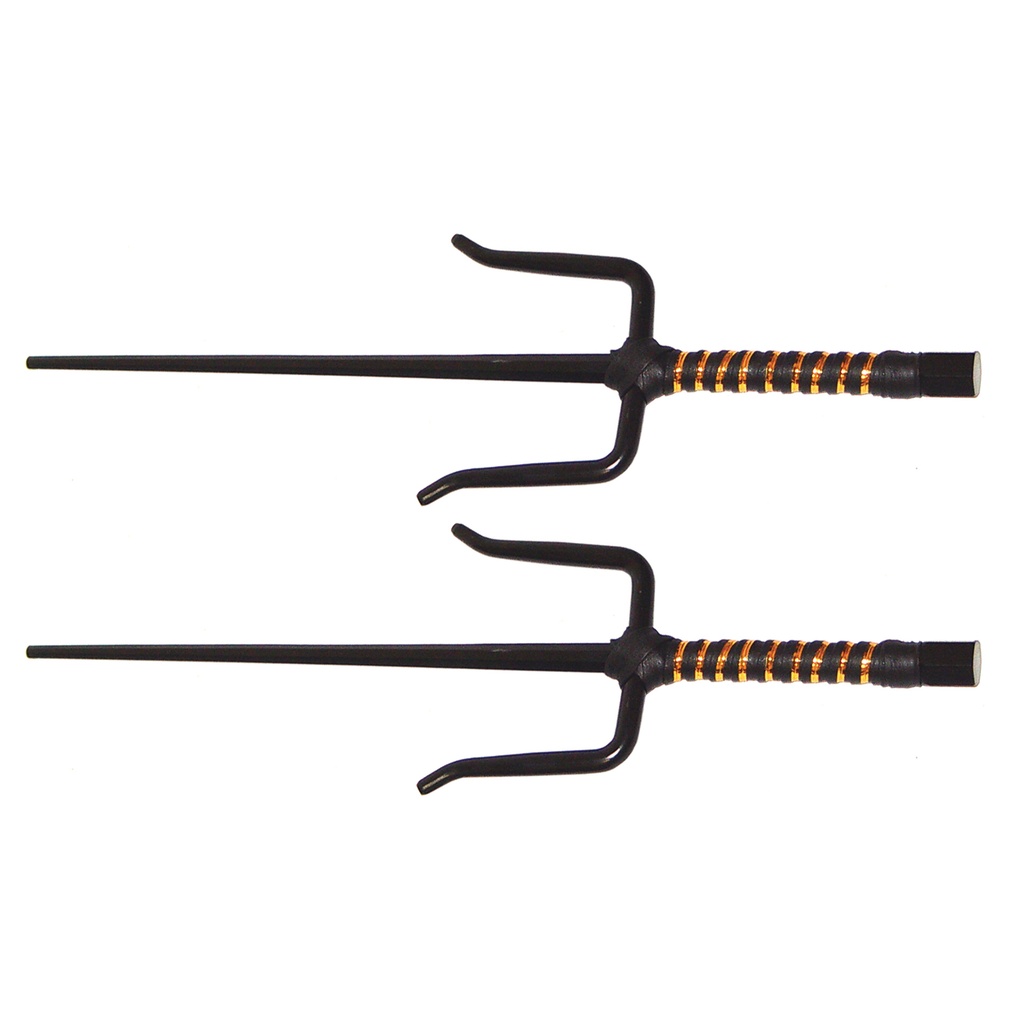
This Silent Dojo Heritage Sai Pair brings traditional Okinawan lines into a modern blacked‑out finish. Each all‑metal sai runs 19.5 inches with a straight central prong, compact side tines, and a leather‑wrapped handle trimmed in gold‑tone bands. Balanced for kata, training, or display, this ninja sai set feels solid in hand and sharp on the wall. For Texas martial artists and collectors, it’s a clean, matching pair that looks like it belongs in the dojo—not the toy aisle.
Silent Dojo Heritage Sai Pair for Texas Collectors
This Silent Dojo Heritage Sai Pair isn’t a fantasy wall prop—it’s a matched set of traditional Okinawan-style sai built in full metal with a modern black finish. At 19.5 inches each, these ninja sai carry real presence in the hand and on the rack, with enough weight and balance for kata, training, or serious display in a Texas collection.
What This Ninja Sai Pair Is—and What It Isn’t
Let’s say it plain: this is a sai pair, not a nunchuck, not an automatic knife, not a switchblade, and not an OTF knife. A sai is a three-pronged martial arts weapon: a straight central prong for thrusting and blocking, flanked by two curved side prongs that help trap, guide, or control an opponent’s weapon. There’s no folding mechanism, no spring, no button—just solid, fixed construction meant to work with traditional Okinawan and ninja-inspired techniques.
On a site that talks a lot about automatic knives, OTF knives, and switchblades, this set earns its place by contrast. Where an automatic knife snaps open with a spring, a sai is always ready. No deployment, no blade to lock, just a fixed, dependable form for kata, demonstration, or display. If you’re the kind of Texas collector who likes understanding the difference between your gear, this pair fits right in alongside your blades as a dedicated martial arts piece.
Design Details: Traditional Okinawan Lines, Modern Blacked-Out Finish
Each piece in this ninja sai set follows the classic pattern: a straight, tapered central prong with a defined tip, two compact side prongs swept slightly outward, and a solid pommel at the base. The full black metal build gives the pair a stealth, modern look, while the leather-wrapped handle and gold-tone trim nod to traditional training weapons you’d see in a serious dojo.
Grip and Balance for Kata and Training
The leather-wrapped grip offers a firm, tactile hold when you’re working through forms. Gold-tone spiral bands tighten that visual line and add just enough contrast to break up the black. At 19.5 inches, each sai sits in that sweet spot: long enough to feel authentic and commanding, short enough to move quickly through spins, guards, and transitions.
Built for Display as Much as Practice
Texas collectors know some pieces live in the hand, and some mostly live on the wall. This pair does both. The all-black finish with subtle gold accents makes the set display-ready out of the box. Parallel on a plaque, crossed over a scroll, or racked over your automatic knife collection, they read as serious martial arts weapons, not costume filler.
Texas Context: Sai, Knives, and the Law
Texas law draws its lines differently for knives, clubs, and other weapons. A sai pair like this generally falls under impact or martial arts weapons rather than under automatic knife, OTF knife, or switchblade statutes. That means the legal conversation around blade length, deployment buttons, and automatic opening that we have to have with knives doesn’t apply the same way here.
That said, Texas still has rules about where you can carry weapons—schools, courthouses, and certain posted places stay off-limits. If you’re hauling this ninja sai set to a Texas dojo in Houston, Dallas, Austin, or anywhere else, common sense applies: keep them cased, treat them as training weapons, and respect posted signs and local ordinances. This isn’t legal advice, just the kind of grounded perspective a Texas collector expects when we talk about anything that can be used as a weapon.
How a Sai Pair Fits Alongside Automatic Knives and Switchblades
If you collect automatic knives, OTF knives, or classic switchblades, this sai pair adds a different chapter to the story. Automatics and OTFs are all about deployment mechanisms—springs, sliders, side-opening versus out-the-front action. A switchblade folds and fires from the side, an OTF knife drives the blade straight out the front, and an automatic knife is any spring-driven opener built around a button or similar trigger.
The ninja sai set ignores all of that. Fixed steel, no moving parts, no lockup to worry about. It belongs in the same collection for a different reason: it’s a pure martial arts form. You get the same satisfaction of owning a dedicated tool with a deep history, without blurring the lines on what it is. When a Texas collector walks your wall, they can tell at a glance: blades here, automatics there, traditional Okinawan sai right alongside them—each piece honest about what it was built to do.
Mechanism and Use: From Dojo to Display
Because there’s no mechanism, maintenance is straightforward. Wipe down the black metal to keep the finish clean, keep the leather grip dry and conditioned if needed, and resist the urge to treat it like a pry bar. In a Texas dojo, this pair works for basic blocks, kata, stance work, and demonstration. At home, it works as a quiet signal that you appreciate martial tradition, not just modern knife tech.
What Texas Buyers Ask About Ninja Sai
How do sai compare to automatic knives, OTF knives, and switchblades?
They don’t overlap much. An automatic knife or switchblade is a bladed tool with a spring-assisted opening—either side-opening or as an OTF knife that comes straight out the front. A sai pair has no blade edge and no mechanism; it’s a rigid martial arts weapon built for blocking, trapping, and control. If you’re shopping automatic knives or switchblades and end up here, think of this ninja sai set as a companion piece in your Texas collection, not a substitute.
Is it legal to own a ninja sai set in Texas?
In Texas, owning a sai pair like this is generally legal for adults, and these are commonly sold as martial arts training weapons and display pieces. Where things tighten up is carry and location: even in a weapon-friendly state, you still have to respect restricted locations and any local rules your dojo or training space may have. When in doubt, treat this set like you’d treat a visible long gun or a serious automatic knife in public—transport respectfully, keep it cased, and know the setting you’re stepping into.
Is this sai pair better for training use or display for a Texas collector?
It does both well, but how you use it depends on your priorities. If you’re a Texas martial artist, the full-metal construction, 19.5-inch length, and leather-wrapped grip make it a solid training and demo set. If you’re mainly a knife and weapon collector, the modern black finish and gold-accented handles give you a sharp, symmetrical display piece that stands out next to your automatic knives, OTF knives, and classic switchblades. Either way, it earns its space by looking and feeling like a serious traditional weapon, not a novelty.
For a Texas buyer who already knows the difference between a switchblade, an OTF knife, and an automatic knife, adding a dedicated ninja sai set like this Silent Dojo Heritage Sai Pair is about rounding out the story. You’re not just stacking more blades—you’re collecting the forms that shaped the way people trained, fought, and carried themselves. Black steel, leather grip, clean lines: it’s a quiet nod to tradition that fits right in with a modern Texas collection.