Square & Compasses Heritage Sword Cane - Black Stainless
15 sold in last 24 hours
This heritage sword cane carries the square and compasses right where you rest your hand. The black shaft hides a 12-inch stainless blade, ready when the moment calls for ceremony, display, or discreet backup. It’s built for Freemasons and fraternal collectors who appreciate subtle regalia with real steel inside. In a Texas lodge or in your study, this sword cane feels like a piece of tradition you don’t just look at—you carry it.
Square & Compasses Heritage Sword Cane – What It Really Is
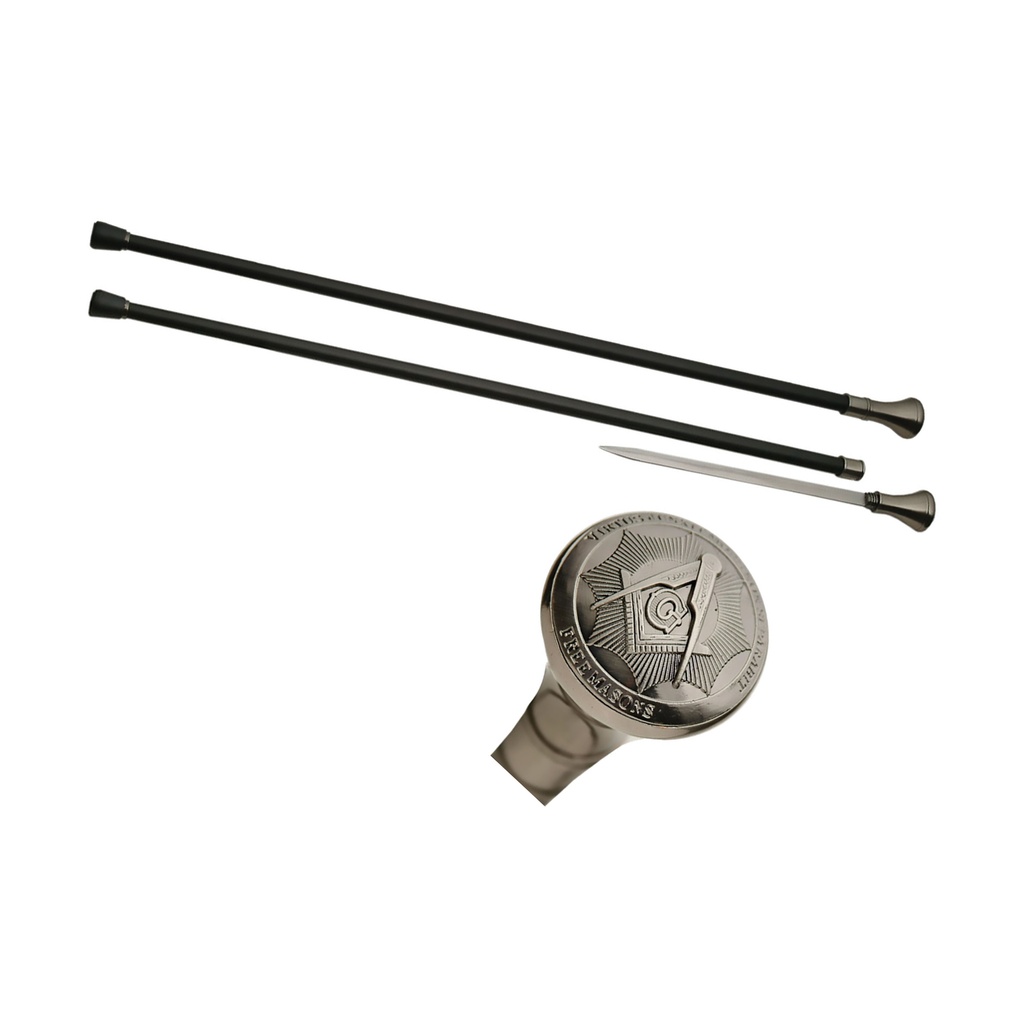
This isn’t a switchblade, an automatic knife, or an OTF knife trying to pass as something it’s not. The Square & Compasses Heritage Sword Cane is a concealed fixed-blade sword cane: a straight 12-inch stainless blade hidden inside a black walking cane shaft, crowned with a Masonic emblem knob. No spring, no push-button deployment, no sliding OTF mechanism—just a discreet steel blade nested in a cane that reads fraternal and ceremonial at first glance.
For Texas buyers who know the difference between an automatic knife, an OTF knife, and a true sword cane, that honesty matters. This piece belongs beside lodge regalia and collector blades, not in the automatic or switchblade bin.
Masonic Sword Cane Design for Fraternal Collectors
What sets this sword cane apart is the story it tells before anyone sees the blade. The round metal knob carries the Masonic square and compasses in clear relief, ringed by subtle radiating lines. The shaft runs clean and straight in matte black, ending in a rubber tip that looks like any other walking cane in a Texas crowd.
Twist or pull the handle, and you reveal the slim stainless blade hidden in the core. The mechanism isn’t about speed like an automatic knife or the dramatic slide of an OTF knife. It’s about discretion, symbolism, and that quiet satisfaction when steel and tradition meet in one piece.
Concealed Fixed Blade, Not a Spring Mechanism
The blade in this sword cane is fixed once drawn—no hinge, no assisted opening, no sliding track like an OTF. The concealment lives in the sheath-like cane shaft, not in a folding or automatic action. Collectors who already own switchblades or OTF knives will recognize this as a different animal entirely.
Stainless Steel Built for Display and Occasional Use
The 12-inch stainless blade is slim and straight, made for light ceremonial or backup use, not heavy chopping. In a Texas collection, it stands as a conversation piece beside your automatic knives, OTF knives, and traditional switchblades—proof that not every sharp edge needs a pocket clip.
Sword Cane vs Automatic Knife vs OTF Knife
Texas collectors get frustrated when every sharp object gets thrown under the same “switchblade” label. This Masonic sword cane helps draw a clean line:
- Sword Cane: Long, straight concealed fixed blade inside a cane shaft. Deployed by separating handle and shaft. No spring, no button.
- Automatic Knife: Side-opening blade that swings out from the handle when you hit a button or release. Pocket-sized, fast, and usually carried clipped.
- OTF Knife: Out-the-front knife where the blade rides on a track and shoots straight out of the handle, typically with a thumb slide.
This piece is firmly in the sword cane category. You might store it in the same Texas gun room or office as your switchblades, OTF knives, and other automatic knives, but you own it for different reasons: heritage, symbolism, and display.
Why the Distinction Matters to Texas Buyers
When you’re a Texas collector who knows their hardware, you don’t call a sword cane an automatic knife any more than you’d call a lever gun an AR. Mechanism defines category. This Masonic sword cane earns its spot as a ceremonial and defensive adjunct, not as an everyday pocket carry like a switchblade or OTF knife.
Texas Context: Carrying a Sword Cane in the Lone Star State
Texas law has changed over the years, loosening restrictions on many blade types, including automatic knives and traditional switchblades. Even so, a sword cane lands in a different bucket than a pocket-sized OTF knife or side-opening automatic. It’s a long blade concealed in a walking stick, which can trigger different rules and reactions.
This piece is best treated as a collector’s item, ceremonial accessory, or home/display companion, not as an everyday carry tool you walk into a courthouse or school with. Texas is friendly to knives, but property owners, businesses, and local ordinances can still draw hard lines on concealed long blades—especially when they’re built into canes.
Best Use in Texas Life
Use this sword cane where it makes sense: at home in a lodge-themed study, as part of a Freemason display, or in private settings where a ceremonial or fraternal cane is welcomed. For practical day-to-day carry, most Texans will still reach for a smaller automatic knife, an OTF knife, or a simple lockback that slips into a pocket without questions.
Collector Value: Fraternal Symbolism with Real Steel Inside
To a serious Texas collector, this isn’t just a hidden blade in a stick. It’s a convergence of three collecting lanes: fraternal regalia, edged weapons, and concealed carry curiosities. The Masonic emblem on the knob speaks to lodge history; the stainless sword hidden inside gives the cane literal and figurative weight.
If your drawer’s already full of automatic knives, OTF knives, and vintage switchblades, this sword cane broadens the story your collection tells. It becomes the piece you point to when someone asks about unusual mechanisms or fraternal gear with functional edges.
Display Presence
On a stand in a Texas office or den, the black shaft and bright emblem handle read as classic, not flashy. Only when you separate the shaft and reveal the 12-inch blade does it join the rest of your edged collection. That reveal is what keeps collectors coming back to sword canes—they bridge the gap between walking cane, ceremonial staff, and concealed weapon.
What Texas Buyers Ask About Masonic Sword Canes
Is this like an automatic knife, an OTF knife, or a switchblade?
No. A sword cane like this Masonic piece is a concealed fixed blade stored inside a hollow cane shaft. There’s no spring, no button, and no out-the-front track. An automatic knife and a switchblade are typically side-opening pocket knives that deploy by button or release. An OTF knife pushes the blade straight out of the handle on rails. This sword cane simply draws straight out of the shaft—closer to unsheathing a short sword than firing a switchblade.
Are sword canes legal to carry in Texas?
Texas has become much more permissive with knives, including automatic knives and traditional switchblades, but long, concealed blades in canes fall into a gray, situational area. Law can change, and enforcement can vary by context. This piece should be treated primarily as a collectible or ceremonial item. Before carrying a sword cane in public in Texas, especially into businesses, events, or urban areas, a buyer should review current Texas law and local rules for concealed blades and restricted locations.
Who is this sword cane really for—user or collector?
This Masonic sword cane leans collector first, user second. It will appeal to Freemasons, fraternal organization members, and Texas collectors who already own automatic knives, OTF knives, and maybe a switchblade or two and want something with more symbolism. It’s functional steel, but the real value is in the Masonic emblem, the heritage styling, and the concealed-blade novelty. If you want a hard-use daily knife, look to a dedicated automatic or OTF. If you want a fraternal showpiece with a hidden edge, this belongs in your stable.
For the Texas Collector Who Knows the Difference
The Square & Compasses Heritage Sword Cane doesn’t pretend to be an automatic knife, an OTF knife, or a modern tactical switchblade. It stands in its own lane: a fraternal, ceremonial sword cane with a 12-inch stainless blade riding quiet inside a black shaft. If you’re the kind of Texas buyer who cares how a blade deploys, where it rides, and what story it tells, this piece fits right alongside your folders and automatics—different mechanism, same respect for steel and tradition.