Star of Life Rescue Assisted Opening Knife - Orange Aluminum
8 sold in last 24 hours
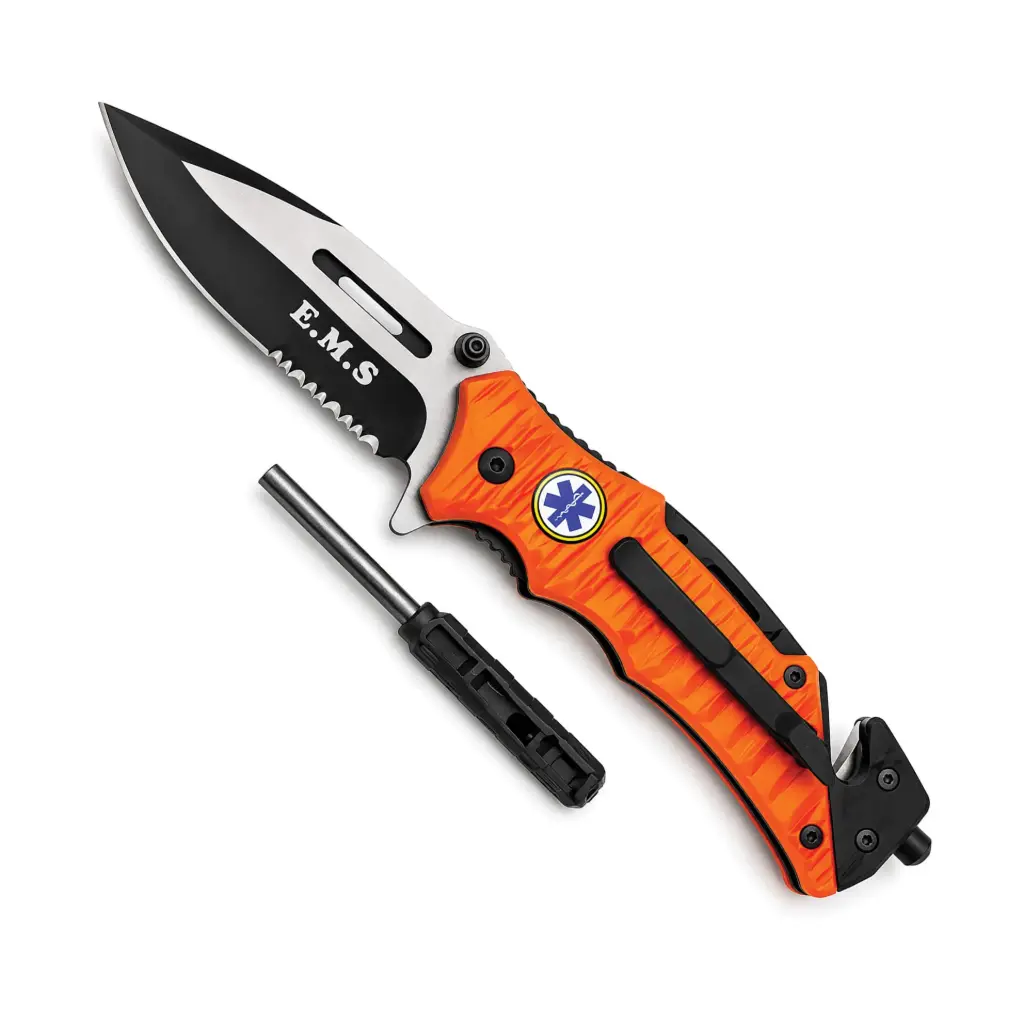
This assisted opening knife pairs manually initiated, spring-assisted deployment with a recognizable EMS identity. Orange aluminum, a blue Star of Life emblem, and a partially serrated clip-point blade give its rescue theme substance. Unlike an automatic knife or automatic OTF knife, it requires you to start the blade moving; it is not a switchblade. For a Texas buyer organizing everyday essentials or building a rescue-themed collection, the pocket clip and integrated rescue tools make a considered combination. It belongs with someone who buys by mechanism, not just appearance.
| Blade Length (inches) | 3.25 |
| Overall Length (inches) | 8.125 |
| Closed Length (inches) | 5 |
| Blade Color | Black |
| Blade Finish | Matte and satin |
| Blade Style | Clip Point |
| Blade Edge | Partial-Serrated |
| Handle Finish | Textured |
| Handle Material | Aluminum |
| Theme | EMS |
| Pocket Clip | Yes |
| Deployment Method | Spring-assisted |
An Assisted Opening Knife With a Clear Rescue Identity
An assisted opening knife starts with your input, not a button that releases the blade automatically. On this EMS-themed folder, a thumb stud and flipper tab provide visible opening controls, while spring assistance helps complete deployment after you initiate blade movement. That distinction matters before the orange handle or rescue tools enter the conversation.
The Star of Life Rescue Assisted Opening Knife wears its purpose plainly. A blue Star of Life emblem sits against orange aluminum, and E.M.S lettering carries the theme onto the black-and-silver blade. For Texas collectors, that is a recognizable design story backed by identifiable features—not a reason to mislabel it an automatic knife, OTF knife, or switchblade.
This assisted opening knife brings together a folding blade, pocket clip, and integrated rescue features. The first buying decision is straightforward: choose it because you want assisted action and EMS-inspired utility, not because you expect automatic deployment.
How This Assisted Opening Knife Opens
Manual initiation, then spring assistance
The defining feature of an assisted opening knife is the opening sequence. You begin moving the blade through its opening control; the spring then assists the remaining travel. An automatic knife instead releases its blade through an automatic operating control. The two can look similar in photographs, but the action in your hand is different.
This assisted opening knife has both a thumb stud and flipper tab visible. Follow the supplied operating instructions, keep fingers clear of the blade path, and verify secure lock engagement before use. The available specifications do not identify the lock design, so there is no reason to invent one.
A folding clip point with two cutting sections
The 3.25-inch clip-point blade combines a plain cutting section with partial serrations. That gives this assisted opening knife two edge profiles for different cutting tasks. Its black-and-silver appearance combines matte and satin finishes. Blade steel and hardness are unspecified; collectors should judge the documented configuration without assuming a premium alloy or particular edge-retention performance.
An Assisted Opening Knife Is Not an Automatic Knife or OTF Knife
Think of these names as descriptions with some overlap, not three interchangeable labels. An automatic knife opens under spring power when its release is operated. A switchblade is a common name for that automatic category, although legal definitions deserve their own attention. Automatic knives can open sideways or send the blade forward.
An OTF knife describes the blade's path: out the front of the handle. Many examples are automatic, but OTF alone does not establish the operating mechanism. This assisted opening knife is a side-folding design, not an OTF knife. Its spring assistance also does not make it a switchblade.
For buyers comparing an automatic knife vs OTF knife, the useful questions are separate: what starts deployment, and where does the blade travel? This assisted opening knife answers both without ambiguity. You initiate movement, the spring assists, and the blade pivots outward from the handle.
Texas Carry: Know the Blade and the Rules
This assisted opening knife has a listed 3.25-inch blade, below Texas's more-than-5.5-inch threshold for a location-restricted knife. That measurement matters more than rescue graphics when assessing the state's blade-length classification. Texas generally permits ownership and carry of assisted-opening knives, but that is not blanket permission in every place or circumstance.
Texas removed its general switchblade prohibition in 2013. An automatic knife is therefore not generally prohibited statewide simply because of its mechanism. An OTF knife still needs to be considered under applicable blade-length, location, and other rules. Schools, secured airport areas, federal property, and other controlled settings can involve separate restrictions; check current requirements before carrying.
For everyday planning, this assisted opening knife measures 5 inches closed and has a listed overall length of 8.125 inches. A black pocket clip provides a carry attachment point. Check the closed size against your pocket and workplace policy rather than assuming every folder carries alike. An assisted opening knife remains a cutting tool, whatever the emblem says.
Why This Assisted Opening Knife Earns Drawer Space
Rescue details that belong to the design
The grooved aluminum handle includes finger contours, while the orange finish gives this assisted opening knife a distinct visual identity. An integrated seat belt cutter and glass breaker extend the rescue layout. These features are worth noting, but their presence alone does not establish professional certification, tested emergency performance, or suitability for every vehicle window.
A removable fire starter is shown alongside the knife in the product imagery. Confirm package contents before making it part of your purchase decision. This assisted opening knife should be selected on documented features, not assumptions about accessories. The same standard applies when buying a switchblade or an OTF knife: identify what is actually included.
For a collection organized by mechanism and purpose, this assisted opening knife fills an understandable slot: an EMS-themed rescue folder with assisted deployment. It need not imitate an automatic knife to earn attention. The appeal lies in its coherent combination of orange aluminum, medical-service symbolism, partial serrations, and supplemental tools.
What Texas Buyers Ask About Assisted Opening Knife
Is this an OTF, an automatic, or a switchblade?
No. This assisted opening knife requires manual initiation before spring assistance takes over. An OTF knife opens through the front; this blade folds outward. A switchblade opens automatically through its release mechanism. Knowing those differences helps you buy the action you intended instead of relying on loose category labels.
Is an assisted opening knife legal to carry in Texas?
Generally, yes. This assisted opening knife has a listed blade length below the state's location-restricted threshold. Carry still depends on the setting and applicable rules. Verify current law and destination policies, especially for schools, secure facilities, travel, or federal property. Product descriptions are not individualized legal advice.
Who should choose this rescue folder?
Choose this assisted opening knife if its EMS identity, assisted action, and integrated tools match your priorities. Buyers requiring a specified steel, named lock, verified clip orientation, or certified rescue performance should obtain those details first. A serious Texas collection has room for practical variety—and owners who know exactly what each piece is.