
Brush Country Classic Fixed Blade Knife - Bone Handle
3 sold in last 24 hours
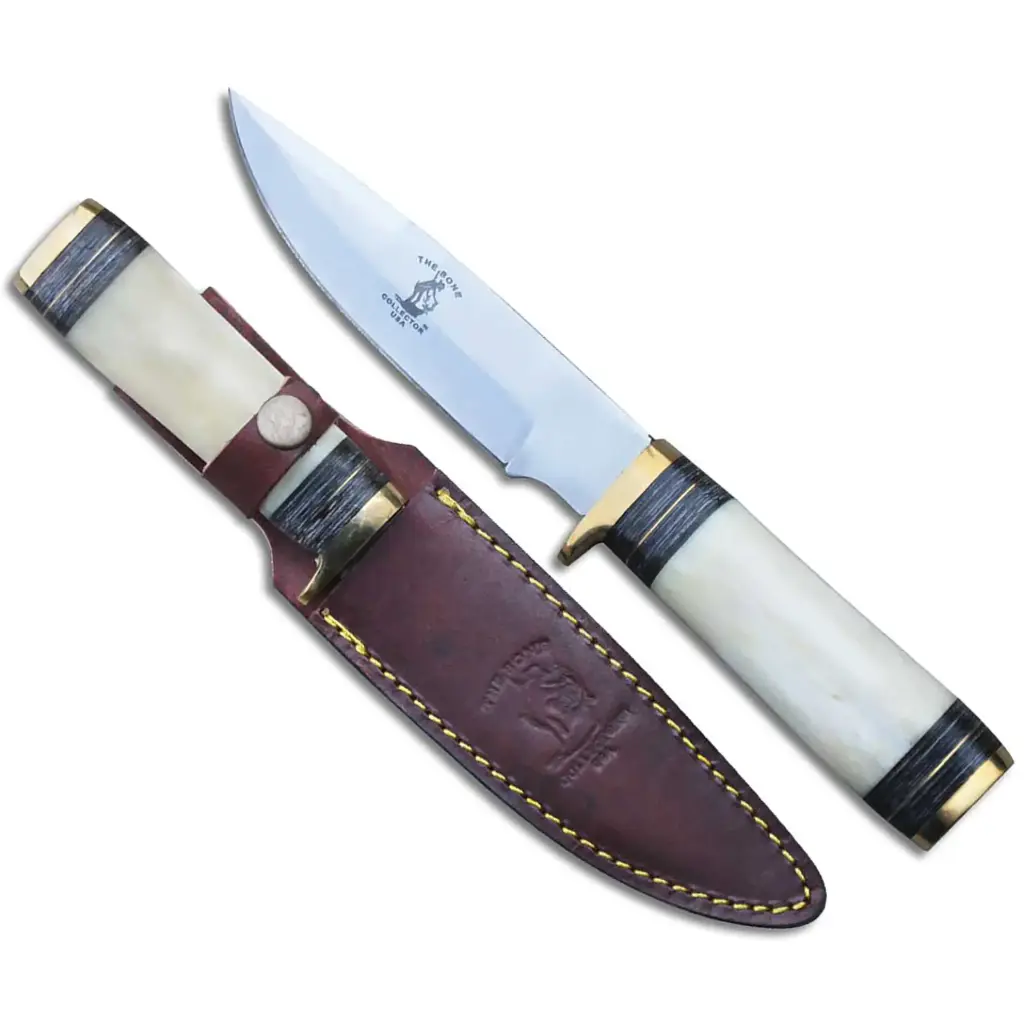
This is a classic fixed blade hunting knife built for Texas brush and bone, not glass cases. A satin drop point blade, bone-style handle, and brass guard ride in a fitted leather sheath that sits right on a belt or saddle rig. It isn’t an automatic knife, an OTF knife, or a switchblade—it’s the traditional field knife you reach for when game is down and work needs doing. For Texas collectors who know their mechanisms, this one earns its place the old-fashioned way.
What This Fixed Blade Knife Is – and What It Isn’t
The Stealth Shadow is pictured like an automatic knife in the name, but in the hand it’s a classic fixed blade hunting knife. No button, no spring, no OTF knife sliding track, and no switchblade mechanism hiding in the handle. The blade is already out, locked by solid steel and a full tang under that bone-style handle. This is the kind of knife Texas hunters and collectors grew up seeing on a belt at the deer lease long before the first automatic knife hit the shelves.
If you’ve been burned by sellers calling every pocket piece a switchblade, this one earns trust by being plain honest: it’s a traditional fixed blade field knife with modern fit and finish, and that’s exactly how it should be carried and collected in Texas.
Fixed Blade Confidence vs. Automatic Knife Convenience
There’s a time for an automatic knife or an OTF knife in your pocket, and there’s a time for a real hunting blade on your belt. This knife is built for that second moment. The satin drop point blade gives you control for skinning and field dressing, where a switchblade or OTF knife would just get in the way. No springs to gum up with fat, no tracks to choke on grit—just steel, bone-style handle, and your own hand doing the work.
Collectors who already own a drawer full of assisted openers and automatic knives know the gap this fills. You don’t draw this knife because it’s flashy. You draw it because the job in front of you isn’t delicate, and you don’t want to wonder about lock strength or deployment timing. The fixed design is the mechanism story here—simple, honest, and strong.
Mechanism Story: Fixed, Full-Time, No Surprises
Where an automatic knife or switchblade spends its life folded and waiting on a spring, this blade lives ready. The drop point profile is tuned for slicing and controlled tip work, with a plain edge that sharpens easily on a stone in camp. The handle’s bone-style slabs and dark spacers cover what appears to be a full tang, backed up by brass guard and pommel that keep your hand locked in during wet or bloody work.
You’re not managing a button, thumb stud, or OTF slider. You’re managing pressure, angle, and a solid grip. For a Texas buyer who understands the difference, that’s its own kind of reliability.
Texas Carry Reality: Belt Sheath, Lease, and Ranch
Texas is friendly to knives, but how you carry them still matters. This knife comes with a dark brown leather sheath, embossed and stitched for real field use. It rides on your belt the way a classic hunting knife should, ready at the blind, the skinning rack, or the tailgate. Where an automatic knife or switchblade might raise eyebrows in town, a fixed blade in a leather sheath at the deer lease is just part of the uniform.
For many Texas collectors, this isn’t an EDC in the city; it’s a lease knife, a ranch truck knife, or a camp knife. It pairs well with an automatic knife or OTF knife in your pocket so each has its lane: pocket blade for quick cuts, fixed blade for real work. Knowing that distinction is what separates a casual buyer from a serious Texas knife hand.
Texas Law Context for Fixed Blades
Texas law has opened up on knife length and automatic knives in recent years, but it’s still smart to know what you’re carrying and where. This fixed blade is not a switchblade or automatic knife, so it doesn’t fall into that spring-assisted, button-activated category that used to be a gray area. That said, buyers should always check current Texas statutes and local rules before carrying any large fixed blade in certain restricted locations like schools, courthouses, or posted venues.
The upside for Texas collectors is simple: a traditional hunting knife like this, in its sheath, is right at home on private land, ranches, leases, and most everyday settings where folks still respect a working blade.
Design Details Texas Collectors Notice
The first thing your eye catches is the contrast: satin-finished blade, creamy bone-style handle, dark spacer rings, and brass-tone guard and pommel. It’s a look that leans more Hill Country campfire than tactical team. The leather sheath, with yellow stitching and embossed logo, finishes the package in a way that makes sense for a Texas hunting culture that still values leather, brass, and bone.
Blade and Handle for Real Field Use
The drop point blade gives a long, useful belly for skinning and meat work, with a point that won’t punch through a hide unless you tell it to. The plain edge is easy to touch up on a stone out at camp—no need for special tools or systems. The smooth bone-style handle fills the palm without hot spots, and the brass guard keeps your hand from sliding forward when things get slick.
In a world of blacked-out OTF knives and skeletonized automatics, this knife makes its case through feel and balance, not marketing terms. A Texas buyer who’s dressed game before will recognize the proportions immediately.
What Texas Buyers Ask About Fixed Blade Hunting Knives
Is this anything like an automatic knife, OTF knife, or switchblade?
No. Mechanically, this is the opposite of an automatic knife or OTF knife. There’s no spring, no button, and nothing that snaps open. A switchblade or OTF blade is stored inside the handle and deployed by a mechanism. This fixed blade is already out, full-time, with the handle built around the tang. If you’re shopping automatic knives, OTF knives, or side-opening switchblades, this belongs in a different part of your Texas kit—a belt knife, not a pocket surprise.
Is a fixed blade hunting knife like this legal to carry in Texas?
Texas law is generally favorable to knives, including many automatic knives and larger blades, but there are still restricted places and definitions that matter. A traditional fixed blade hunting knife like this is typically legal to own and carry in most Texas settings, especially on private land, ranches, and hunting property. That said, always verify current Texas statutes and any local restrictions before carrying, particularly in government buildings, schools, or posted locations. Knowing the difference between an automatic knife, a switchblade, an OTF knife, and a plain fixed blade helps you stay on the right side of the law.
Why would a Texas collector add this if they already own automatics?
Because an automatic knife or OTF knife solves speed in the pocket; a fixed blade like this solves strength and control in the field. Serious Texas collectors don’t think in terms of "one favorite knife"—they think in systems. This bone-handled hunting knife covers the jobs where you need full tang strength, a belt sheath, and a grip that doesn’t shift, especially on game. It also brings a traditional look that rounds out a collection heavy on modern switchblades and automatics.
Where This Fixed Blade Belongs in a Texas Collection
This knife doesn’t compete with your automatic knife, OTF knife, or switchblade; it completes them. The automatic rides in your pocket when you’re in town. The OTF knife might live in the truck console. This fixed blade, with its bone-style handle and leather sheath, hangs on your belt when you step onto the lease, walk a fence line, or sit under a mesquite waiting on first light.
For Texas buyers who know their mechanisms and respect the difference, this is the knife that ties your modern collection back to the way your father and grandfather carried steel: plain, ready, and built to work as long as you do.