Tag-Punched Trail Gut Hook Hunting Knife - Bone & Black
15 sold in last 24 hours
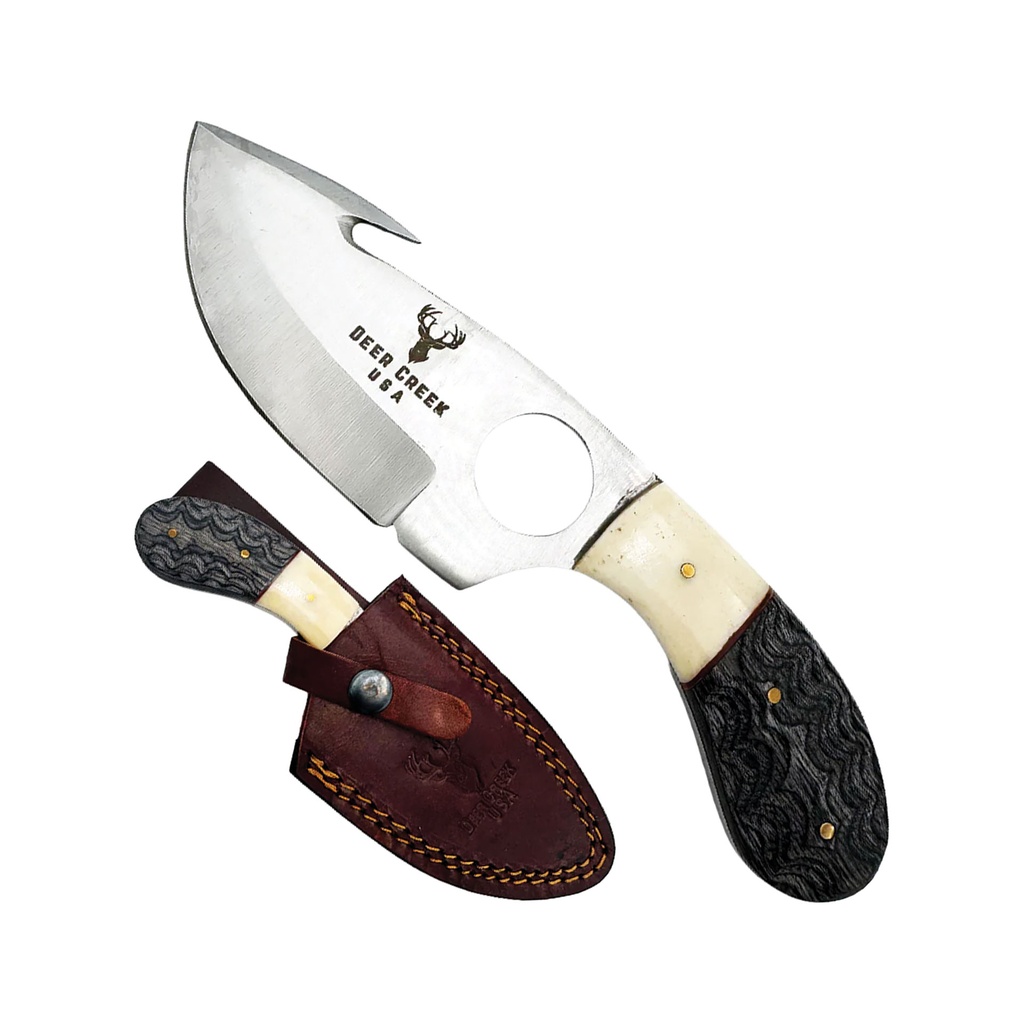
This fixed-blade gut hook hunting knife is built for the moments right after the tag’s punched. A compact 7.25" full-tang frame and 4.25" satin stainless blade keep field dressing clean and controlled. The two-tone bone and black pakkawood handle locks into your hand when things get slick, while the belt leather sheath rides where Texas muscle memory expects it. For deer, hogs, or elk, it’s the kind of hunting knife a Texas hunter reaches for without thinking twice.
| Blade Length (inches) | 4.25 |
| Overall Length (inches) | 7.25 |
| Weight (oz.) | 10 |
| Blade Color | Silver |
| Blade Finish | Satin |
| Blade Style | Gut Hook |
| Blade Edge | Plain |
| Blade Material | Stainless Steel |
| Handle Finish | Polished |
| Handle Material | Bovine Bone & Pakkawood |
| Theme | Hunting |
| Handle Length (inches) | 3 |
| Tang Type | Full |
| Pommel/Butt Cap | None |
| Carry Method | Belt |
| Sheath/Holster | Leather |
What This Gut Hook Hunting Knife Really Is
This is a fixed-blade gut hook hunting knife built for the part of the hunt that doesn’t make the photos. Full-tang, compact, and honest about its job, it’s made to open, dress, and skin deer and other Texas game with smooth, controlled cuts. No springs, no automatic gimmicks, no OTF sliding parts — just a solid hunting knife that does its work the old-fashioned way.
The 4.25-inch satin stainless blade carries a wide belly for skinning and a purposeful gut hook to start your cuts clean. At 7.25 inches overall and right at belt weight, it feels like second nature in the hand. This is the knife that rides on your hip all season, not the one that lives in a display case until company comes over.
Fixed-Blade Gut Hook vs. Automatic Knife vs. OTF
Texas buyers know there’s a world of difference between a fixed-blade hunting knife and any automatic knife, OTF knife, or switchblade. This piece doesn’t deploy; it’s already there. Full-tang steel runs from tip to butt, with no pivot, button, or internal spring to fail when you’re elbow-deep in a deer.
An automatic knife or switchblade is built around fast one-hand opening with a button or lever. An OTF knife drives the blade straight out the front of the handle on a track. Those are fine tools for urban carry or quick utility cuts, but for field dressing in a pasture or on a lease outside Abilene, a fixed-blade hunting knife like this does the quiet work better. No retraction, no reset — just draw from the leather sheath, make the cut, and keep moving.
Trailbone Precision in a Texas Hunting Knife
Blade Geometry Built for Field Dressing
The heart of this gut hook hunting knife is that wide-bellied blade. The curvature gives you long, sweeping skinning strokes, while the sharpened gut hook lets you open up an animal without punching into organs and making a mess of the meat. That big circular cutout ahead of the handle isn’t a gimmick — it gives you a natural indexing point and fine control when you choke up for careful work.
Satin-finished stainless steel is easy to clean, sheds grime, and shrugs off the kind of weather a Texas season throws at it — from November drizzle in the Hill Country to dry Panhandle cold. A quick touch-up on a stone or pull-through sharpener, and it’s back to gliding through hide.
Handle Materials with Real Grip
The handle tells you exactly what this knife wants to do. Cream bone up front, black pakkawood at the rear, pinned to a full tang with brass — all shaped into a curve that fills your palm instead of fighting it. Bone gives it that classic hunter’s look; pakkawood brings stability when things get wet or bloody.
At just about three inches of handle, it stays compact, but the swell and contour keep it from twisting in your hand. That matters more in the field than any flipper tab or assisted-opening feature. When you’re pulling a cut along a long seam, you want a hunting knife that tracks straight without a death grip. This one does.
Texas Carry Reality: Where This Hunting Knife Belongs
In Texas, a fixed-blade hunting knife like this lives on a belt, in a blind, or thrown behind the truck seat with your other weekend gear. The included leather sheath rides on your belt quietly, sitting low enough not to catch on brush but high enough that you can draw it with a gloved hand without fumbling.
Texas knife law treats a fixed-blade hunting knife differently from an automatic knife or OTF knife in the way people use it day to day. This isn’t a pocket switchblade for city carry — it’s an honest hunting tool that makes sense around a lease, ranch, or camp. You draw it when there’s work to do: dressing deer, quartering hogs, or trimming a bit of rope off the feeder.
For a collector, it also hits that sweet spot between working knife and display piece. Bone, wood, brass, and leather always look right lined up next to your more modern tactical and automatic blades.
Why Collectors Make Room for a Gut Hook Hunting Knife
Different Job, Different Slot in the Drawer
If you already own an automatic knife, an OTF knife, and maybe a classic switchblade, this fixed-blade hunting knife doesn’t compete with them — it fills a different role. Those other pieces are about speed of deployment and everyday carry. This one is about control once the blade is already in your hand.
The gut hook alone gives it a reason to exist in a collection. It’s purpose-built for opening an animal cleanly along the belly or legs. That’s a job no side-opening automatic or front-deploying OTF is really meant to do, no matter how sharp they are. Serious Texas knife people like having the right tool waiting for the right task, and this is the right tool for field dressing.
Traditional Materials, Modern Utility
Collectors who favor Texas hunting culture will appreciate the mix here: stainless steel for low-maintenance use, bone and pakkawood for a classic look, and a real leather belt sheath for carry. It doesn’t shout, but it does say you know the difference between a showy switchblade and a working hunting knife you’re not afraid to bloody.
The deer head logo on the blade isn’t a marketing afterthought; it matches the blade’s purpose. This gut hook knife looks at home hanging on a pegboard in a Texas camp house or laid across the tailgate beside a cooler full of quarters.
What Texas Buyers Ask About Gut Hook Hunting Knives
Is a gut hook hunting knife better than an automatic or OTF in the field?
For field dressing, yes. An automatic knife or OTF knife shines when you need a fast, one-hand opening blade for everyday tasks. A gut hook hunting knife like this is better once the game is on the ground. The fixed blade gives you strength and control; the gut hook keeps your cuts shallow and clean, and you’re not worrying about folding the blade or retracting a switchblade when your hands are slick. Many Texas hunters carry an automatic for general use and a fixed-blade gut hook for the kill.
Is this hunting knife legal to carry in Texas?
Texas is friendly to knives, but you still want to respect the law. This is a fixed-blade hunting knife, not an automatic knife, OTF knife, or concealed switchblade. Under current Texas law, adults can carry large knives openly in most places, though there are still restricted locations and age rules. Around a lease, ranch, or private land, this style of hunting knife is right at home. If you plan to belt-carry it into town, check the latest Texas knife regulations and any local restrictions before you go.
What makes this particular gut hook knife worth adding to my collection?
It earns its space by doing one thing well. The compact full-tang build, wide belly, and real, usable gut hook make it a true field-dressing tool, not just a “hunting” label slapped on a generic blade. The bone and black pakkawood handle with brass pins gives it a traditional Texas look that contrasts nicely with modern automatic knives and OTF designs in your drawer. For a serious Texas knife collector, it checks the boxes of function, feel, and regional character.
For the Texas buyer who knows the difference between a switchblade, an OTF, and a straight-up hunting knife, this gut hook fixed blade fits right where it should: on the belt during season, on the rack the rest of the year, and in the story every time someone asks, “What do you carry when the tag’s punched?”