Trailguard Sawback Field Survival Knife - Matte Steel
6 sold in last 24 hours
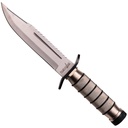
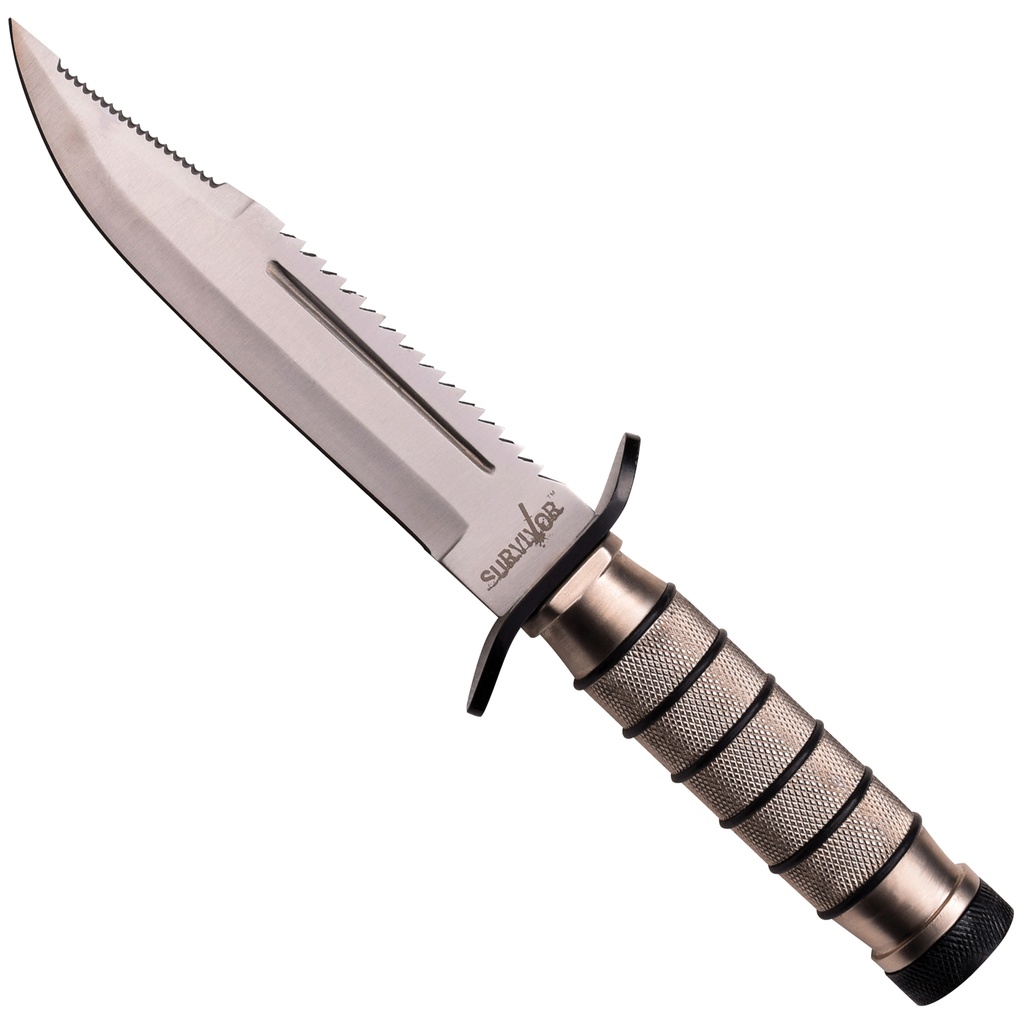
The Trailguard Sawback Field Survival Knife is a full‑tang fixed blade built for real Texas ground, not glass cases. A 5-inch clip point with partial serrations and spine sawback handles camp chores, cord, and light wood work in one tool. The knurled metal handle locks into your grip, while the flat butt cap and nylon sheath ride easy on a belt or pack. It’s the kind of survival knife you throw in the truck and forget—until the day it quietly saves the trip.
| Blade Length (inches) | 5 |
| Overall Length (inches) | 9.5 |
| Weight (oz.) | 10.56 |
| Blade Color | Silver |
| Blade Finish | Matte |
| Blade Style | Clip Point |
| Blade Edge | Partial-Serrated |
| Blade Material | Steel |
| Handle Finish | Matte |
| Handle Material | Metal |
| Theme | Survival |
| Handle Length (inches) | 4.5 |
| Tang Type | Full Tang |
| Pommel/Butt Cap | Flat |
| Carry Method | Belt Carry |
| Sheath/Holster | Nylon Sheath |
Trailguard Sawback Field Survival Knife – What It Really Is
The Trailguard Sawback Field Survival Knife is a full-tang fixed blade built for people who still step off the pavement. This isn’t an automatic knife, an OTF knife, or a switchblade trying to be tactical by flipping fast. It’s a solid, 9.5-inch survival knife meant to ride on your belt or in your pack and go to work when the weather, the plan, or the map changes on you out in Texas country.
At its core, you’re looking at a 5-inch clip point blade in matte steel, partial serrations near the handle, and a sawback along the spine. Add a knurled metal handle, flat butt cap, and full-tang construction, and you’ve got a purpose-built field tool that prizes control and durability over mechanical fireworks. Collectors who know the difference between a fixed blade and a flashy automatic knife understand why that matters.
Fixed Blade Survival Knife vs. Automatic Knife, OTF, and Switchblade
Texas buyers see plenty of sites where every sharp object gets called a switchblade. This Trailguard isn’t one of them. A switchblade or automatic knife uses a spring to snap the blade open from a folded position. An OTF knife drives a blade straight out the front of the handle. Both have their place in a collection, especially for fast one-handed use.
The Trailguard is different. It’s a fixed blade survival knife: the blade is already out, already locked, and runs full-tang through the handle. No button, no slider, no assisted mechanism. That means no waiting for a spring to do its job when your hands are cold, muddy, or gloved. You draw it from the nylon sheath and you’re working—simple as that. For a lot of Texas outdoorsmen, this is the workhorse that backs up the automatic knife they keep in their pocket.
Mechanics of the Trailguard Field Survival Knife
Mechanically, this survival knife is as straightforward as it gets, and that’s the point. A single piece of steel runs from tip to pommel, wrapped in a knurled metal handle for grip. The clip point gives you a controllable tip for detail work, while the partial serrations chew through rope, cord, and webbing without cussing. Up top, a sawback section along the spine adds another option for notching, light branch work, or scraping.
Full-Tang Confidence in the Field
Full tang means the steel doesn’t stop at the guard. It fills the handle, giving this fixed blade survival knife real backbone when you’re twisting, prying, or bearing down. That’s a different kind of reliability than any automatic knife or OTF knife can offer, because there’s no pivot, no internal track, and no spring to fail. The Trailguard is built for the kind of abuse a folding switchblade simply shouldn’t see.
Grip, Balance, and Belt Carry
The knurled metal handle isn’t there to look tactical; it’s there to stay in your hand when rain slicks everything. At 10.56 ounces and 9.5 inches overall, the balance sits in that sweet spot where it chops above its weight but still feels quick around camp. The included nylon sheath keeps this fixed blade riding where it should—on your hip or strapped to a pack—so your automatic knife can stay in your pocket for lighter, quick-cut tasks.
Texas Survival, Camp Use, and Carry Reality
In Texas, a good survival knife earns its keep on deer leases, riverbanks, and rough little roads that don’t always show on the GPS. This Trailguard fixed blade is built for that kind of life. The matte steel blade doesn’t scream for attention, and the metal handle shrugs off sweat, mud, and the kind of dust that gums up an OTF knife.
Where an automatic knife shines for opening packages, cutting straps, or quick one-handed work, this survival knife takes over when you’re batoning kindling, cutting saplings, or working around a fire. The partial serrations handle stubborn line and nylon, while the sawback offers extra bite when you need to notch or score material. It’s the field piece you grab when you know you might be staying out longer than you planned.
Texas Law, Fixed Blades, and Where This Knife Fits
Texas has loosened up a lot over the years on blade length and types, but it still pays to know what you’re carrying. In plain terms, this Trailguard is a fixed blade survival knife, not a switchblade, not an automatic knife, and not an OTF knife. That matters because some of the old confusion in Texas law centered on spring-loaded blades and the way they were deployed.
Modern Texas law is more friendly to knives across the board, including automatic and switchblade-style folders, but local rules and specific locations can still get particular about what you bring inside. A full-size fixed blade like this is best treated as outdoor gear—carried on private land, in camp, on the lease, or anywhere a survival knife is clearly a tool, not a pocket toy. As always, it’s worth checking current Texas statutes and any county or city rules before you strap on a bigger knife.
What Texas Buyers Ask About Fixed Blade Survival Knives
How does a fixed blade survival knife compare to an automatic knife, OTF, or switchblade?
A fixed blade survival knife like the Trailguard trades speed of deployment for strength and simplicity. An automatic knife or switchblade folds and uses a spring to fire open, while an OTF knife drives the blade out the front with a slider or button. This Trailguard is already open, full-tang, and ready, with no moving parts to clog with sand or grit. Most Texas collectors pair a good automatic knife in their pocket with a dependable fixed blade survival knife on their belt for camp and emergency work.
Is it legal to carry this fixed blade survival knife in Texas?
Texas law has grown more knife-friendly, generally allowing a wide range of blade types, including automatic knives and switchblades, with length limits tied to specific locations. A full-size fixed blade survival knife like this is typically fine for outdoor carry—on your property, on a lease, fishing, or camping. Certain places, like schools or secured government buildings, can still have restrictions. Before you carry any fixed blade, automatic knife, OTF knife, or switchblade into town, check the latest Texas statutes and any local ordinances so you stay square with the law.
Where does a knife like this belong in a Texas collection?
For a serious Texas collector, the Trailguard isn’t trying to replace a high-end OTF knife or a custom switchblade; it fills a different slot. This is the working survival knife you’re not afraid to drag through mesquite, loan to a buddy at camp, or stash in the truck. It complements the more intricate automatic knives in your drawer by doing the hard, dirty jobs they were never meant for. If your collection already covers mechanisms—OTF, side-opening automatic, classic switchblade—this fixed blade survival knife rounds out the field and proves you understand tools as well as toys.
Why the Trailguard Belongs in a Texas Kit
In a Texas-focused collection, a knife earns respect by doing what it was built to do. The Trailguard Sawback Field Survival Knife is a straight-talking fixed blade: full tang, matte steel, partial serrations, and sawback spine, with a belt-ready sheath that keeps it handy when plans go sideways. It doesn’t pretend to be an automatic knife or an OTF knife, and it doesn’t need to. It stands beside them as the piece you reach for when the job is bigger than a pocket cut.
If you know the difference between a switchblade, an OTF, and a survival knife, you already understand where this blade fits. It’s for Texans who measure a knife less by how fast it opens and more by how it performs when the light’s fading, the wind’s coming up, and you’re a good ways from the nearest pavement.