Sunrise Trail Classic Fixed Blade Hunting Knife - Yellow Bone
14 sold in last 24 hours
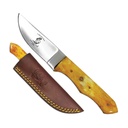
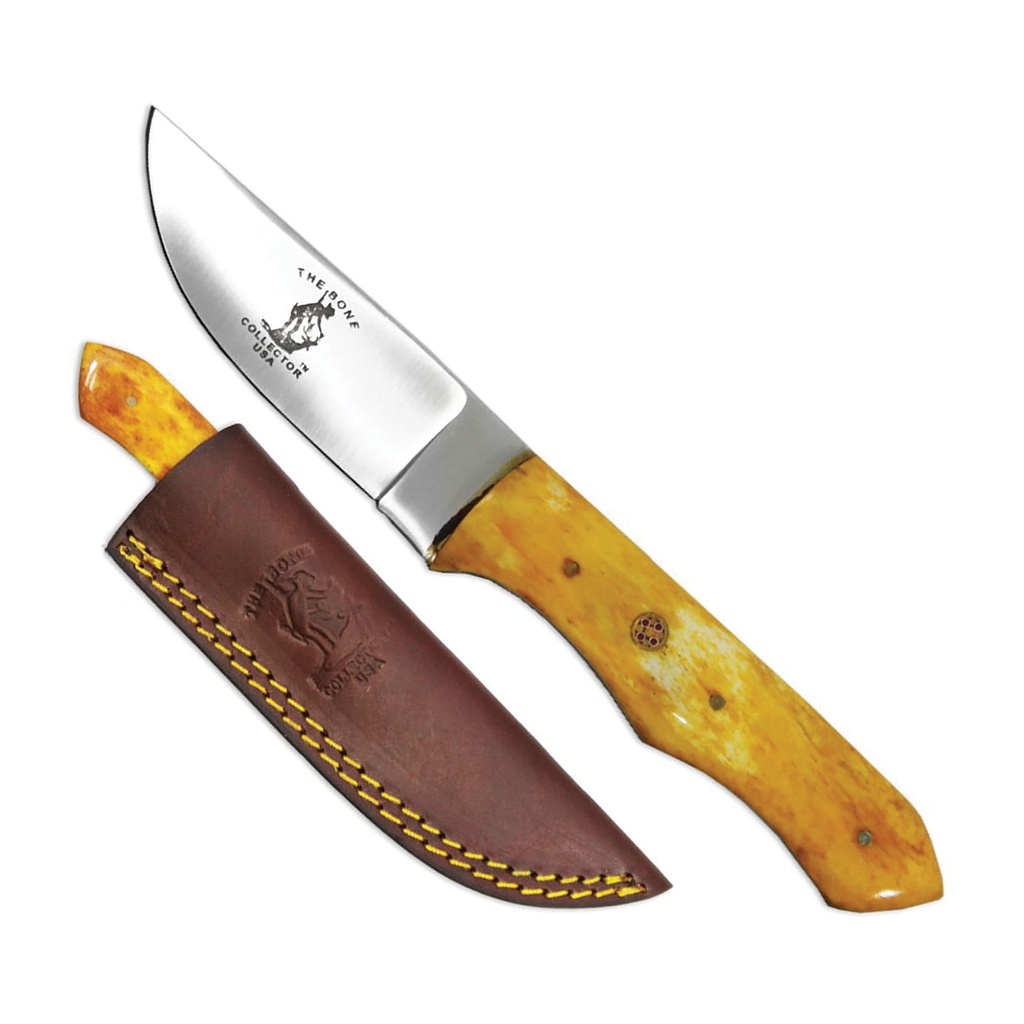
This fixed blade hunting knife is a classic that just plain works. A polished 4-inch stainless drop point rides on a full tang, anchored by yellow bone scales that feel natural in the hand. On a Texas lease or a back-forty fence line, it rides easy in its leather sheath and handles cleaning, trimming, and camp chores without drama. For the collector who knows the difference between a pocket folder and a true fixed blade, this is the one that feels like it’s always been yours.
| Blade Length (inches) | 4 |
| Overall Length (inches) | 8 |
| Blade Color | Silver |
| Blade Finish | Polished |
| Blade Style | Drop Point |
| Blade Edge | Plain |
| Blade Material | Stainless Steel |
| Handle Finish | Polished |
| Handle Material | Bovine Bone |
| Theme | None |
| Handle Length (inches) | 4 |
| Tang Type | Full Tang |
| Pommel/Butt Cap | Exposed bone |
| Carry Method | Belt Carry |
| Sheath/Holster | Leather Sheath |
What This Fixed Blade Hunting Knife Really Is
This is a true fixed blade hunting knife, not a folding knife dressed up for the field. The 4-inch polished stainless drop point is full tang from tip to butt, anchored in warm yellow bone scales. No springs, no assist, no button—just solid steel you can trust when your hands are cold, the light’s fading, and the work still needs doing.
In a world where every site shouts about an automatic knife, an OTF knife, or the latest switchblade, this one stays quiet and honest. It’s a classic fixed blade hunting knife built for real use on Texas ground, and it doesn’t pretend to be anything else.
Fixed Blade Hunting Knife vs. Automatic, OTF, and Switchblade
A Texas collector knows the difference, but it’s worth saying straight. An automatic knife opens with a button or switch—side-opening, spring-driven, meant for one-hand deployment. An OTF knife (out-the-front) sends the blade forward through a channel in the handle, usually with a thumb slide. A switchblade is the common catch-all folks use when they’re talking about automatic knives, whether side-opening or OTF.
This knife isn’t any of those. This is a fixed blade hunting knife—full tang, no moving parts in the mechanism. You draw it from the leather sheath and it’s already locked and ready. Where an automatic or OTF knife shines in quick deployment and pocket carry, this fixed blade shines in stability and strength. There’s no pivot to gum up, no spring to fail, and no confusion about whether it’s open all the way. In the field, especially when you’re dressing game or working around bone, that matters more than flash.
Mechanics of a Classic Fixed Blade Hunting Knife
The mechanism story here is simple by design. The steel runs the full length of the handle in a true full-tang build. That tang gives this fixed blade hunting knife better strength than most folding or automatic knife designs because the load is spread through solid steel, not a joint.
Drop Point Blade Built for Field Work
The polished drop point is the pattern most Texas hunters quietly count on. Enough belly for skinning, enough point for controlled work around joints, and a straight section that handles rope, hide, and camp chores. Unlike many tactical switchblade or OTF knife profiles that favor stabbing or piercing, this blade is tuned for real hunting work.
Yellow Bone Handle and Field Balance
The yellow bovine bone handle scales are more than just pretty. Bone has a warm, organic feel that settles into the hand, with subtle contouring and a finger groove that keep the knife planted even when your grip isn’t perfect. Where a metal-handled automatic or OTF knife can feel cold and slick, this fixed blade stays familiar and steady. The full tang and bone together give a slight forward balance—just enough to let the blade lead without feeling heavy on the belt.
Texas Carry Reality for a Fixed Blade Hunting Knife
Texas law treats a fixed blade hunting knife differently than a pocket-carried automatic knife or OTF knife that folks sometimes call a switchblade. Under current Texas law, there is no blanket prohibition on automatic knives or switchblades anymore, but blade length and location still matter. This knife sits in that comfortable hunting sweet spot—about 8 inches overall, with a 4-inch blade—well within what most Texas hunters and ranch hands are used to carrying on the belt.
Carried in its leather sheath on your belt while hunting, camping, or working around the place, this fixed blade hunting knife fits naturally into the Texas outdoors. It’s not a concealed pocket switchblade, not a flashy OTF knife for city show-and-tell. It’s the kind of knife you’d expect to see on a guide’s belt in the Panhandle or on a lease outside Llano.
Field Use, Not Just Show
Because it’s a fixed blade, you don’t have to think about deployment the way you do with an automatic knife or OTF knife. There’s no flick, no button, no timing. You reach, draw, cut, and get back to work. That’s why many seasoned Texas hunters still prefer a fixed blade hunting knife for their primary field knife, even if they carry an automatic or switchblade-style folder as backup in the pocket.
Collector Value: Why This Fixed Blade Belongs in a Texas Drawer
Collectors in Texas usually own all three: an automatic knife for quick tasks, maybe an OTF knife because it’s mechanically interesting, and at least one switchblade just because the history’s too good to ignore. But a fixed blade hunting knife like this yellow bone piece fills a different role in the collection.
First, the materials. Natural bone and leather carry a kind of quiet heritage that most modern automatic or OTF knife builds can’t touch. The polished stainless blade, full tang, and bone scales with a mosaic pin give it that traditional look that sits well beside older American and European hunting knives.
Second, the proportions. A compact 4-inch drop point is large enough for whitetail field work but small enough that it doesn’t feel like a dedicated camp chopper. That makes it the kind of fixed blade a Texas collector actually carries, not just stores.
Third, the story. Where an OTF knife invites talk about springs, tracks, and lockup, this knife invites stories about first deer, cold mornings in the Hill Country, or cleaning fish on a muddy riverbank. A serious collector values both kinds—but this fixed blade hunting knife is the one that smells like leather and gun oil, not just machine lube.
What Texas Buyers Ask About Fixed Blade Hunting Knives
Is a fixed blade hunting knife better than an automatic or OTF?
“Better” depends on the job. An automatic knife or OTF knife is hard to beat for quick, one-handed cutting when you’re climbing, driving, or working in tight quarters. A switchblade-style automatic can live in the pocket every day. A fixed blade hunting knife, like this yellow bone full-tang, wins when strength, stability, and easy cleaning matter more than fast deployment. In the field, many Texas hunters carry both: an automatic or folder in the pocket, and a fixed blade on the belt for the real game work.
Is it legal to carry this fixed blade hunting knife in Texas?
Texas law has eased up on automatic knives and switchblades, and a traditional fixed blade hunting knife like this one generally fits comfortably within legal everyday carry, especially in hunting and outdoor contexts. Blade length and location can still matter, and local rules can vary, so any Texas buyer should check current state and local regulations for "location-restricted" knives and how they apply. As a compact fixed blade hunting knife, this piece is designed with practical, lawful belt carry in mind, not concealed trickery.
Why choose this yellow bone fixed blade over another hunting knife?
Because it balances like a real field knife and looks like something you’ll hand down. The full-tang build and drop point profile give it honest hunting performance. The yellow bone handle and leather sheath add the kind of traditional character you don’t get from most tactical automatic or OTF knife designs. For a Texas collector who already owns more than one switchblade and a drawer full of folders, this fixed blade hunting knife scratches a different itch: the satisfaction of carrying a classic that feels like it was made for your hand and your lease.
In the end, this isn’t a knife you buy to show off mechanical tricks. It’s the fixed blade hunting knife you belt on when you’re rolling through a Texas gate before daylight, knowing you’ve got the right tool for the work ahead. If you know the difference between an automatic knife, an OTF knife, and a true fixed blade—and you care about that difference—this yellow bone classic will feel like it’s been part of your kit for years.