Blue Circuit Recurve Butterfly Knife - Blue Metal
4 sold in last 24 hours
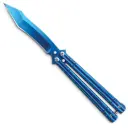
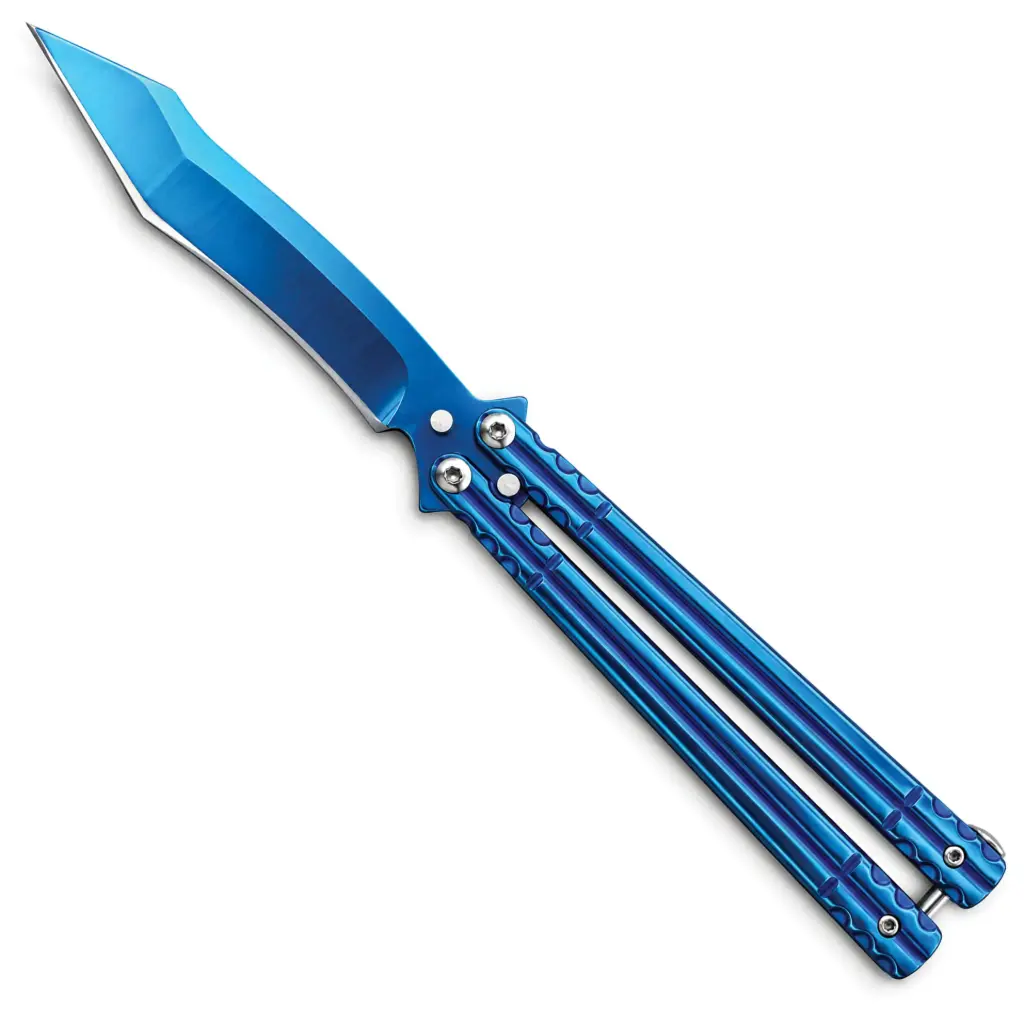
This butterfly knife opens by rotating twin handles around the blade, not firing a spring or sending steel out the front. Blue Circuit Recurve pairs matching blue metal handles with a recurved tanto profile and silver accents that make the geometry clear. For a Texas collector, it belongs in a display or a carefully considered carry setup, with destination rules checked first. It is neither an automatic knife nor an OTF knife, and calling it a switchblade misses the point. This is a live-blade piece for someone who knows the difference.
| Blade Length (inches) | 4.375 |
| Overall Length (inches) | 9.375 |
| Closed Length (inches) | 5.375 |
| Weight (oz.) | 5.42 |
| Blade Color | Blue |
| Blade Finish | Satin |
| Blade Style | American Tanto |
| Blade Edge | Plain |
| Handle Finish | Polished |
| Handle Material | Metal |
| Theme | Tactical |
| Latch Type | Swing |
| Is Trainer | No |
Blue Circuit Recurve Butterfly Knife: Know the Mechanism
A butterfly knife opens by rotating two handle halves around the blade's pivots. It does not fire from a button or slide out of the handle's end. Blue Circuit Recurve puts that manual mechanism behind a blue blade, matching metal handles, and a cutting edge that curves before meeting an angular tanto tip. This butterfly knife belongs in the conversation on its own terms: a live-blade folding design, not an automatic knife, an OTF knife, or a button-operated switchblade.
Twin handles, manual movement
The twin handles fold around the blade when closed and rotate away during opening. A swing latch is the listed closure hardware; inspect its engagement rather than assuming a particular retention strength. For a collector, the point is straightforward: this butterfly knife offers a different mechanical experience from a spring-driven folder, with exposed pivots and moving handle halves you can see and understand.
A Butterfly Knife Built Around Contrast
The visual signature of this butterfly knife is the meeting of two lines: the recurve along the cutting edge and the angular American tanto tip. Blue on the blade and handles ties the silhouette together. Silver at the cutting bevel and hardware draws your eye back to the geometry instead of burying it under decoration.
Finishes and dimensions worth noting
Listed dimensions are a 4.375-inch blade, 9.375-inch overall length, and 5.375-inch closed length, with a weight of 5.42 ounces. The butterfly knife has metal handles with a polished finish, longitudinal grooves, and scalloped detailing. The blade finish is listed as satin. No steel grade, hardness, or coating specification is supplied, so this butterfly knife should be judged on its documented construction and design, not an invented metallurgy story.
Butterfly Knife, Automatic Knife, and OTF Knife: Different Motions
An automatic knife opens through a release control that activates its opening mechanism. Many open sideways, while an automatic OTF knife sends its blade straight through the front of the handle. OTF describes the blade's travel, not necessarily its power source; manual OTF designs also exist. Switchblade is a common term for an automatic knife, not a precise description of every folding mechanism.
A butterfly knife uses neither that front-exit arrangement nor the familiar side-opening automatic action. Its handles move around the blade under the user's control. Calling this butterfly knife a switchblade misses the mechanism that makes it interesting. An assisted opener is different again: the user starts blade movement before assistance takes over. Those distinctions matter more than a tactical-looking finish when identifying a butterfly knife.
Texas Butterfly Knife Carry: Measure First, Then Check Location
Texas does not generally prohibit a butterfly knife simply because it has two pivoting handles. Under Texas Penal Code Chapter 46, a knife with a blade over 5.5 inches is a location-restricted knife. The listed 4.375-inch blade falls below that threshold. That is useful context, not a promise that carrying this butterfly knife is lawful everywhere.
Schools, courthouses, secured airport areas, federal facilities, and private property can involve separate restrictions or rules. Check current law and the specific destination before carrying any butterfly knife. The same care applies when researching whether a switchblade is legal in Texas or choosing an automatic knife or OTF knife. A product category never replaces a location check.
For everyday planning, remember the closed length and weight, not just the blade measurement. At 5.375 inches closed and 5.42 ounces, this butterfly knife deserves a deliberate look at pocket space and secure storage. No pocket clip or carrying sheath is specified. Decide how you will transport it securely before treating it as part of a daily carry setup.
Where This Butterfly Knife Fits in a Collection
This butterfly knife earns attention through its coordinated blue treatment and uncommon-looking recurve-to-tanto transition. It gives a display a clear visual role without needing a fictional service history or claims about combat performance. Put it beside a straight-edged butterfly knife and the blade geometry tells the difference before you touch either one.
Buying for manipulation practice calls for a separate decision. This is a live-blade butterfly knife, not a trainer. Start unfamiliar movements with a purpose-built blunt trainer, and keep fingers clear of the edge and pinch points. The recurve also calls for sharpening equipment that can follow its inward curve; a broad, flat stone may not contact the whole edge evenly.
What Texas Buyers Ask About Butterfly Knife
Is a butterfly knife an automatic knife, an OTF knife, or a switchblade?
No. This butterfly knife opens through manual handle rotation. An automatic knife uses a release-triggered opening mechanism; an OTF knife is defined by a blade that travels through the handle's front. Switchblade commonly refers to an automatic mechanism, although legal definitions depend on jurisdiction. Describing this model as a switchblade or automatic knife would hide its actual construction rather than explain it.
Is this butterfly knife legal to carry in Texas?
Texas generally permits possession and carry of this knife type, subject to applicable restrictions. Its listed blade length is below the state's over-5.5-inch location-restricted threshold. Still, a butterfly knife can be barred by the rules of a particular place, and travel across state lines changes the legal picture. Confirm current Texas law, federal rules, and property policies before making a carry decision.
Who should choose this butterfly knife for a collection?
Choose it for the blue-and-silver presentation, twin-handle mechanism, and recurved tanto profile. If your priority is a documented premium steel, verified flipping tolerances, or a blunt practice blade, the supplied information does not establish those qualities. A useful butterfly knife purchase starts with matching the piece to your purpose, not letting the finish answer questions about materials or handling.
A Texas collection worth knowing reflects choices, not just accumulation. Blue Circuit Recurve brings a recognizable color story and a mechanism that deserves its correct name. Pick this butterfly knife because the twin handles, curved edge, and angular tip add something specific to your drawer. Know what it is, know where it belongs, and check the carry rules before it leaves home. That is a sound way to buy a knife, whether you collect one pattern or a shelf full.