Doctrine-True Army Combatives Field Manual - Yellow
13 sold in last 24 hours
This Army combatives field manual reprint puts doctrine, not theory, in your hands. Drawn from FM 21-150, it walks you through rifle-bayonet fighting and hand-to-hand combat the way soldiers actually learned it in 1992—clear progressions, no fluff. Texas instructors, martial artists, and serious students get a ready-made curriculum that moves from basics to advanced work in a logical flow. If you want combatives material with real lineage behind it, this manual earns its space in your kit and on your shelf.
What This Army Combatives Field Manual Really Is
This isn’t a glossy martial arts coffee-table book. The Doctrine-True Army Combatives Field Manual - Yellow is a faithful reprint of the U.S. Army’s FM 21-150, the 1992 field manual on rifle-bayonet and hand-to-hand combat. It’s doctrine, written for soldiers, meant to be used on mats, in the barracks, and out on the training field. If you teach combatives in Texas or you’re building a serious reference shelf, this is one of those primary sources you either own or you’re borrowing from someone who does.
Inside the Combatives Manual: How It’s Built
FM 21-150 breaks combatives down the way an old-school NCO would: simple, direct, and repeatable under stress. You get rifle-bayonet work, strikes, throws, takedowns, and finishing techniques organized into ranges and progressions, not scattered tricks. The manual assumes you’re training a unit, not entertaining an audience, so everything is about what can be taught fast, retained under pressure, and done in boots, gear, and rough conditions.
Range-Based Hand-to-Hand Structure
The structure moves from weapon in hand to empty-hand, showing how bayonet work, clinch, and ground all relate. That makes it especially useful for Texas instructors who want to bridge modern MMA-style combatives with legacy military methods without losing the thread of realism.
Doctrine Over Flash
Because this is an official Army field manual, the techniques are framed with training objectives, safety notes, and step-by-step breakdowns. You’re not getting a personality-driven system; you’re getting doctrine that can be plugged into your unit PT, academy syllabus, or private training sessions and run as-is.
Why Texas Combatives Instructors Still Use This Manual
Texas has a deep bench of veterans, law enforcement, and serious martial artists. A lot of them cut their teeth on this very manual. Owning an FM 21-150 reprint isn’t about nostalgia; it’s about having the original reference for the combatives vocabulary that shaped a generation of instructors and students. When a retired infantry sergeant in San Antonio or Killeen talks about how they learned bayonet drills and hand-to-hand, this is the book behind those memories.
If you’re teaching in a Texas gym, academy, or on a ranch training weekend, this field manual lets you anchor your curriculum to something that’s bigger than one person’s opinion. You can build drills, progressions, and testing standards straight out of the pages and know you’re working from a framework many Texas veterans already recognize.
Mechanism vs. Metal: Why a Manual Belongs Beside Your Automatic Knife
Most Texans shopping for an automatic knife, an OTF knife, or a switchblade are thinking about hardware first—deployment speed, lockup, steel. That’s fine. But hardware without doctrine is just steel and springs. A serious collector in Texas often keeps reference material alongside the blades: field manuals, maker biographies, and historic reprints like FM 21-150.
This combatives manual doesn’t teach you how an automatic knife, OTF knife, or traditional switchblade works mechanically. Instead, it gives you the fighting context those tools live in. You’ll see how military doctrine handled close-quarters violence long before modern side-opening automatics and double-action OTF knives were riding in Texas pockets. That contrast matters to collectors and trainers who want to understand the lineage from rifle-bayonet and empty-hand work to today’s personal defense setups.
Context for Modern EDC and Defensive Carry
Reading FM 21-150 next to your favorite Texas-legal automatic knife or assisted opener reminds you of a basic truth: your own mindset, conditioning, and hand-to-hand competence are still the foundation. Whether your pocket clip holds a manual folder, an OTF knife, or a classic switchblade, this manual keeps your focus on principles—position, aggression, and finishing the fight—not just gadgets.
Texas Law, Training Culture, and Why Doctrine Still Matters
Modern Texas law is straightforward compared to many states when it comes to blades. A wide range of knives—automatic knives, OTF knives, and even traditional switchblades—can be carried legally, with limits mostly defined by location and, in some cases, blade length. That freedom has shaped a Texas culture where folks don’t just carry knives; they talk steel, mechanisms, and purpose.
In that environment, owning a combatives field manual like this isn’t a legal requirement, it’s a cultural fit. When Texans compare an automatic knife to an OTF knife, or argue the merits of a side-opening switchblade versus a stout manual folder, the serious ones also think about training: What’s my plan if the blade fails? What if I can’t draw? What if we’re already tied up in a clinch? This is where a doctrine-heavy book like FM 21-150 earns its place. It fills in the gaps that steel alone can’t cover.
Not a Knife Law Guide—But a Training Companion
This manual doesn’t address Texas knife statutes or spell out what automatic knife or switchblade carry is legal in each town. You’ll still want to check current Texas law before you strap on your favorite OTF knife or automatic. What the manual does do is assume you may not have a perfect tool in hand when the trouble starts—and it trains you from there. That perspective pairs naturally with responsible carry in Texas, where most folks understand that mindset and skills come first.
Collector Value: Why FM 21-150 Belongs on a Texas Shelf
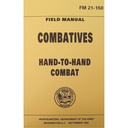
For a Texas knife and gear collector, provenance matters. This reprint clearly presents itself as FM 21-150, Combatives, September 1992, Headquarters, Department of the Army. The yellow cover, the Army seal, and the plain typography all signal what it is: an official manual with a specific place in U.S. military training history.
If your collection already includes Vietnam-era bayonets, modern fighting knives, or a spread of automatic knives and OTF knives with military lineage, this book rounds out the picture. It connects hardware to doctrine. You can lay out a 1990s-issue bayonet, a modern combat folder, maybe a compact Texas-legal switchblade, and this manual, and you’ve got a complete story: the tools, the methods, and the mindset of that era.
Because it’s a working manual, not a limited-run art book, you don’t have to baby it. Mark it up, flag pages, drop it in a range bag headed out from Houston, Dallas, or El Paso. That “use it, don’t worship it” quality is exactly what appeals to a lot of Texas collectors who prefer honest wear over plastic-wrap perfection.
What Texas Buyers Ask About This Combatives Manual
How does this field manual relate to knives like automatics, OTFs, and switchblades?
FM 21-150 itself doesn’t break down knife mechanisms the way a modern gear guide would. You won’t find diagrams of automatic knife actions or OTF knife internals, and it doesn’t distinguish switchblades from other folders. Instead, it focuses on bayonets, improvised weapons, and empty-hand fighting. For a Texas buyer with a drawer full of blades, the value is perspective: you see how soldiers were trained to fight at close quarters when steel was just one part of the problem, not the centerpiece. That context can refine how you think about your own carry choices today.
Is there anything in here about Texas legal carry or specific knife laws?
No. This is a straight reprint of a 1992 U.S. Army combatives manual, not a Texas law handbook. It doesn’t mention Texas statutes, automatic knife regulations, OTF knife carry, or switchblade rules. If you’re in Texas, you’ll want to check current state and local law for what’s allowed where you live and where you plan to carry. The manual’s job is training—strikes, throws, bayonet work—not legal advice.
Why should a Texas knife collector buy a combatives manual at all?
Because serious collections tell a story. You may already have automatic knives, a few OTF knives, some classic switchblades, and fixed blades with military heritage. This manual gives those pieces a doctrinal backdrop. It shows how combatives training looked in the early ’90s, how rifle-bayonet work was taught, and how soldiers were expected to fight up close. For a Texas buyer who cares about history, authenticity, and training lineage, that makes this yellow-covered field manual just as important as the next blade on the wall.
In the end, this field manual fits right in with the way Texans tend to approach gear: honest, functional, and rooted in real use. It won’t flip open like an automatic knife or snap out like an OTF, but it will sharpen the mindset behind every piece you carry. And that’s what separates a casual buyer from a collector who truly knows what they’re looking at.