Green Beret Crest Special Forces Field Handbook - Olive Cover
3 sold in last 24 hours
The Special Forces handbook is the quiet professional in your ruck. This olive-cover field manual packs survival, communications, first aid, and unconventional operations into a no-nonsense format you can actually use. Modeled after Green Beret references, it’s built for field conditions, not coffee tables. Slip this military survival guide beside your kit and you’ve got calm, structured answers when the plan falls apart. For Texans who like their gear proven, not pretty, this handbook earns its space.
What the Special Forces Handbook Really Is
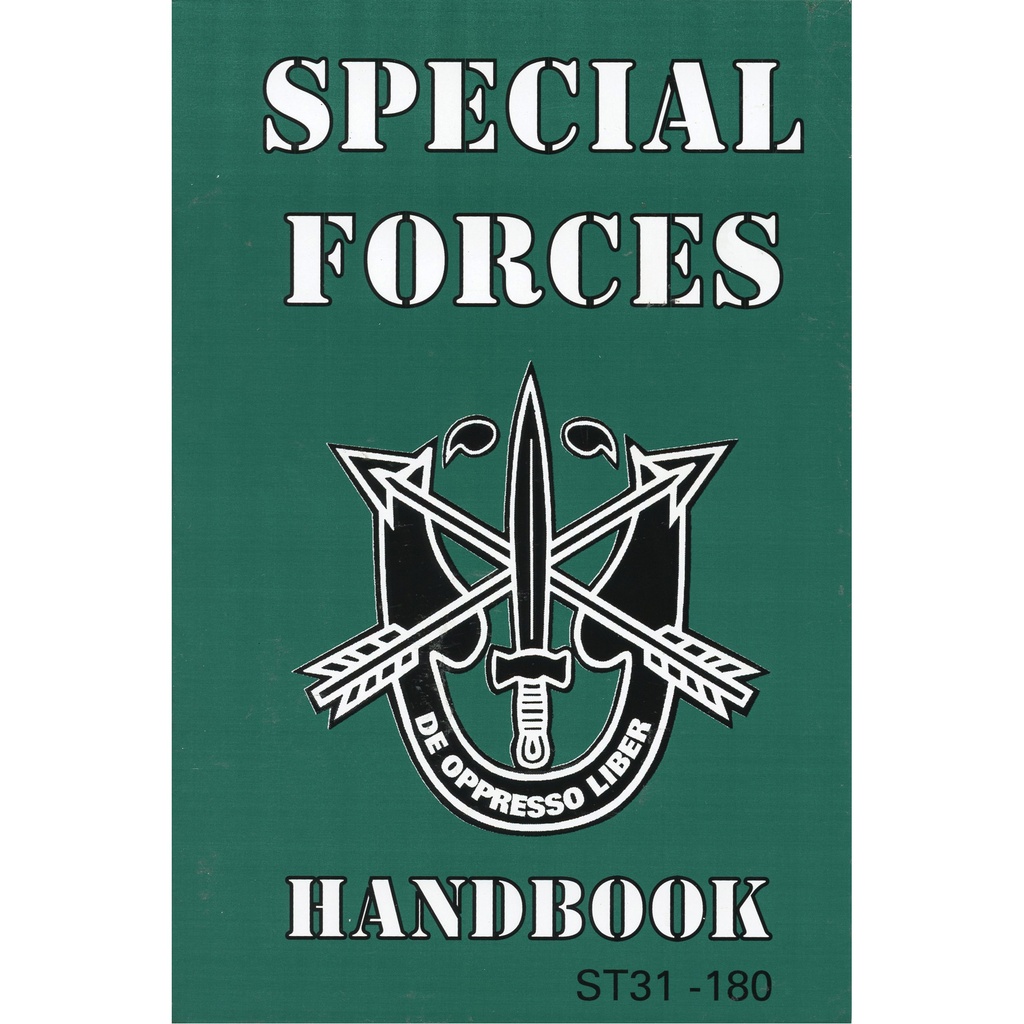
This Special Forces handbook isn’t a novelty. It’s a compact military survival guide built in the spirit of the quiet professionals who wear the Green Beret crest. Olive cover, bold title, and the “De Oppresso Liber” shield tell you exactly what lane it runs in: practical, field-ready reference for when conditions shift and comfort disappears.
Where a lot of survival books talk around tactics, this handbook moves straight from basic survival to communications, first aid, and unconventional operations. It reads more like a field manual than a campfire story—short sections, direct language, and an order that makes sense when you’re cold, wet, and thinking three steps ahead.
Inside the Special Forces Field Handbook
Think of this as a structured checklist for bad days. The Special Forces handbook doesn’t waste ink on fluff. It walks you from staying alive right now to staying effective over time—exactly how a serious military survival guide should.
Core Survival and Fieldcraft
The opening sections cover the survival fundamentals you’ll actually lean on: shelter, water, fire, navigation, and movement. The tone is instructional, not inspirational—here’s what to do, in this order, with what you’ve got. It’s written for someone who might be tired, under pressure, and tired of flipping through gear catalogs.
Communications, First Aid, and Unconventional Operations
Where a basic camping book stops, this Special Forces field handbook keeps going. You’ll find core communication concepts, signals, and procedures, then straight into first aid that treats injuries as part of operating, not as a separate hobby. The unconventional operations material rounds it out, giving a glimpse into how Special Forces think about problem-solving when the terrain, locals, and weather aren’t on your side.
Why a Texas Buyer Reaches for This Military Survival Guide
Texas offers just about every kind of ground you can test gear on—piney woods in the east, Hill Country rock, Panhandle wind, and borderland heat. A Special Forces handbook like this fits right into that mix for a few reasons.
First, it’s low-vis. The olive cover disappears in a ruck or glove box. No neon, no gimmicks. Second, it reads like a military survival guide, not a coffee-table adventure book. That matters when you’re training, running drills on a lease, or teaching kids the difference between theory and capability. Third, it pairs naturally with the gear Texans already love—whether that’s a trusted automatic knife clipped inside the waistband, an OTF knife riding in a pack, or a classic side-opening switchblade in a collection drawer.
Training, Not Just Reading
Most Texans who buy a book like this aren’t looking for entertainment. They want a framework to build personal SOPs—water plan, med plan, communication plan. The Special Forces handbook gives you a way to walk the ranch, deer lease, or back acreage and test real-world scenarios against field-proven methods.
How This Handbook Fits Beside Your Automatic, OTF, or Switchblade
This site talks a lot about knife mechanisms—automatic knives, OTF knives, and traditional switchblades—and how each one earns its place. This Special Forces handbook fits the same mindset. It doesn’t care which blade you carry; it cares that you understand why you’re carrying it and how you’ll use it when the weather turns against you.
If your everyday carry is a side-opening automatic knife, this guide backs it up with the survival basics that make that blade matter: fire prep, shelter building, and small tasks you’ll do a hundred times before you ever need a dramatic cut. If you favor an OTF knife for fast, one-handed deployment, the communications and first aid sections of this military survival guide match that same priority: quick access to the right move under stress. And if you own classic switchblades as part of a collection, this handbook gives context—you’re not just collecting hardware, you’re collecting a whole approach to preparedness.
Texas Context: Law-Abiding Gear, Serious Preparedness
Texas law has opened the gate for adults to carry automatic knives, OTF knives, and even traditional switchblades more freely than in years past, but the same rule applies as always: the most important tool is the one between your ears. A Special Forces field handbook like this is the mental side of your kit.
Nothing in this book changes what’s legal or illegal to carry in Texas. What it does change is how you think about the gear you’re already allowed to own. It nudges you away from buying a blade just because it fires hard or looks mean, and toward understanding how that knife fits into survival, communication, and medical planning.
For Texans who train responsibly—on ranges, private land, or lease property—this military survival guide is a natural addition. It lives in the truck, the go bag, or the safe right next to your better automatic knife and your most trusted OTF knife, and it gets pulled out during quiet evenings when you’re working through "what if" instead of watching someone else do it on a screen.
What Texas Buyers Ask About the Special Forces Handbook
How does this handbook really fit with my automatic, OTF, or switchblade setup?
Texans who already know the difference between an automatic knife, an OTF knife, and a switchblade usually ask where this book lands in that world. The answer is simple: this is doctrine, not hardware. Your automatic knife is a side-opener that snaps into play with a button. Your OTF knife pushes the blade straight out the front on a track. A classic switchblade does its thing with a coil spring and a side or top release. The Special Forces handbook doesn’t try to be any of those; it tells you what to do once the blade is open and the problem is in front of you.
Is it legal to own and carry this Special Forces handbook in Texas?
Yes. This is a book, not a weapon. Texas law that covers automatic knives, OTF knives, and other edged tools doesn’t apply to printed material like a military survival guide or field handbook. You can keep it in your truck, ruck, desk, or range bag without any special restrictions. As always, if you’re pairing it with blades or firearms, make sure those items meet Texas law where you live and travel.
Is this more for collectors or for people who actually train?
Both, if they’re honest about why they’re buying it. A Texas knife collector will appreciate that this Special Forces field handbook comes from the same world as the hardware they collect—automatic knives, OTF knives, and old-school switchblades that echo military history. A user who trains will appreciate that it’s structured, direct, and built for field reference. It doesn’t talk down, it doesn’t dramatize; it just lays out the work. If your idea of collecting includes knowing how gear is meant to be used, this earns its shelf space.
Why This Handbook Belongs in a Texas Collection
The olive cover, Green Beret crest, and straightforward "Special Forces Handbook" title make this feel like something you’d find on a team room shelf or in a ruck, not a gift shop spinner. It’s a quiet, competent companion piece to the knives and tools you already own—automatic, OTF, or classic switchblade.
For a Texas buyer, that matters. We live in a state where you can carry serious hardware if you choose, but the folks who take that seriously tend to read, train, and teach. This military survival guide fits that culture. It’s not loud, it’s not pretty, and it doesn’t need to be. It’s just ready—like the rest of your kit.