Imperial Laurel Legionnaire Gladius Sword - Wood Handle
10 sold in last 24 hours
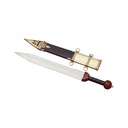
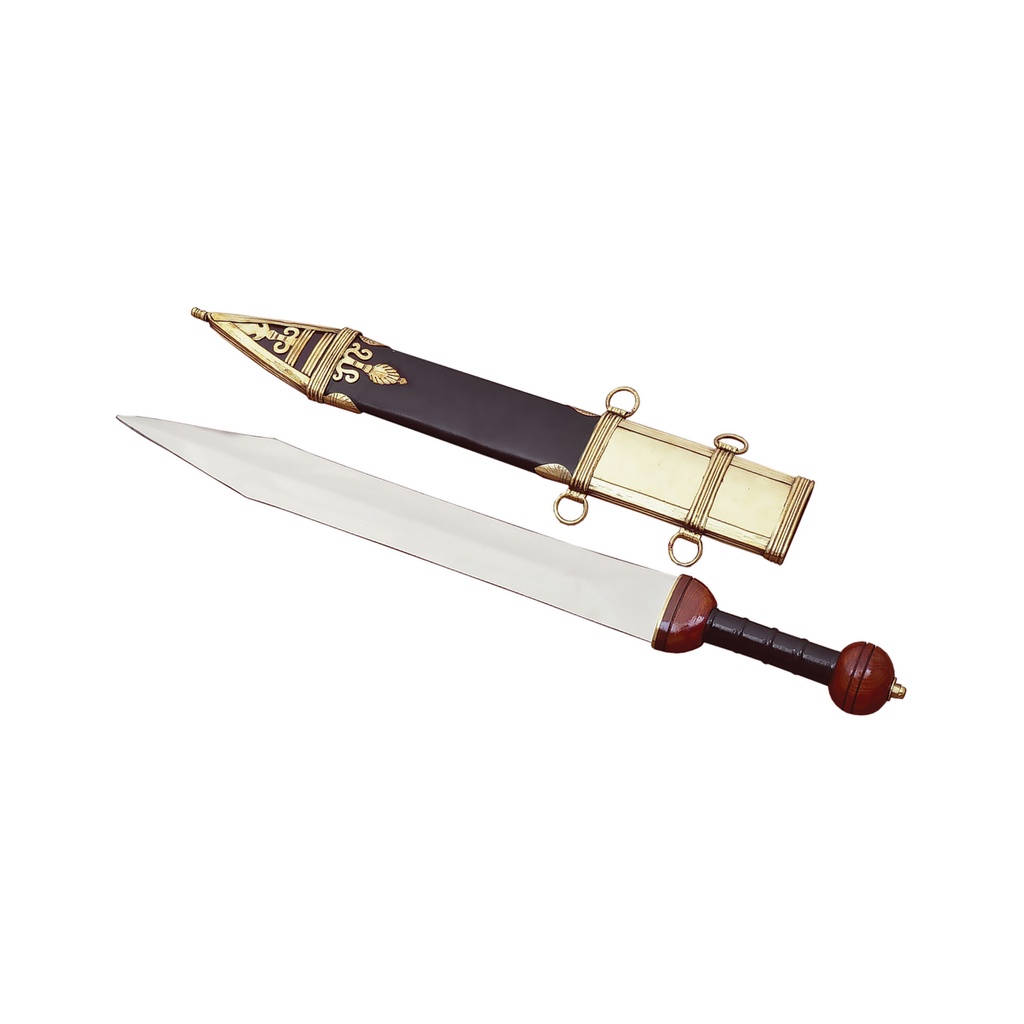
This Roman gladius sword is built for display and memory, not the field. The polished short sword blade, warm wood handle, and laurel-trimmed black-and-gold scabbard honor the imperial style that marched across history. At just under 27 inches, it hangs clean on the wall, sits right in a study, and fits naturally among serious replica swords. For the Texas collector who knows their steel and their stories, this gladius brings the legions home without pretending to be something it isn’t.
Imperial Laurel Roman Gladius Sword for Texas Collectors
The Roman gladius sword is the short, double-edged blade that built an empire. This Imperial Laurel Handcrafted Roman Gladius Sword with a wood handle is a fixed-blade replica of that classic legionnaire weapon, built for display, study, and storytelling. It isn’t an automatic knife, an OTF knife, or a switchblade — it’s an honest short sword for the collector who already knows the difference and wants something with more history than deployment tricks.
What Defines a Roman Gladius Sword
A true Roman gladius sword is short, straight, and meant for thrusting. This piece follows that pattern: a polished double-edged blade with a spear-point tip and an overall length around 27 inches. The handle is segmented reddish-brown wood with a rounded pommel and a simple gold-colored guard. In the hand, it feels like what it is — a compact sword built for close quarters, not a modern tactical automatic knife or out-the-front blade you tuck in a pocket.
Collectors who chase switchblades and OTF knives for their mechanical snap will recognize a different kind of satisfaction here. There’s no spring, no button, no assisted opening. Just a fixed blade that’s already out, already ready, and completely about form, balance, and historical style.
Blade, Handle, and Scabbard Details Collectors Notice
Short Sword Proportions and Finish
The blade runs just under twenty inches, with clean, straight edges and a bright polished silver finish. It’s clearly a short sword, not a dagger and not a long sword. The spear point tapers with enough presence to look right in a wall rack or above a desk, where the geometry can be appreciated from across the room.
Because this is a display-focused Roman gladius sword, the emphasis is on visual impact and historical lines more than on modern combat steel specs. A Texas buyer who obsesses over lock-up on a side-opening automatic knife will feel that same eye for detail pull toward the thickness at the ricasso, the symmetry of the edges, and the clean meeting of blade and guard.
Wood Grip and Imperial Laurel Scabbard
The segmented wood handle has that familiar Roman profile — rounded ridges that sit naturally in the palm, capped with a matching wood pommel touched off by a small gold finial. It’s warm, organic, and very different from the aluminum and G10 slabs you’ll find on most automatic knives or OTF knives.
The scabbard is where the imperial flair shows. Black body, gold bands, four suspension rings, and laurel-style ornament near the throat. That laurel motif is what sets this sword apart from generic short swords and makes it feel imperial, not just "Roman inspired." On a wall in a Texas study or game room, the black-and-gold scabbard pulls the eye first, and the blade seals the deal when guests ask to see it unsheathed.
Not an Automatic Knife, Not an OTF — and That’s the Point
This site talks a lot about automatic knives, OTF knives, and switchblades, because Texans buy and carry all three. This Roman gladius sword lives in a different lane entirely. It’s a fixed-blade short sword with no moving parts in the mechanism beyond your hand on the grip and your arm on the swing.
For a collector who already owns side-opening automatics, front-deploying OTF knives, and classic switchblades, a gladius is how you step back from modern mechanics and into the roots of edged weapons. You’re not comparing deployment speed. You’re comparing history: how a legionnaire’s short sword differs from the folding automatic knife in your pocket, and why both deserve a spot in a serious Texas collection.
Texas Law, Display Reality, and Owning a Sword Here
Texas has opened up a lot for blade enthusiasts. Under current law, swords and long blades are treated differently from how automatic knives and switchblades used to be handled. While you should always check the latest Texas statutes and any local ordinances, a Roman gladius sword like this is generally treated as a large fixed blade or "location-restricted knife" in certain sensitive places, not as a prohibited weapon just because of how it deploys.
That’s a key distinction: Texas law has historically worried more about concealment and blade length than whether something is an automatic knife, an OTF knife, or a switchblade. This gladius is openly a sword. Most Texans will hang it on a wall, mount it above a fireplace, or keep it in a display case in the office or shop, not ride around with it under the truck seat.
In other words, this is a home and collection piece, not an EDC carry conversation. Your automatic knives and OTF knives cover the daily use side. Your Roman gladius sword holds down the history and display side.
What Texas Buyers Ask About Roman Gladius Swords
Is a Roman gladius anything like an automatic knife or OTF?
Mechanically, no. A Roman gladius sword is a fixed blade — there is no folding, no spring, and no switch. An automatic knife uses a spring and button or switch to fire the blade from the side of the handle. An OTF knife drives the blade out the front in a track. A switchblade is a broad legal and cultural term that usually covers automatic knives, especially side-openers. This gladius does the opposite: the blade is always present, and the "action" is all in the draw from the scabbard and the way you handle it.
Is it legal to own and display this sword in Texas?
In Texas, owning a Roman gladius sword like this is generally legal for adults, and displaying it in your home, office, shop, or private property is typically not an issue. Where Texas gets particular is about carrying large blades into certain locations (schools, courthouses, some government facilities). That discussion hits knives, swords, and switchblades alike. As always, a serious Texas collector checks the current state code and any local rules, but for most buyers this gladius lives on the wall, not at the belt.
Does this belong in a collection if I mostly buy automatics and OTFs?
If you’re already deep into automatic knives, OTF knives, and the occasional switchblade, this Roman gladius sword gives your collection a spine — a reference point. It’s a way to show where edged weapons started before springs and buttons got involved. The laurel-trimmed black-and-gold scabbard stands out in a room full of modern hardware, and the wood handle brings warmth that metal and synthetics can’t. It doesn’t replace your automatics; it frames them in a wider story.
Why This Roman Gladius Sword Earns a Place in a Texas Collection
A serious Texas collector doesn’t buy every shiny thing that comes along. You pick pieces that either do a job or tell a story. This Imperial Laurel Roman Gladius Sword does the latter. The proportions are right for a legionary-style short sword, the wood handle gives it a handcrafted feel, and the laurel-decorated scabbard makes it look like it came off a parade ground instead of a movie set.
Set it beside your favorite automatic knife or OTF knife, and you’ll see the line that runs from ancient steel to modern mechanisms. One is about springs and speed; the other is about discipline and distance closed the hard way. In a Texas home, office, or ranch house, this Roman gladius sword doesn’t shout. It just hangs there, blade and laurel catching the light, reminding anyone who knows their knives why the old forms still matter.