Signal-Post Field Standard Rigging Manual - Signal Yellow
13 sold in last 24 hours
This field-proven rigging manual is the same breed of no-nonsense reference the Army trusted in 1968—reprinted in high-visibility signal yellow for shop floors and Texas job sites. Clear charts, knots, hitches, splices, and safe-load math turn complex lifts into straightforward decisions. It sits on the bench next to your automatic knife and OTF, ready when the load, the gear, and the crew all have to be right the first time.
What This Rigging Manual Really Is
This isn’t a coffee-table reprint. The Signal-Post Field Standard Rigging Manual - Signal Yellow is a straight-up 1968 Department of the Army technical manual, TM 5-725, brought back to life for people who still lift real weight. It’s a rigging manual built for shop floors, training rooms, and field crews who treat reference books like tools, the same way they treat an automatic knife, an OTF knife, or a hard‑working switchblade.
Where a knife’s mechanism decides how the blade gets to work, this manual decides whether a lift is safe, smart, or asking for trouble. Wire rope, chains, fiber rope, knots, hitches, splices, and safe-load calculations are laid out in that dry, precise military style Texans tend to trust: say it once, say it right.
Rigging Manual Built With Military Precision
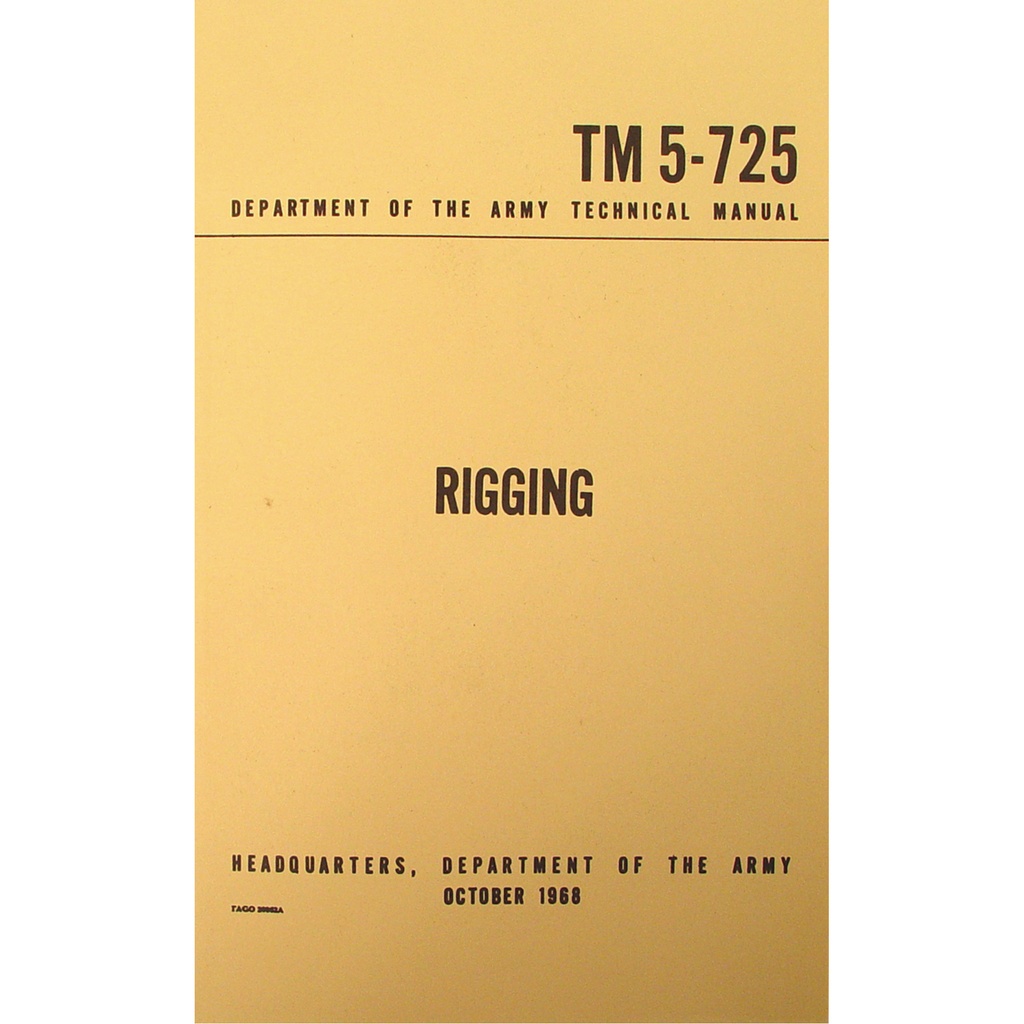
The first thing you notice is the signal-yellow cover. It’s not about looks; it’s about visibility. On a crowded Texas shop bench—automatic knife, OTF knife, tape, chalk, rigging hardware—this book still stands out. The Army didn’t waste ink on pictures or decoration. Big black "RIGGING" on the front, TM 5-725 at the top, and that October 1968 date at the bottom tell you exactly what you’re holding: an official standard frozen in time.
Inside, the rhythm feels familiar to anyone who appreciates good machinery. Definitions first, then diagrams, then tables. You get step-by-step knots and hitches, rope and chain work, and the math behind safe working loads. The tone is like a seasoned rigger talking—no hype, no stories, just what works and what fails.
Content That Works Like a Tool
This rigging manual is organized so you can flip it open and get back to work. Need a quick check on what a certain size wire rope can honestly carry? It’s a table away. Forgot the exact layout of a particular hitch? Diagram and notes, right there. Just like knowing the difference between an automatic knife and a switchblade saves you from a bad buy, knowing what this manual actually says about load limits saves you from a bad lift.
Why 1968 Still Matters
Machinery changes. Gravity doesn’t. The 1968 Army standard holds up because it was written for crews under pressure to get it right every time. For Texas buyers who collect blades and tools with history, a technical manual like this fits right in—same era as Vietnam gear, early automatic knives, and rugged field switchblades that never babied a job.
Texas Jobsites, Knives on Your Belt, Manual on the Bench
On a Texas oilfield spread, fabrication yard, ranch, or municipal shop, this rigging manual earns its space. One hand might be on an OTF knife cutting rope clean; the other is on this book confirming a hitch and safe-load figure. It’s built for crews who understand that a sharp blade and solid numbers are equal partners in every lift.
Because the cover is signal yellow, it doesn’t disappear into the clutter. Foremen can point a new hire straight to it. Safety trainers can build tailgate talks out of a single section—knots one week, chain inspection the next—without wading through fluff. Texas buyers who know their way around automatic knives and switchblades will recognize the same no-nonsense mindset in these pages.
Training New Hands the Right Way
In Texas, a lot of rigging is learned side by side: veteran and green hand. This 1968 reprint backs up that mentorship with clear, shared standards. When an experienced rigger says, "Check the manual," this is what they mean—a common reference that settles arguments the way a cleanly engineered knife settles into lockup: firmly and finally.
Collector Appeal: The Manual That Sits Beside the Steel
For Texas knife collectors, this rigging manual scratches the same itch as a well-made automatic knife or a period-correct switchblade. It’s official, dated, and specific. TM 5-725 on the cover places it inside a long line of Army technical culture—gear, weapons, and tools all documented with the same clipped precision.
On a shelf lined with OTF knives, automatic knives, and military field gear, this signal-yellow volume breaks up the steel with a flash of color and history. It’s the kind of piece you hand to a buddy who appreciates function over marketing and say, "This is how they taught rigging when details still mattered."
Why Serious Buyers Respect It
Anyone can print a glossy "safety guide." This manual is different. It comes from a time when a bad line, a bad knot, or a bad call could cost more than a job. The language is dry because the stakes weren’t. That mentality is familiar to anyone who has ever carried a serious automatic knife in the field or chosen an OTF knife for one‑hand duty instead of pocket jewelry.
Texas Law, Knives, and Rigging Standards
Texas knife law has opened up in recent years—automatic knives, OTF knives, and even classic switchblades are now generally legal to own and carry for adults, with blade length and location limits still worth knowing. The same mindset that keeps you squared away on carry law ought to keep you squared away on rigging standards. This manual helps do that.
While it doesn’t speak to Texas statutes directly, its load tables and methods give Texas employers and hands a defensible baseline: Army‑tested practices from a time when lawyers weren’t writing the manuals. If something goes wrong, being able to point to recognized rigging standards carries the same kind of weight as knowing you were carrying your knife within Texas law.
What Texas Buyers Ask About This Rigging Manual
How does this fit with my automatic knives, OTF knives, and switchblades?
Think of this rigging manual as the book that explains the work your knives quietly support. Your automatic knife cuts rope and slings, your OTF knife trims tags in tight spaces, your switchblade might handle quick utility cuts—this manual decides whether the line you just cut, tied, or inspected should even be in the air. It doesn’t replace your blades; it gives their work context and standards, the same way a spec sheet backs up a good knife maker.
Is this 1968 Army rigging standard still useful on Texas jobsites?
Yes. Steel has gotten better and some hardware designs have changed, but the fundamentals—wire rope behavior, chain limits, knots, hitches, splices, angles—haven’t. Many Texas shops and yards still lean on older military and industrial standards as a baseline because they’re conservative, clear, and field‑tested. This manual is ideal as a training backbone and a reality check, even if you layer newer manufacturer data on top of it.
Why would a collector pick this over a newer glossy rigging guide?
A Texas collector who knows the difference between an automatic knife, an OTF knife, and a switchblade also knows the difference between advertising copy and an official Army technical manual. This 1968 reprint is the real thing: simple typography, TM number, and Headquarters, Department of the Army on the cover. It pairs naturally with period knives, field gear, and any collection that values function and provenance over polish.
Closing: For Texans Who Respect Tools, Steel, and Standards
The Signal-Post Field Standard Rigging Manual - Signal Yellow isn’t for someone who wants a pretty book. It’s for Texans who live and work around load lines, cranes, hoists, and hardware—and who keep an automatic knife, OTF knife, or dependable switchblade in their pocket because getting stuck isn’t an option. This manual gives the lifts the same disciplined respect you give your blades. If you like your tools honest, your steel sharp, and your standards written in black and white, this belongs on your bench.