Shadow Manual Covert Tactics Field Book - Black Cover
12 sold in last 24 hours
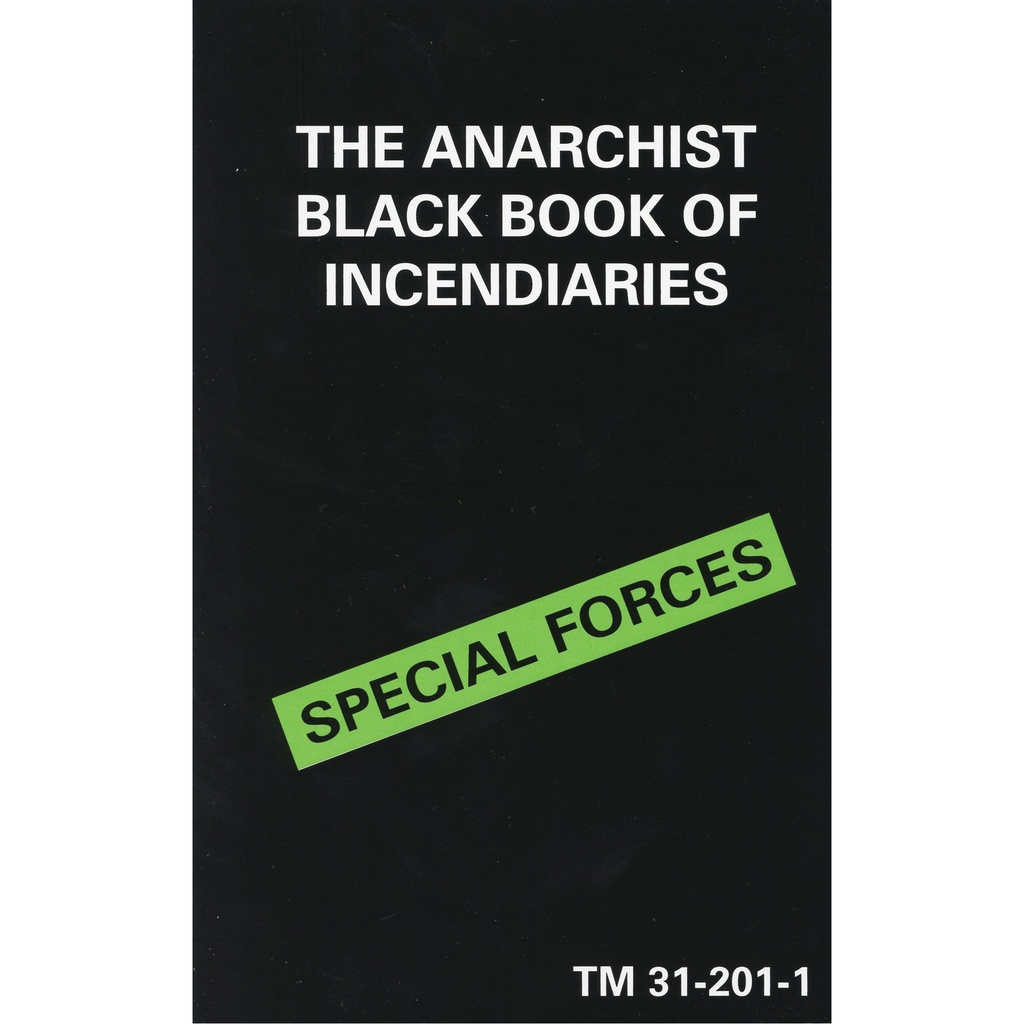
This field-style incendiary reference book is built like a military manual, with 155 pages of tightly packed diagrams, formulas, and step-by-step systems. Presented in a stark black cover with a SPECIAL FORCES banner, it reads like a technical handbook for serious students of historical tactics literature. Collectors of controversial military and survival manuals will recognize the TM-style code and illustration-driven layout as classic reference-library material, not casual reading.
What This Incendiary Field Book Actually Is
The Anarchist Black Book of Incendiaries is a compact, military-style reference manual that walks through historical incendiary systems, materials, and initiation methods in a technical, illustrated format. It’s laid out like a SPECIAL FORCES training book, complete with TM-style code markings and dense, diagram-heavy pages. This isn’t a novel, and it’s not a casual read. It’s a collected snapshot of how incendiary concepts have been presented in field-manual form.
Inside the Anarchist Black Book of Incendiaries
Across 155 pages, this paperback moves through ignition systems, improvised fuse cords, initiators, and classic fuel blends in a straight, manual-like tone. You’ll see material on sugar-chlorate mixtures, napalm-style compounds, paraffin and sawdust blends, so-called “fire bottles,” thermite-related sub-igniters, and other historical incendiary approaches. The style is stripped down: short instructional paragraphs, clear black-and-white illustrations, and minimal commentary. It reads like a technical training document, not opinion or theory.
Manual-Style Layout and Illustrations
The book’s 5.5" x 8.5" footprint matches the field-manual look telegraphed by the cover. Inside, drawings and schematics carry much of the explanation. Measurements, proportions, and build sequences are broken down in a visual way that collectors of military and survival manuals will recognize. That visual density is the point: it feels like something meant to be thumbed through at a workbench or training table.
Reference, Not Light Reading
This is best treated as a technical reference: something you pull off the shelf when you’re studying historical tactics literature, comparing different manuals, or rounding out a collection. The prose isn’t polished or literary—it’s workmanlike, direct, and focused strictly on how these systems were laid out in manual form.
Texas Context: Owning and Handling This Book Responsibly
In Texas, owning a book like this falls under the same common-sense umbrella as owning any controversial reference material: possession of printed information is generally protected, but what you do with that information is what the law cares about. This manual talks about incendiaries—serious, destructive tools with very real consequences if misused. That means a Texas buyer should treat it as study material, not an instruction list for real-world experiments.
Texas has a strong culture of firearms, blades, and personal freedom, but it also has clear arson, explosives, and destructive device statutes. Building, testing, or deploying incendiary devices outside strict legal and safety boundaries can lead to criminal charges fast. The responsible use of this book is as a historical or technical reference, especially for collectors of military-style manuals, survival texts, and unusual tactical literature.
How This Manual Fits a Serious Texas Collection
For a Texas collector who already has shelves of field manuals, survival guides, and declassified training texts, the Anarchist Black Book of Incendiaries fills a specific niche: focused incendiary content presented in that familiar, no-frills government-manual style. The SPECIAL FORCES banner, TM 31-201-1 code, and stark black cover give it a distinctive spine in a row of books.
It pairs naturally with other technical volumes on combat engineering, demolitions, or historical unconventional warfare manuals. Where some survival books skim the topic in a chapter or two, this one stays in its lane and lives there for all 155 pages. For a reference library that leans into the more controversial corners of military history and tactics, that focus matters.
Format and Durability
The paperback format keeps it portable and easy to handle. At 5.5" x 8.5", it tucks into a pack, lockbox, or filing cabinet without demanding coffee-table space. The matte black cover takes scuffs in a way that actually suits the subject: it’s meant to look like it’s been around the block a few times. Inside, the paper and print are utilitarian—clear enough to study diagrams and small text without straining, sturdy enough for repeated reference.
Ethical and Practical Boundaries for Texas Readers
Collectors in Texas tend to understand the line between studying a thing and doing a thing. This book lives on the study side. Treat it like you’d treat an old demolitions manual or a ballistics text: useful for understanding methods, history, and design thinking, but not a license to recreate anything described. Open flame, reactive chemicals, and improvised devices are all areas where Texas law and basic safety demand caution and restraint.
Many Texas buyers pick up a volume like this for context—to see how earlier manuals described incendiaries, how crude some of the ideas look with modern eyes, or how these systems were diagrammed before digital tooling took over. That sort of reading falls squarely inside responsible collecting.
What Texas Buyers Ask About the Anarchist Black Book of Incendiaries
Is this a real military-style manual or just a gimmick?
The presentation is patterned after a military technical manual—black cover, SPECIAL FORCES banner, TM-style code, dense diagrams, and short, directive paragraphs. It’s not an official U.S. government publication, but it deliberately mirrors that format, which is why collectors of declassified and replica field manuals find it at home next to genuine training texts. Functionally, you can treat it as a technical reference book assembled in that familiar style.
Is it legal to own this incendiary manual in Texas?
Owning a book that contains information about incendiaries is generally lawful in Texas; it’s printed material. The legal problems start when someone uses that information to build devices, cause fires, damage property, or endanger people. Texas arson and destructive device laws are strict on conduct, not on collecting reference material. If you’re picking this up as part of a technical or historical library and keeping your interest on the page, you’re staying in the safe lane.
Who is this book really for—preppers, collectors, or casual readers?
Casual readers usually bounce off the dry, manual-like tone. The natural audience here is the collector who already owns other tactical, survival, and military-style reference books and wants a focused incendiary volume to round out the shelf. Some preparedness-minded readers also file it away as a what-not-to-do reference, or as a way to understand how improvised devices are described in older-style manuals. Either way, it rewards a methodical, study-driven mindset more than casual curiosity.
For a Texas collector who likes their reference shelf a little controversial and a lot technical, the Anarchist Black Book of Incendiaries fits right in. It’s lean, focused, and unapologetically manual-like—more about line drawings and procedures than storytelling. Handle the subject matter with the same respect you’d give a hot barrel or a live wire, keep your interest on the page, and it earns its spot as that one black-covered volume friends always notice when they scan your library.