TimberGuard Stonewash Hunting Dagger Knife - Green Nylon
15 sold in last 24 hours
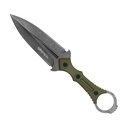
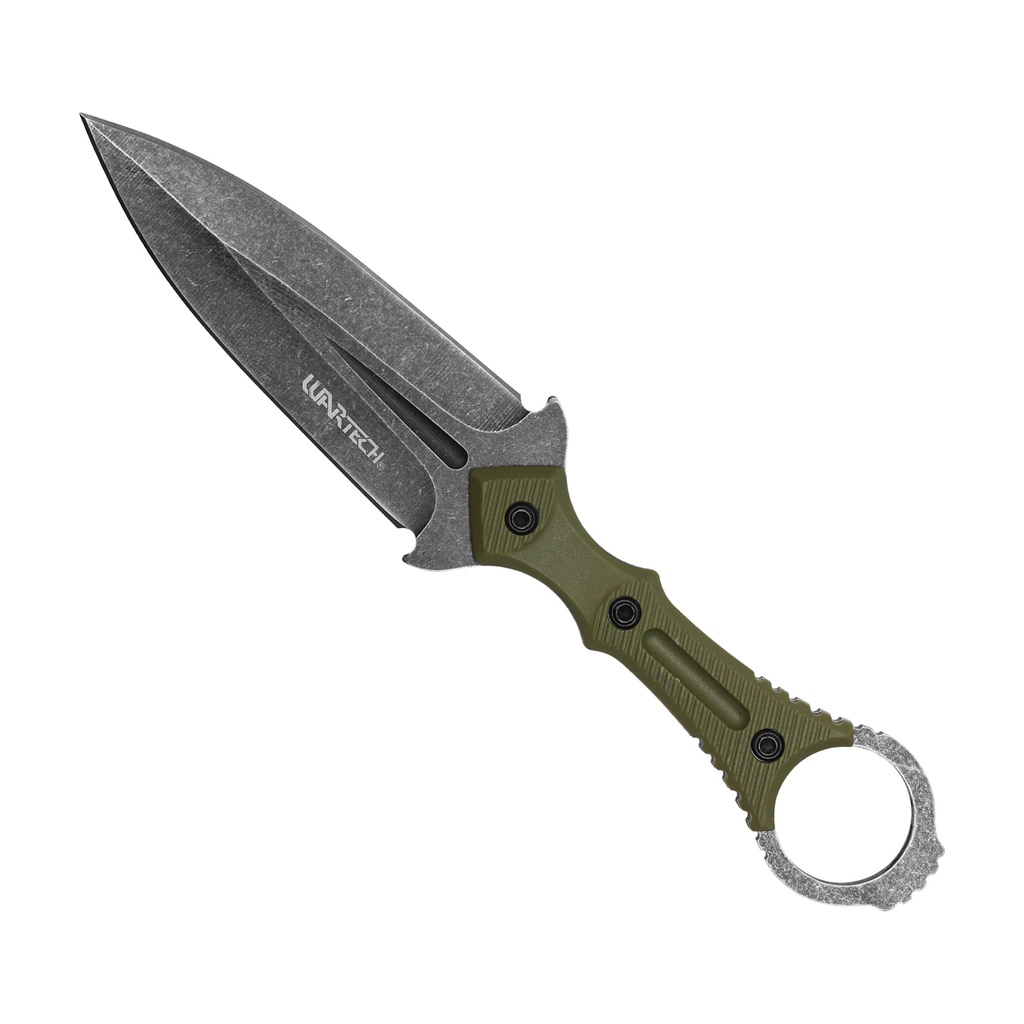
This hunting dagger is a fixed blade built for when the light’s gone and the work isn’t. The stonewashed double-edge holds up to field dressing, camp chores, and rough Texas brush, while the green nylon handle and ring pommel lock in your grip. At 8.25" overall with a 3.75" edge, it carries light on the belt but feels planted in the hand. For Texas hunters who know the difference between a good-looking knife and a working blade, this one’s made to be used.
| Blade Length (inches) | 3.75 |
| Overall Length (inches) | 8.25 |
| Blade Color | Silver |
| Blade Finish | Stone Washed |
| Blade Style | Dagger |
| Blade Edge | Plain |
| Blade Material | Steel |
| Handle Material | Nylon Fiber |
| Theme | None |
| Handle Length (inches) | 4.5 |
| Sheath/Holster | Hard Sheath |
What This Hunting Dagger Really Is
This is a full-tang fixed blade hunting dagger built for field work, not for a glass case. You’re looking at a stonewashed, double-edged spear-point blade with a ring pommel and green nylon handle — a modern hunting and field knife with tactical roots. It’s not an automatic knife, it’s not an OTF knife, and it sure isn’t a switchblade. It’s the tool you reach for when the job is already in front of you and there’s no time to fiddle with a mechanism.
At 8.25 inches overall with a 3.75-inch cutting edge, this hunting dagger lands in that sweet spot between compact carry and real working length. The stonewashed finish shrugs off scratches, the nylon handle keeps weight down, and the finger ring at the pommel gives you control when your hands are cold, wet, or gloved out in the Texas brush.
Fixed Blade Hunting Dagger vs. Automatic Knife and OTF Knife
Texas collectors know there’s a world of difference between a fixed blade hunting dagger, an automatic knife, and an OTF knife. This one is a full-tang, non-folding blade: no springs, no buttons, no sliders. The blade is always ready, riding in a hard sheath on your belt until it’s time to work.
An automatic knife opens from the side with a button or spring-assisted mechanism. An OTF knife drives the blade straight out the front of the handle, often with a thumb slider. Both are fast, pocketable, and make sense for everyday carry and quick access. This hunting dagger plays a different role. It’s for dressing hogs, cutting rope, clearing small brush, and doing the kind of work where a solid, unmoving spine of steel matters more than any deployment trick.
That contrast is why serious Texas knife folks keep all three in their collection: an automatic knife for one-handed pocket duty, an OTF knife for tight, precise work, and a fixed blade hunting dagger like this for the moments when strength and control trump everything else.
Mechanics of a Texas-Ready Hunting Dagger
The mechanism here is simple by design: fixed blade, full tang, no moving parts. Where an automatic knife or switchblade adds complexity with springs and locks, this dagger leans on solid geometry and grip.
Full-Tang Build and Double-Edged Profile
The blade runs the full length of the handle, pinned down by three visible fasteners. That full tang makes this hunting dagger feel planted in the hand — no flex, no rattle. The double-edged spear-point profile is built for penetration and straight-line cutting. A central fuller lightens the steel without sacrificing strength, and the stonewash finish hides the scars of real use.
Ring Pommel and Nylon Fiber Grip
That ring pommel at the end isn’t for show. It gives you a retention point when you’re working in mud, blood, or rain. Slide a finger through and the knife stays with you even if your grip is compromised. The green nylon fiber handle scales keep the weight down, add texture, and bring a subtle tactical hunting look that doesn’t shout for attention the way some combat daggers do.
Texas Hunting Reality: How This Fixed Blade Carries
In Texas, a fixed blade hunting dagger like this usually lives on your belt, in your pack, or lashed to a vest when you’re moving through mesquite, cedar, or river bottom. The hard sheath protects the blade and your gear, and it gives you a consistent draw stroke — no fumbling for a thumb stud or a button the way you might with an automatic knife or a switchblade when you’re wearing gloves.
On a hog hunt outside Llano, this knife makes more sense than an OTF knife or small automatic. You can choke up on the handle for careful field work, then shift your grip and use the ring pommel for more aggressive cutting or piercing tasks. The double edge saves you from flipping the knife around when you’re working from different angles on an animal or cutting through stubborn material.
Texas collectors who actually use their blades know that a good fixed blade hunting dagger takes pressure off their fancier OTF knives and automatic knives. You don’t feel bad beating this one up. That’s the whole point.
Texas Knife Law and the Hunting Dagger
Texas knife law has loosened considerably in recent years, and fixed blades like this hunting dagger benefit from that. While there are still situational and location-based restrictions in certain places, a fixed blade hunting knife is right at home on private land, leases, and most rural carry situations where Texans actually hunt and work.
Where folks get confused is mixing up legal conversation around an automatic knife, an OTF knife, and a fixed blade like this. Texas once treated switchblades and certain automatics very differently; much of that has changed, but the habit of confusion hasn’t. A full-tang hunting dagger carried for lawful hunting or field use is historically one of the least controversial knives in the state. It looks like what it is: a working blade, not a novelty trick.
As always, Texans should stay current on specific location rules — courthouses, schools, and certain posted venues can still be off-limits for many blades. But for the collector who hunts, camps, or runs ranch land, this fixed blade hunting dagger fits neatly inside the spirit of Texas outdoor carry.
Collector Value: Why This Hunting Dagger Earns a Slot
A Texas knife drawer that only holds automatic knives and OTF knives is incomplete. You need at least one honest hunting dagger that can take a beating. This one earns a place for a few reasons.
First, the design tells a clear story: stonewashed double edge, full tang, nylon fiber scales, and a ring pommel. It’s not trying to be a theatrical combat prop or a mall ninja toy. It’s a straight-line modern hunting and field dagger.
Second, it bridges tactical and hunting roles. Some fixed blades lean so hard into tactical styling that they feel out of place on a deer lease. Others are so traditional they don’t match the rest of a modern automatic knife or OTF knife collection. This dagger splits that difference; it looks right next to a blacked-out side-opening automatic and a stonewashed OTF in the same case.
Third, it’s the knife you won’t baby. Collectors in Texas often keep a few pieces as safe queens and another set as working steel. This one is working steel. You can gouge it, re-sharpen it, and hang it back on the belt without wincing. That sort of blade deepens a collection because it builds history, not just value.
What Texas Buyers Ask About Hunting Daggers
How does a hunting dagger compare to an automatic knife, OTF knife, or switchblade?
A hunting dagger like this is a fixed blade: no spring, no button, no slide. An automatic knife is typically a side-opener with a button that snaps the blade out. An OTF knife sends the blade straight out the front of the handle, often double-action with a thumb slider. A switchblade is a legal and cultural term that usually refers to certain automatic knife designs. This hunting dagger skips all that and focuses on strength, control, and reliability — it’s already deployed the second you clear the sheath.
Is a hunting dagger legal to carry in Texas?
Under current Texas law, fixed blade knives like this hunting dagger are broadly legal, though there are still restrictions on specific locations and circumstances. The big legal debates in Texas have mostly centered on automatic knives, switchblades, and length limits in certain settings. For hunting, ranch work, and general outdoor use on private land or lawful public areas, a fixed blade hunting knife has long been part of normal Texas life. Always confirm local and current rules, but in practice, this type of knife is about as traditional as it gets for Texas field carry.
Why would a Texas collector add this if they already own OTF and automatic knives?
Because those OTF knives and automatic knives handle quick access and pocket duty, not hard, dirty field work. A dedicated hunting dagger like this takes the abuse so your higher-dollar switchblade or front-opening piece doesn’t have to. It rounds out the collection with a fixed blade that’s honest about its job: cut, pierce, pry a little when you must, ride the belt, and come back for more. Any Texas collection that sees real use has at least one blade like this standing guard.
In the end, this stonewashed hunting dagger fits a very Texas profile: it doesn’t brag, it just works. It knows its place beside your favorite automatic knife and OTF knife, and it doesn’t compete with them. It handles the messy part of ranch life and hunting season so your showpieces can stay pretty. For a collector or hunter who understands the difference between a switchblade, an OTF, and a fixed blade hunting knife, that quiet reliability is exactly what earns it a permanent slot on the belt and in the drawer.