Field-Issue Incendiary Ordnance Technical Manual - Yellow Cover
3 sold in last 24 hours
This field‑issue ordnance reference manual is a straight reprint of a 1966 Department of the Army incendiaries technical manual—unconventional warfare devices, clean diagrams, no drama. The yellow cover and TM designation put it right in the Cold War era, where doctrine was crisp and unambiguous. Texas collectors, shop owners, and historians use it as a serious reference and a conversation piece that actually has something to say. It’s not a toy or a how‑to—it's documentation of how the Army once thought and taught.
What This Ordnance Technical Manual Really Is
The Field-Issue Incendiary Ordnance Technical Manual - Yellow Cover is a straight-faced reprint of a 1966 Department of the Army technical manual on incendiaries and unconventional warfare devices. It’s not an automatic knife, an OTF knife, or a switchblade – it’s the paperwork that would’ve sat behind that hardware. Where a Texas collector might chase rare autos or out‑the‑front designs for the safe, this book anchors the shelf: doctrine, diagrams, and terminology from the era when those tools were designed and fielded.
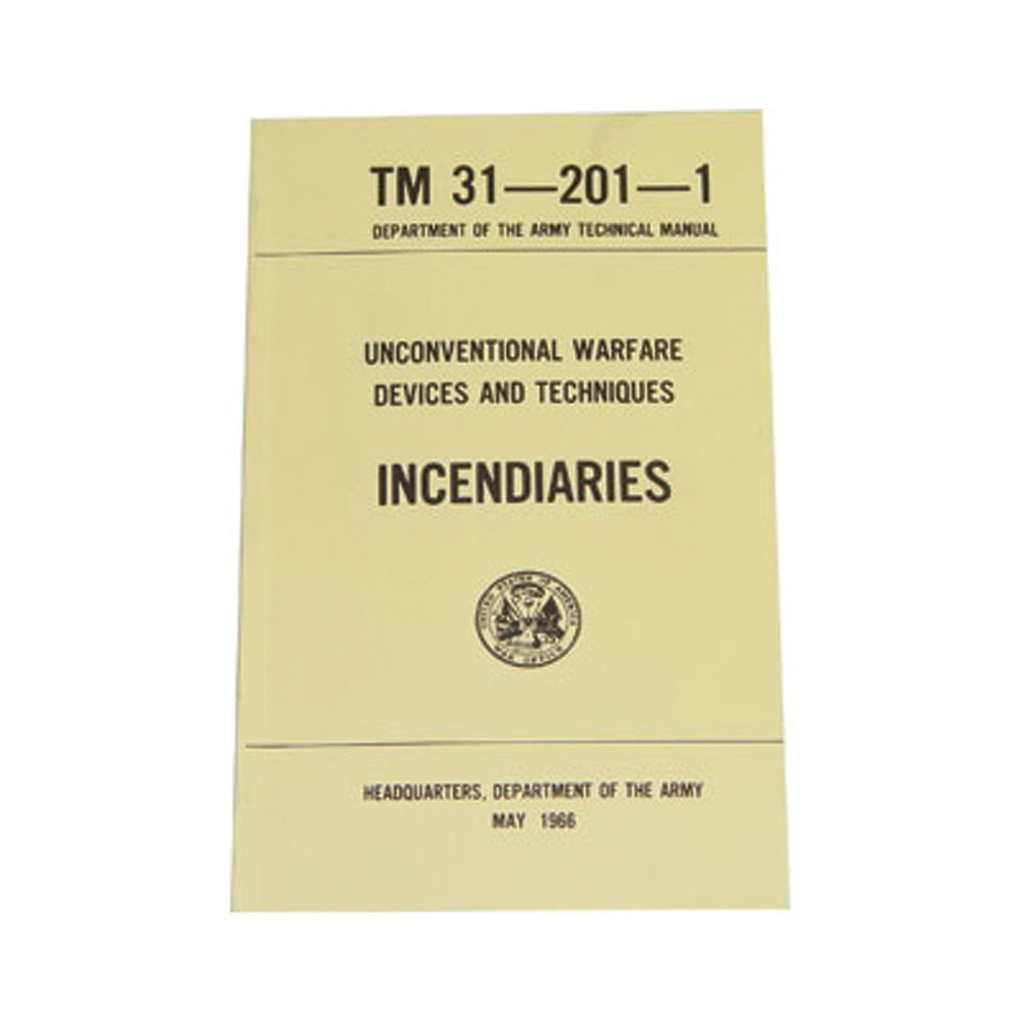
Open the yellow cover and you’re in a field tent or a stateside classroom, not a movie. Clean line drawings, formal headings, and TM 31‑201‑1 stamped right where it belongs. This technical manual doesn’t try to entertain. It documents, defines, and organizes – the same way a good knife spec separates an automatic knife from a spring‑assisted folder or an OTF from a side‑opener without getting dramatic about it.
Inside the Incendiaries Technical Manual
This ordnance reference manual walks through incendiary devices and unconventional warfare techniques the Army cared about in May 1966. You’ll see structured sections, step‑by‑step breakdowns, and clear component labels. It reads like a checklist, not a story. That’s the appeal. Where a flashy switchblade ad talks speed and attitude, this manual talks mixture, fuze, container, and effect in flat government language.
For a Texas buyer who already knows the difference between an OTF knife, a side‑opening automatic, and a traditional switchblade, this same type of precision is familiar. You value mechanisms being named correctly. This manual treats ordnance the same way: no vague terms, no marketing gloss, just definitions and diagrams. It’s a reference you study the way you’d study lock geometry on a high‑end automatic knife.
Mechanism, Not Hype
Nothing in these pages is about style. It’s about how things are built and what they’re designed to do. Fuels, casings, ignition – all handled with the same matter‑of‑fact tone a good maker uses when explaining how an OTF knife’s double‑action track differs from a single‑action auto. That’s why collectors respect it. It’s the opposite of hype.
Archival Layout and Authentic Feel
The pale yellow softcover, the TM number at the top, the Department of the Army seal – they all work together to signal originality. On a shelf full of glossy knife catalogs, this thing looks like it came straight out of a footlocker. It pairs well visually with classic military automatic knives, bayonets, and any Cold War‑era hardware you keep on display.
Texas Context: Where This Manual Belongs
In Texas, plenty of folks collect hardware first – automatic knives for everyday carry, OTF knives for the novelty and engineering, and the occasional old switchblade for the history. This technical manual lives a shelf over from that action. It’s what you reach for when you want to understand the doctrine that sat behind all those tools and tactics.
Texas law has its own way of talking about weapons, and over the years the state has loosened up on blades, including automatics and switchblades. That doesn’t mean you’re casual about them. Most serious collectors in Texas like to know not just what they’re carrying, but where it came from in a historical sense. This incendiaries technical manual scratches that itch. It’s not about what you can or can’t carry today – it’s about how the Army once taught, trained, and standardized dangerous materials.
Why Knife Collectors Care About a Technical Manual
If you’re the kind of Texan who separates automatic knife from OTF knife from switchblade without thinking about it, you already live in the world this book comes from: one where terms matter and mechanisms aren’t all lumped into one lazy category. That’s the same mindset that keeps technical manuals like this relevant.
For the collector, this manual does three things:
- Historical anchor: It pins your collection to a real date – May 1966 – and a real doctrine set, the same way a production year pins down a rare auto or military switchblade.
- Reference depth: It gives you technical context when you’re explaining ordnance, campaigns, or Cold War history to someone staring at the knives in your case.
- Display credibility: On a shop wall or in a home library, it signals that you’re not just buying sharp things; you’re studying their world.
Retailers use this manual as a quiet centerpiece: placed near tactical books, automatic knives, and survival gear, it draws in the buyers who want more than surface‑level chatter.
Serious Material, Presented Responsibly
This is not a step‑by‑step hobby book. It’s a historical document reprinted for study, collection, and context. The tone is dry by design. That’s a good thing. It lets Texas shop owners and collectors stock it with a clear conscience: this is reference material, not encouragement. If you already treat your automatic knives, OTF knives, and switchblades with respect, you’ll handle this manual the same way.
What Texas Buyers Ask About This Technical Manual
How does this tie into automatic knives, OTF knives, and switchblades?
This manual doesn’t teach blade work, and it doesn’t cover automatic knives, OTF knives, or switchblades directly. Instead, it sits in the same military ecosystem. The same Army that issued folding autos, bayonets, and later specialty blades also issued ordnance technical manuals like this one. So while your knives live in the safe or on your belt, this book lives on your desk, helping you understand the doctrine and terminology that shaped the gear you collect.
Is owning this incendiaries technical manual legal in Texas?
In Texas, owning and reading a historical military technical manual like this is legal. You’re buying printed documentation, not chemicals or devices. The responsibility, same as with automatic knives or a serious OTF knife, is on how you behave. This book is best treated as a historical and technical reference, not an instruction sheet. Texas law focuses on what you actually do, not what you read, but using any information irresponsibly is on the individual, not the paper.
Why would a knife collector add this manual to the shelf?
A serious collector in Texas eventually wants more than another edge in the drawer. This manual adds depth. It tells you how the Army thought about destructive tools at a time when switchblades were controversial in the public eye but just another item on a military inventory. It puts your collection in a bigger story – one about doctrine, logistics, and training. If you like being the person who can explain not just what a tool is, but where it fits in history, this belongs next to your knives.
Texas Collector Identity: Beyond the Blade
Owning the Field-Issue Incendiary Ordnance Technical Manual - Yellow Cover marks a shift from just stacking hardware to building a real collection. It says you care about context as much as steel. You know the difference between an automatic knife and an OTF knife, and you don’t call every side‑opener a switchblade. You don’t buy books for decoration; you buy them because they tighten up your understanding.
On a Texas shelf, this yellow cover looks right at home between a well‑used field manual and a row of folders and autos you actually carry. It’s quiet, serious, and a little bit stubborn – just like the collectors who appreciate it.