Fieldline Guarded Grip Boot Knife - Olive Green Nylon Fiber
15 sold in last 24 hours
The Fieldline Boot Knife is a fixed blade with a 4.875-inch dagger profile, an olive green nylon-fiber grip, and a matte black finish. No spring deployment, no folding joint—just a guarded handle and a nylon sheath. For a Texas collector organizing gear before a weekend away, that distinction matters: this is neither an automatic knife nor a spring-driven OTF knife or switchblade. The ribbed grip, centered point, and lanyard hole give it a clear place beside your folders. Different mechanism, different character, chosen on purpose.
| Blade Length (inches) | 4.875 |
| Overall Length (inches) | 9 |
| Blade Color | Black |
| Blade Finish | Matte |
| Blade Style | Dagger |
| Blade Edge | Plain |
| Handle Finish | Textured |
| Handle Material | Nylon Fiber |
| Theme | Tactical |
| Handle Length (inches) | 4.125 |
| Pommel/Butt Cap | Lanyard Hole |
| Carry Method | Sheath |
| Sheath/Holster | Nylon |
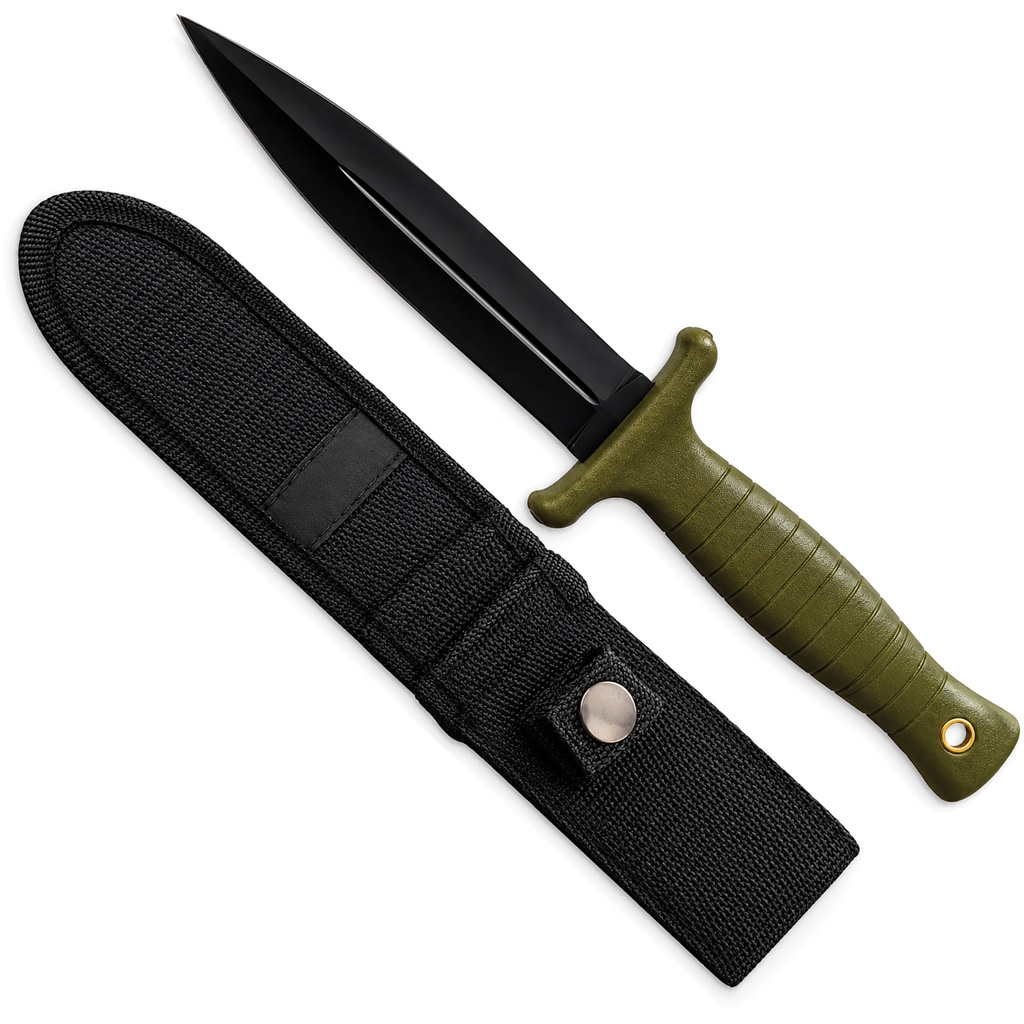
The Fieldline Boot Knife is a fixed blade, not a folder waiting on a button. Its 4.875-inch dagger-profile blade stays in line with the handle, and the nylon sheath covers it between uses. Olive green nylon fiber frames the grip; matte black carries the blade. At 9 inches overall, it has a substantial presence without relying on graphics or ornament. For a Texas collector accustomed to sorting knives by mechanism first, this one introduces itself plainly: a guarded fixed blade with a centered point, visible grip texture, and a separate sheath.
Fieldline Boot Knife: A Fixed Blade, Plain and Simple
A boot knife describes a familiar form and carry tradition, not a deployment system. Here, the mechanism question has a short answer: nothing folds, slides, or fires open. You remove the knife from its sheath rather than opening a blade from inside a handle. That separates it from the moving parts and operating sequence that define folding and spring-opening designs. The distinction matters when you are building a collection around how knives work, not merely how they look.
No hinge, slider, or release button
An automatic knife uses stored spring energy to open its blade after a release is operated. Switchblade is a common term for that spring-opening category. An OTF knife is defined instead by its blade traveling out the front of the handle; many OTF designs are automatic, but the terms describe different things. Fieldline belongs to none of those opening systems. Its blade is already extended, and its sheath handles coverage.
That gives this boot knife a different ownership routine. There is no opening action to compare or thumb control to learn. Your attention goes to the handle shape, guard, blade profile, and sheath. A collection can include all those mechanisms without treating them as interchangeable.
The Boot Knife Profile: Dagger Blade and Guarded Grip
The blade tapers symmetrically toward a centered point. Its plain edge and matte black finish keep the outline visually clean, while a long recessed fuller adds definition along the blade face. The fuller draws the eye toward the point without adding a printed motif. It is a visible part of the design, not a reason to invent claims about cutting performance.
Ribs, texture, and an olive green guard
The 4.125-inch nylon-fiber handle combines closely spaced transverse ribs with a fine pebbled surface between them. Those are two distinct textures: the ribs establish the grip's larger pattern, while the smaller texture fills the spaces. The olive green color makes both easier to distinguish against the black blade and sheath.
A crossguard extends from both sides of the blade base, ending in rounded tips. At the opposite end, the handle flares into a rounded butt. Together, those shapes give the grip a visibly bounded profile. The lanyard hole near the butt has a gold-colored metal liner, a small contrasting detail worth noticing when you look beyond the blade.
Sheath Carry and Practical Questions for Texas Buyers
This boot knife uses a black nylon sheath with a coarse woven surface and stitched perimeter. Near the opening, a retention strap closes with a round, silver-colored snap. A plain rectangular patch is stitched onto the sheath face. The presentation stays consistent with the knife itself: restrained colors, visible construction details, and no decorative graphics competing for attention.
The boot designation should not make the carry decision for you. At 9 inches overall, the knife deserves a deliberate check against your clothing, equipment, and intended storage arrangement. Consider the complete sheathed package rather than blade length alone. A sheath is part of the ownership experience, not an accessory to think about afterward.
For Texas buyers, laws on this type of knife vary by state and city. Check the law where you live and carry before choosing your carry arrangement.
The practical difference from an automatic knife is straightforward. A folder stores its blade inside the handle; this fixed blade needs its separate sheath. Neither arrangement answers every buyer's needs. Choose around the actual construction rather than assuming every knife belongs in the same pocket or gear compartment.
A Collector's Place for Olive Green and Matte Black
Fieldline's strongest visual distinction is the relationship between the olive green handle and the matte black blade. The green brings attention to the ribbed grip and rounded guard ends. The black keeps the dagger profile clear. Beside an all-black knife, it offers a different field-equipment palette without becoming ornate.
Compare construction before collecting labels
A useful comparison starts with roles inside your collection. An OTF knife contributes a front-traveling blade mechanism. A side-opening automatic contributes a different spring-driven action. This boot knife contributes a fixed dagger profile, a guarded nylon-fiber handle, and sheath-based storage. Each earns attention for its own construction.
Look closely at the transition from guard to grip, the spacing of the ribs, and the rounded butt. Those repeated curves connect the handle visually. Then compare the long blade fuller with the sheath's plain face. There is enough detail to reward inspection, but the design does not depend on decoration to explain itself. That is a sound reason to choose it for a collection built around contrasting forms.
What Texas Buyers Ask About Boot Knife
Is this an OTF knife, an automatic knife, or a switchblade?
No. Fieldline is a fixed-blade boot knife. An automatic knife opens with spring power after a release is operated, and switchblade commonly names that category. OTF describes a blade traveling through the front of its handle. Fieldline has no opening cycle; you uncover its fixed blade by removing the sheath.
Is this boot knife legal to carry in Texas?
Laws on this type of knife vary by state and city. Check the law where you live and carry.
What makes it worth considering beside other fixed blades?
Start with the combination: a 4.875-inch matte black dagger blade, an olive green ribbed nylon-fiber handle, a two-sided guard, and a nylon sheath with a snap retention strap. The metal-lined lanyard hole adds another visible distinction. Choose it for those concrete features and its fixed-blade format.
A Texas collection does not need every knife to tell the same story. The Fieldline Boot Knife earns its place through a clear profile, field colors, and construction you can understand at a glance. Know the mechanism, consider the sheath, and choose the piece that adds something different to your drawer.